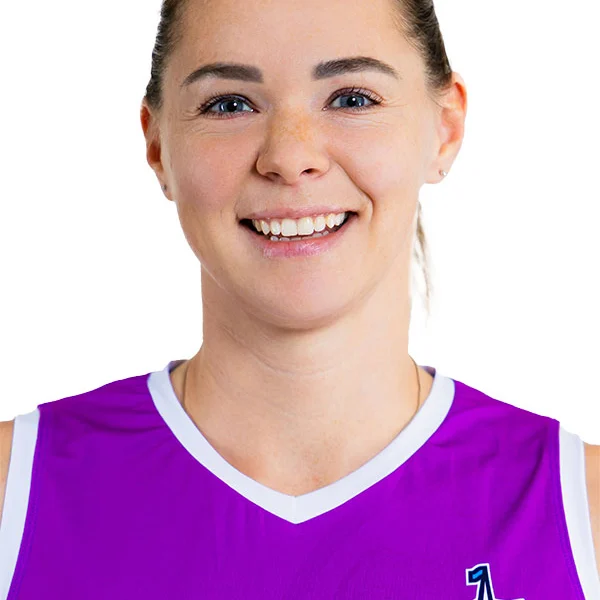
Irina Filishtinskaya is a Russian setter whose senior career has spanned two decades in the Russian club system. Born in Salavat on June 14, 1990, she developed with the organization now known as Proton Saratov and later won domestic and European trophies with Dinamo Krasnodar, Dinamo Kazan and Lokomotiv Kaliningrad.
Filishtinskaya stepped away from professional volleyball in 2018 and returned two years later after becoming a mother. Her second career phase brought two Russian championship titles with Lokomotiv, a return to the senior Russia team in 2025 and, from 2025, a new role as captain of the young Korabelka Saint Petersburg project.
Player Information
| Field | Details |
|---|---|
| Full name | Irina Nikolaevna Filishtinskaya |
| Maiden name | Irina Uraleva |
| Date of birth | June 14, 1990 |
| Place of birth | Salavat, Bashkortostan, Russia |
| Nationality | Russian |
| Position | Setter |
| Height | 180 cm |
| Weight | 65 kg |
| Listed spike reach | 285 cm |
| Listed block reach | 275 cm |
| Dominant hand | Right |
| Current club | Korabelka Saint Petersburg |
| Club number | 14 |
| Club role | Captain |
| National team | Russia Women’s National Volleyball Team |
| National-team number | No. 15 in the May 2025 Serbia match |
| Previous clubs | Balakovskaya AES / Proton Saratov; Dinamo Krasnodar; Dinamo Kazan; Enisey Krasnoyarsk; Lokomotiv Kaliningrad |
| Sporting title | Master of Sport of Russia, International Class |
| @irinafil_14 |
The current Russian federation player record lists Filishtinskaya at 180 cm and identifies her as a setter for Korabelka. Older athlete databases list a 285 cm spike reach and 275 cm block reach, while her current competition records use No. 14 at club level.
Her official club history has also provided a reliable baseline for the major stages of her career. Lokomotiv’s Filishtinskaya player profile records her periods with Proton, Dinamo Krasnodar, Dinamo Kazan, Enisey and Lokomotiv before her 2025 move to Saint Petersburg.
Early Life & Volleyball Beginnings
Filishtinskaya was born in Salavat, in what is now the Republic of Bashkortostan. She started volleyball at nine years old and later entered the development system attached to Balakovskaya AES, the Saratov-region club that became known as Proton.
Her Dinamo Krasnodar player biography names Irina Terekhova as her first coach. The same profile records that Filishtinskaya continued her education while developing as an athlete and later completed higher education at the Saratov State Academy of Law.
She entered senior club volleyball with Balakovskaya AES in 2006, while still a teenager. By the 2009/10 season, she was already serving as captain of the Saratov-region team, giving her leadership responsibility unusually early for a setter.
That first professional phase did not produce the volume of trophies that would come later, but it established Filishtinskaya as one of Russia’s more promising young setters. Her national-team pathway also began during those years: she won European junior silver in 2008 and moved into Russia’s senior-team environment by 2010.
Club Career
Proton and the first senior years
Filishtinskaya remained with Balakovskaya AES and its successor Proton through 2012. The six-year period took her from youth prospect to starting setter and captain, while also giving her the match experience that eventually led larger Russian clubs to recruit her.
Proton was not one of the dominant trophy-winning teams of that era, so Filishtinskaya’s development depended heavily on responsibility rather than a protected reserve role. Running an offense at a young age meant learning to manage experienced attackers, imperfect reception and long stretches of a domestic season in which the setter had to solve problems rather than simply distribute ideal passes.
By 2012, her performances had attracted Dinamo Krasnodar. The move changed the competitive level of her career almost immediately.
Dinamo Krasnodar and three European trophies
Filishtinskaya joined Dinamo Krasnodar for the 2012/13 season and spent four years with the club. It became the first major trophy-winning period of her career.
Dinamo won the CEV Challenge Cup in her first season. The club then moved into the CEV Cup and developed into one of the strongest Russian teams in European second-tier competition, winning the trophy in both 2014/15 and 2015/16.
The 2014/15 campaign was particularly strong. Krasnodar won the Russian Cup, captured the CEV Cup and reached the FIVB Club World Championship final, finishing as silver medalist.
Filishtinskaya also became accustomed to changing the rhythm of an offense around different types of attackers. In 2015, she discussed how Natalia Malykh would allow Dinamo to play faster, contrasting Malykh’s speed with Rosir Calderón’s heavier, more powerful attacking style.
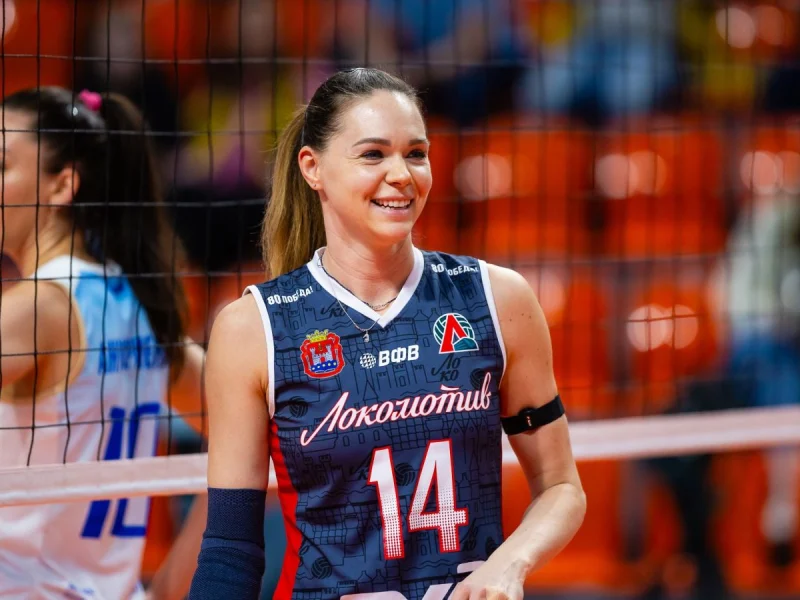
That observation offers a useful view of Filishtinskaya as a setter. Her job was not to impose the same tempo on every lineup, but to adjust the offense to the strengths of the hitter in front of her.
Dinamo also won the Russian Cup in 2014 and 2015, while Filishtinskaya collected Russian championship bronze in 2015/16. By the time she left Krasnodar, she had won one Challenge Cup, two CEV Cups and two Russian Cups with the club.
Dinamo Kazan and a third straight CEV Cup
Filishtinskaya moved to Dinamo Kazan in 2016. The transition did not interrupt her European success: Kazan won the 2016/17 CEV Cup, giving her a third consecutive title in the competition across two different clubs.
She later identified that sequence as one of the most memorable stretches of her career. In a 2024 interview about her major achievements, Filishtinskaya singled out winning three European cups in succession—two with Krasnodar and one with Kazan—as a particularly important accomplishment.
Domestic success continued as well. Dinamo Kazan won the Russian Cup in both 2016 and 2017, giving Filishtinskaya four consecutive Russian Cup titles from 2014 through 2017.
The club finished as Russian championship runner-up in both 2016/17 and 2017/18. Filishtinskaya was also looking toward the Champions League: before the 2017/18 European season, she described playing in the competition as a long-held career goal.
Her Kazan period ended in spring 2018. At 27, Filishtinskaya made a decision that temporarily removed her from professional volleyball altogether.
Two years away and a return after maternity leave
Filishtinskaya paused her playing career in April 2018. The break became a two-year absence from professional competition during which she became a mother.
Enisey Krasnoyarsk later recorded that Filishtinskaya returned to volleyball after maternity leave for the 2020/21 season. The comeback was significant because she was not simply resuming training after an ordinary offseason; she was rebuilding the routines and physical demands of elite sport after two years away.
Filishtinskaya has since spoken openly about that period. The 2026 long-form interview “Moving, a new challenge and a pause for volleyball” revisited both the decision to step away and the process of returning after maternity leave.
She spent one season with Enisey before receiving an offer from Lokomotiv Kaliningrad. That move became the start of the most successful domestic phase of her career.
Lokomotiv and the first Russian championship
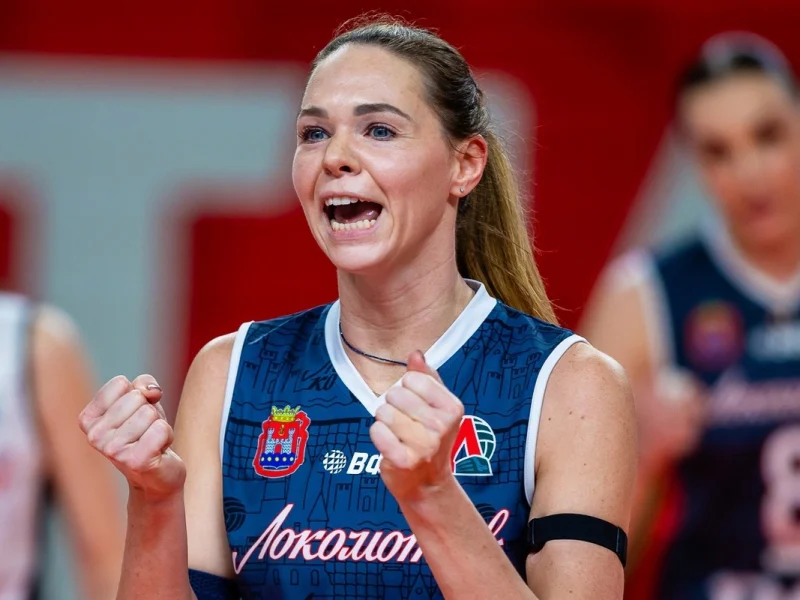
Filishtinskaya joined Lokomotiv in 2021. The setter arrived with a large European trophy collection but was still missing the biggest domestic title in Russian club volleyball.
That changed in 2021/22. Lokomotiv defeated Uralochka-NTMK in a five-match championship series, and Filishtinskaya finally won her first Russian Superliga gold.
The title carried particular emotional weight after her career break. In an official Lokomotiv interview after the championship, she explained how much the gold meant after years of cup and European success and spoke about telling her mother that the medal belonged to her as well.
Lokomotiv remained near the top of the league after that championship. The club finished second in both 2022/23 and 2023/24, with the latter final becoming especially painful after Lokomotiv came close to defeating Dinamo-Ak Bars in a five-match series.
Filishtinskaya called the 2024 silver the most disappointing second-place finish of her career. The season also provided some of the clearest evidence of how she views the setter position: she described the need to remain emotionally engaged but mentally calm, especially after mistakes or difficult rotations.
A second title and the 2025 Russian Cup
The 2024/25 season gave Filishtinskaya another chance at the championship. Lokomotiv entered the playoffs after a difficult year that included injuries and roster disruption, but recovered to reach another final.
This time the result was different. Lokomotiv won the 2025 Russian championship, giving Filishtinskaya the second Superliga title of her career.
The team then added the Russian Cup only weeks later. It was Filishtinskaya’s fifth Russian Cup victory and completed a domestic league-and-cup double at the end of her fourth season in Kaliningrad.
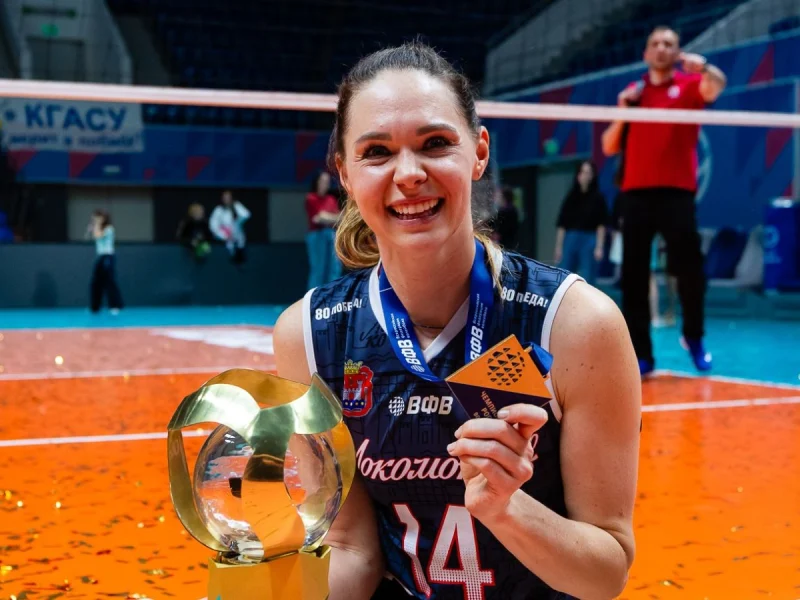
Her role in that team went beyond basic distribution. The offense included Ebrar Karakurt, one of the highest-volume attackers in the league, and Filishtinskaya had to judge when to keep feeding her and when to move the offense elsewhere.
She explained that process in practical terms: when Karakurt was scoring freely, almost any set could work; when the opposite began struggling, the setter’s job was to move away temporarily and bring her back later. That is a revealing example of Filishtinskaya’s approach to game management—distribution as both a tactical and psychological decision.
Korabelka and a new leadership role
Filishtinskaya decided to leave Lokomotiv before the 2025 championship and cup had even been won. Her next destination was Korabelka Saint Petersburg, a young club preparing for its first season in the Russian Superliga.
The move appeared unusual on paper: she was leaving the national champion for a league newcomer. Filishtinskaya explained that she wanted a new challenge and saw value in sharing her experience with a much younger roster while also drawing energy from the group.
Korabelka’s debut season exceeded expectations. The club finished seventh in the regular season and reached the playoffs, even winning the opening quarterfinal match against Uralochka before losing the series in three.
The team also made a deep Russian Cup run. Korabelka reached the Final Six and semifinals, eventually finishing fourth in the 2026 Russian Cup.
Filishtinskaya served as captain during that first Superliga season. Korabelka retained her for 2026/27, keeping the veteran setter at the center of a roster that still contains many players in the early stages of their senior careers.
Club Career Timeline
| Seasons | Team | Country |
|---|---|---|
| 2006–2012 | Balakovskaya AES / Proton Saratov | Russia |
| 2012–2016 | Dinamo Krasnodar | Russia |
| 2016–2018 | Dinamo Kazan / Dinamo-Ak Bars | Russia |
| 2018–2020 | Career pause | — |
| 2020–2021 | Enisey Krasnoyarsk | Russia |
| 2021–2025 | Lokomotiv Kaliningrad | Russia |
| 2025–present | Korabelka Saint Petersburg | Russia |
National Team Career
Filishtinskaya’s international career began before her major club trophies. She won silver with Russia at the 2008 European junior championship and moved into the senior national-team environment in 2010.
Her senior debut period included the Montreux Volley Masters and the Boris Yeltsin Cup. Russia won the 2010 Yeltsin Cup, giving Filishtinskaya her first senior national-team tournament title.
She also represented Russia in university competition. Filishtinskaya won bronze at the 2011 Summer Universiade in Shenzhen and returned four years later as part of the Russian team that won gold at the 2015 Universiade in Gwangju.
The 2017 season became her largest sustained run with the senior national team. Filishtinskaya played in the World Grand Prix, the FIVB World Grand Champions Cup and EuroVolley, where Russia used her alongside Ekaterina Pankova at setter.
Her own scoring from the setter position was unusually relevant. Against Japan at the 2017 World Grand Champions Cup, Filishtinskaya produced seven of Russia’s 22 block points despite being only 180 cm tall.
She also made Russia’s EuroVolley roster later that month. The tournament represented the end of that first long senior-team phase, and Filishtinskaya did not play for the national side again for nearly eight years.
Her return came in 2025 at age 34. Russia selected her for the First Channel Cup match against Serbia in Belgrade, with the federation listing Filishtinskaya as No. 15 alongside Polina Matveeva at setter.
Russia recovered from two sets down to win 3–2. Filishtinskaya later described the recall as both surprising and welcome, saying the return gave her a sense of experiencing another youth in her career.
The match was also significant beyond her personal comeback because it restored a high-level international setting after Russia’s long absence from the regular global calendar. Filishtinskaya spoke positively about the atmosphere around the Serbia match and about hearing the national anthem abroad again.
The Russian Volleyball Federation continued to include her among its women’s national-team candidates in 2026, extending a senior international career that began more than 15 years earlier.
Playing Style & Strengths
Filishtinskaya’s playing identity is built around decision-making rather than physical dominance. At 180 cm, she is smaller than many modern international setters, but her career has lasted because she manages rhythm, attackers and emotional pressure well enough to organize high-level offenses across very different rosters.
She has described a setter as needing a “cold head” even when the rest of the match is emotionally intense. In the 2024 discussion of her approach, Filishtinskaya explained that dwelling on one failed action often produces another mistake, so she tries to restore calm through the next successful volleyball action.
That control is closely connected to how she handles attackers. Her comments about Karakurt show a setter willing to ride a scorer when the matchup is working, but also willing to release that hitter from volume when frustration begins affecting execution.
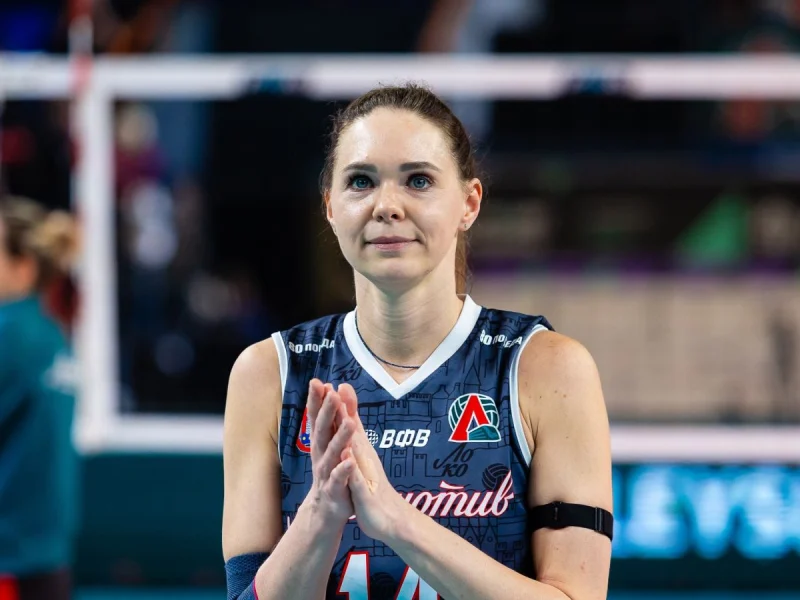
Filishtinskaya has also worked with contrasting offensive styles across her career. Her Krasnodar comments about Rosir Calderón and Natalia Malykh showed that she understood the difference between building around a heavy, powerful ball and using a faster attacker to accelerate the overall tempo.
Another distinctive part of her profile is blocking. Setters are normally targeted by opposing attackers at the net, but Filishtinskaya has repeatedly produced meaningful block points despite her height.
The clearest international example came against Japan in 2017, when she scored seven blocks in one match. During Lokomotiv’s 2021/22 championship season, she also contributed regular points through block and serve rather than operating as a purely non-scoring setter.
Her leadership role has become more important later in her career. Korabelka’s roster is considerably younger than Filishtinskaya, and she deliberately chose the club in part because she could pass experience to players who had not yet spent years in the Superliga.
For a setter, that leadership is closely tied to the position itself. Filishtinskaya is responsible not only for the second contact but also for keeping attackers involved, recognizing when the offense needs a change of direction and maintaining enough stability for a young team to play through difficult stretches.
Major Achievements
Selected National Team Honors
| Year | Competition | Result |
|---|---|---|
| 2008 | European Junior Championship | Silver |
| 2010 | Boris Yeltsin Cup | Champion |
| 2011 | Summer Universiade | Bronze |
| 2015 | Summer Universiade | Gold |
| 2025 | First Channel Cup vs. Serbia | Winner |
Filishtinskaya’s senior international career has not followed a continuous path, but it has covered an unusually long period. She first appeared around the senior team in 2010, played a substantial international season in 2017 and then returned to the group in 2025.
Selected Club Honors
| Year / Season | Competition | Result | Team |
|---|---|---|---|
| 2012/13 | CEV Challenge Cup | Champion | Dinamo Krasnodar |
| 2014 | Russian Cup | Champion | Dinamo Krasnodar |
| 2014/15 | CEV Cup | Champion | Dinamo Krasnodar |
| 2015 | Russian Cup | Champion | Dinamo Krasnodar |
| 2015 | FIVB Club World Championship | Silver | Dinamo Krasnodar |
| 2015/16 | CEV Cup | Champion | Dinamo Krasnodar |
| 2015/16 | Russian Championship | Bronze | Dinamo Krasnodar |
| 2016 | Russian Cup | Champion | Dinamo Kazan |
| 2016/17 | CEV Cup | Champion | Dinamo Kazan |
| 2016/17 | Russian Championship | Silver | Dinamo Kazan |
| 2017 | Russian Cup | Champion | Dinamo Kazan |
| 2017/18 | Russian Championship | Silver | Dinamo Kazan |
| 2021/22 | Russian Championship | Champion | Lokomotiv Kaliningrad |
| 2021 | Russian Cup | Silver | Lokomotiv Kaliningrad |
| 2022 | Russian Cup | Silver | Lokomotiv Kaliningrad |
| 2022/23 | Russian Championship | Silver | Lokomotiv Kaliningrad |
| 2023/24 | Russian Championship | Silver | Lokomotiv Kaliningrad |
| 2024/25 | Russian Championship | Champion | Lokomotiv Kaliningrad |
| 2025 | Russian Cup | Champion | Lokomotiv Kaliningrad |
The trophy list contains two particularly distinctive sequences. Filishtinskaya won the CEV Cup three seasons in a row with two different clubs, then returned from her two-year career break to win the Russian championship twice with Lokomotiv.
Her fifth Russian Cup came in 2025. Dinamo Krasnodar’s retrospective on the competition identified it as Filishtinskaya’s fifth cup title, following the four she had won consecutively between 2014 and 2017.
Personal Life & Interests
Filishtinskaya completed higher education alongside her volleyball career, graduating from the Balakovo branch of the Saratov State Academy of Law. Her early Dinamo Krasnodar profile also listed travel and reading among her interests.
Motherhood became a major dividing point in her professional career. Filishtinskaya stepped away from the sport in 2018, later had her son Egor and returned to the Superliga with Enisey in 2020.
She has spoken about the practical side of combining professional sport with raising a child. In one Lokomotiv interview about motherhood, Filishtinskaya described adapting her recovery routine to her son’s schedule and finding that the return to volleyball was easier emotionally because she had missed the game during her time away.
Egor has also become one of the main ways she separates volleyball from home life. Filishtinskaya said that seeing her son helps her switch off from work, because attention immediately moves away from the previous match or training session.
Away from volleyball, tennis has been a long-standing interest. She grew up watching players including Roger Federer, Novak Djokovic and Maria Sharapova and has joked that in another life she would like to be a tennis player.
That interest has remained current late in her volleyball career. In April 2026, Filishtinskaya again discussed her enthusiasm for tennis, adding Rafael Nadal and Daniil Medvedev to the players she enjoys or has followed.
She also prefers active holidays to spending long periods doing nothing. Beach volleyball has occasionally been part of her offseason routine, although she has never seriously considered switching disciplines.
Where Is Irina Filishtinskaya Playing Now?
Filishtinskaya plays for Korabelka Saint Petersburg in the 2026/27 Russian Superliga season. The current federation roster lists her as a No. 14 setter, while current reporting continues to identify her as the club captain.
She chose Korabelka after winning both the league and cup with Lokomotiv in 2025. The move placed one of the most experienced setters in Russian volleyball inside a club whose first Superliga roster was built largely around younger players.
That first season produced seventh place in the regular season, a playoff appearance and a Russian Cup semifinal. Korabelka then kept Filishtinskaya for another season as the club changed head coach and continued building its Superliga project.
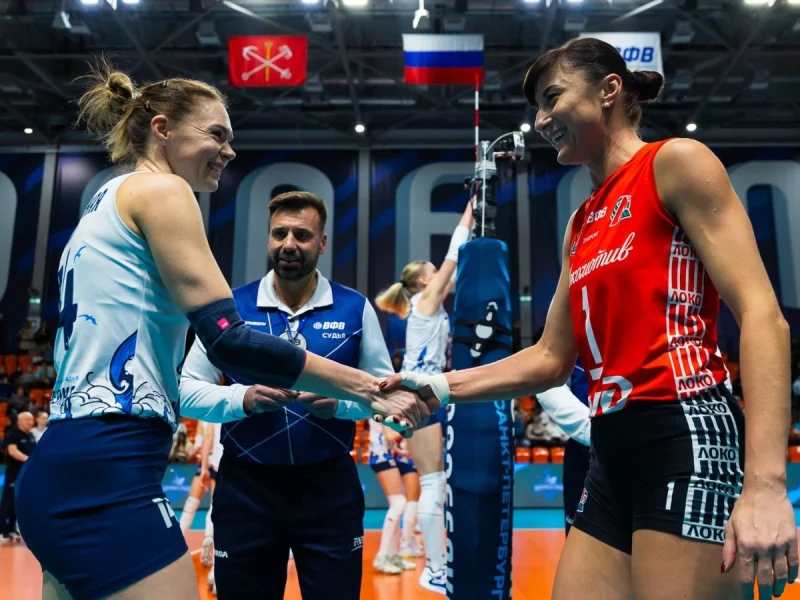
She remains active at 36 rather than moving into a ceremonial veteran role. Korabelka’s current match rosters continue to include Filishtinskaya, and the Russian federation also includes her among its senior women’s national-team candidate group.
The 2026/27 season therefore extends a career that has already crossed several distinct stages: teenage captain at Proton, European trophy winner, senior international, two-year maternity break, national champion after returning, and now veteran captain of one of Russia’s newest Superliga clubs.
Frequently Asked Questions
How old is Irina Filishtinskaya?
Irina Filishtinskaya was born on June 14, 1990. She is 36 during the 2026/27 club season.
How tall is Irina Filishtinskaya?
The Russian Volleyball Federation currently lists Filishtinskaya at 180 cm. Some secondary databases use slightly different figures, but 180 cm is the current federation measurement.
What position does Irina Filishtinskaya play?
Filishtinskaya is a setter. She has spent her entire senior career in the position and is known for game management, attacker distribution and unusually productive blocking for a 180 cm setter.
Which club does Irina Filishtinskaya play for?
She plays for Korabelka Saint Petersburg and wears No. 14. Filishtinskaya joined the club in 2025 after four seasons with Lokomotiv Kaliningrad and remained with Korabelka for 2026/27.
Is Irina Filishtinskaya the captain of Korabelka?
Yes. Filishtinskaya became the veteran leader of Korabelka after joining the club and continues to be identified as its captain in the 2026/27 season.
Did Irina Filishtinskaya retire from volleyball?
She paused her career in 2018 and spent two seasons away from professional volleyball, including maternity leave. She returned with Enisey Krasnoyarsk in 2020 and has remained an active professional player since then.
Has Irina Filishtinskaya played for Russia?
Yes. She first entered the senior national-team setup in 2010, played the 2017 World Grand Prix, World Grand Champions Cup and EuroVolley, and returned to Russia’s senior team for the 2025 First Channel Cup match against Serbia.
How many times has Irina Filishtinskaya won the Russian championship?
Filishtinskaya is a two-time Russian champion. She won both titles with Lokomotiv Kaliningrad, in 2021/22 and 2024/25.
How many Russian Cups has Irina Filishtinskaya won?
She has won five Russian Cups: four consecutive titles from 2014 through 2017 with Dinamo Krasnodar and Dinamo Kazan, plus the 2025 title with Lokomotiv Kaliningrad.
What European club trophies has Irina Filishtinskaya won?
She won the CEV Challenge Cup with Dinamo Krasnodar in 2013 and then won three consecutive CEV Cups: two with Krasnodar in 2015 and 2016 and one with Dinamo Kazan in 2017.
References
- Russian Volleyball Federation — Irina Filishtinskaya official player record
- Russian Volleyball Federation — Korabelka 2026 roster
- Russian Volleyball Federation — Russia women’s national-team candidates
- Russian Volleyball Federation — Russia roster and Serbia match, May 2025
- Lokomotiv Kaliningrad — Irina Filishtinskaya official player profile
- Lokomotiv Kaliningrad — Filishtinskaya on winning her first Russian championship
- Dinamo Krasnodar — Irina Filishtinskaya player biography
- Dinamo Krasnodar — Russian Cup history and Filishtinskaya’s fifth cup title
- Enisey Krasnoyarsk — Club history and Filishtinskaya’s post-maternity return
- CEV — Dinamo Kazan ahead of the 2017/18 European season
- Dinamo Moscow — Russia vs. Japan at the 2017 World Grand Champions Cup
- Championat — Irina Filishtinskaya on setting, Karakurt, family and her Lokomotiv career
- Championat — Filishtinskaya on leaving Lokomotiv, joining Korabelka and returning to Russia
- Championat — Lokomotiv wins the 2024/25 Russian championship
- Sport Business Gazeta — Korabelka reaches the playoffs in its first Superliga season
- St. Petersburg Vedomosti — Korabelka finishes fourth in the 2026 Russian Cup
- St. Petersburg Vedomosti — Korabelka retains captain Irina Filishtinskaya for 2026/27
- Faces of Volleyball — Irina Filishtinskaya long-form interview, May 2026
- Championat — Irina Filishtinskaya on her interest in tennis