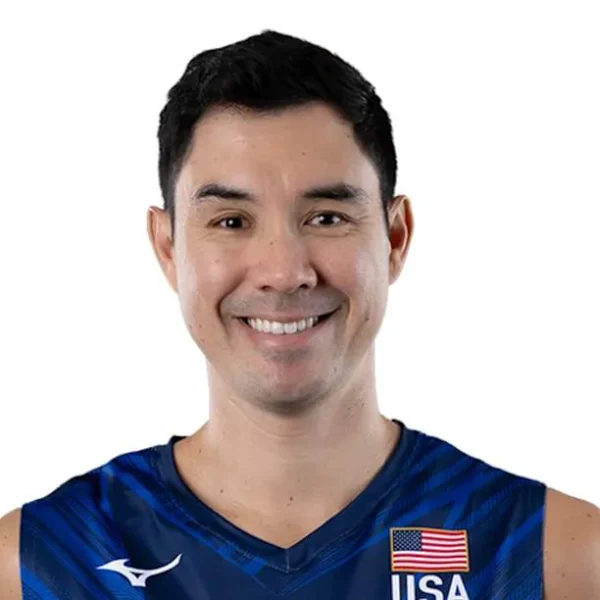
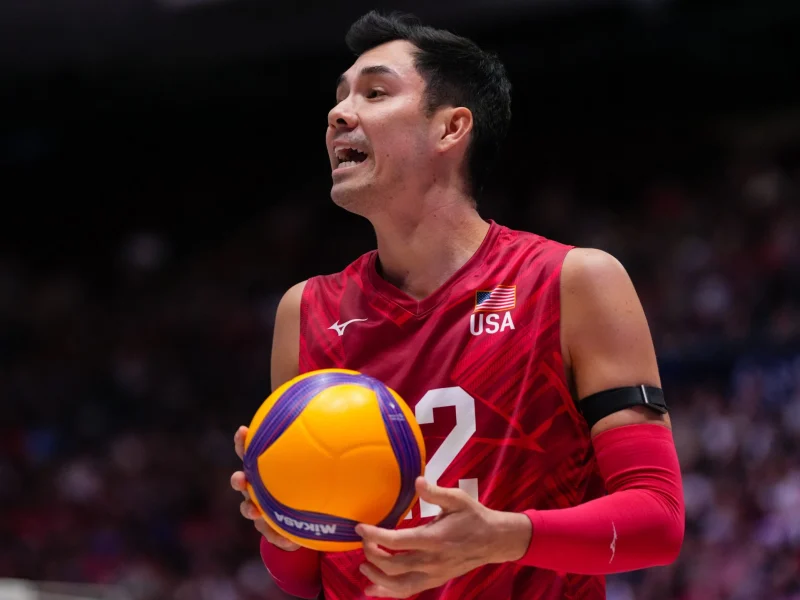
Erik Thomas Shoji (born August 24, 1989) is an American volleyball player who plays as a libero for Berlin Recycling Volleys and the United States Men’s National Volleyball Team. Born and raised in Honolulu, Hawaii, the 184 cm defender has represented the U.S. senior team since 2013 and has competed at three Olympic Games, winning bronze medals at Rio 2016 and Paris 2024.
Shoji’s career has combined sustained international success with more than a decade in European club volleyball. He won the 2014 World League and 2015 World Cup with the United States, earned World Championship bronze in 2018 and has collected four VNL medals. At club level, he won the CEV Cup during his first spell in Berlin and later became a two-time CEV Champions League winner with ZAKSA Kędzierzyn-Koźle. In 2026, after a season with Asseco Resovia, he returned to Berlin and added another major international honor by being named MVP of the NORCECA Continental Championship.
Player Information
| Information | Details |
|---|---|
| Full Name | Erik Thomas Shoji |
| Date of Birth | August 24, 1989 |
| Born | Honolulu, Hawaii, United States |
| Nationality | American |
| High School | Punahou School |
| College / University | Stanford University |
| Position | Libero |
| Height | 184 cm |
| Weight | 80 kg |
| Spike Reach | 317 cm |
| Previous Clubs | CV Mitteldeutschland, Hypo Tirol Innsbruck, Berlin Recycling Volleys, Lokomotiv Novosibirsk, Top Volley Latina, Fakel Novy Urengoy, ZAKSA Kędzierzyn-Koźle, Asseco Resovia Rzeszów |
| Current Club | Berlin Recycling Volleys |
| Club Number | 22 |
| National Team | United States Men’s National Volleyball Team |
| National-Team Number | 22 |
| Senior National Team Since | 2013 |
| @erikshoji |
Early Life & Volleyball Beginnings
Volleyball was part of Shoji’s life long before it became his profession. His father, Dave Shoji, coached the University of Hawai‘i women’s volleyball program for more than four decades, won four national championships and retired as the winningest coach in NCAA Division I women’s volleyball history. His mother, Mary, played basketball at the University of Hawai‘i, while his older brother Kawika went on to become a Stanford setter and U.S. national-team player. His sister Cobey also worked within Stanford volleyball as director of operations for the women’s program.
Erik began playing volleyball at Honolulu’s Outrigger Canoe Club in 1998. At Punahou School, he developed into a high-level multi-sport athlete while establishing himself as one of the leading young defensive players in American boys’ volleyball. Punahou reached four consecutive state championship matches during his high-school career and won three straight titles from 2005 through 2007. With Outrigger, Shoji earned All-Tournament recognition after the club finished second in the 17s division at the 2006 Boys Junior National Championships.
His youth international career developed alongside that success. Shoji represented the United States at the 2007 FIVB U19 World Championship, where he was named Best Digger, and won bronze with the U.S. at the 2008 NORCECA U21 Championship while receiving Best Receiver, Best Defender and Best Libero honors.
Stanford and a Record-Setting College Career
Shoji joined Stanford in 2009 and immediately became one of the most accomplished defensive players in NCAA men’s volleyball. As a freshman, he was named AVCA Newcomer of the Year and earned First Team All-America honors alongside Kawika, making the brothers part of a rare family achievement at the highest level of the college game.
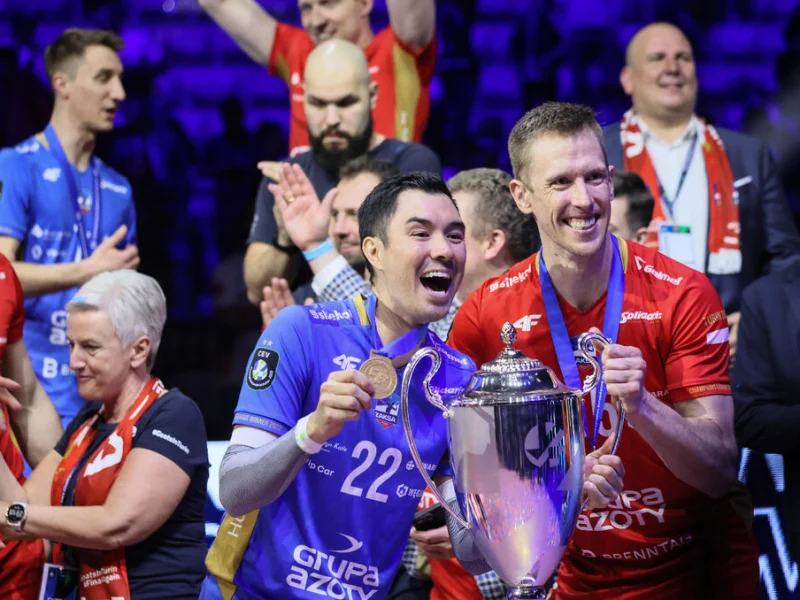
Stanford won the NCAA championship in 2010 with both brothers on the roster. Erik continued as the Cardinal’s starting libero after Kawika graduated and ultimately became the first player in AVCA men’s volleyball history to earn First Team All-America honors four times.
By the end of his senior season in 2012, Shoji held the collegiate and Stanford career record with 1,402 digs. He also finished with Stanford records of 3.16 digs per set and 443 sets played, while owning the four highest single-season dig totals in program history at the time. Stanford head coach John Kosty described him as the greatest libero in collegiate volleyball history, and Shoji received the Biff Hoffman Award as Stanford’s Outstanding Male Senior.
Club Career
Starting a Professional Career in Europe
Shoji moved directly to Europe after Stanford, beginning his professional career with CV Mitteldeutschland in Germany in 2012–13. One year later he joined Hypo Tirol Innsbruck in Austria before returning to Germany for what became an important first spell with Berlin Recycling Volleys.
Berlin gave Shoji his first extended experience with a club competing for major domestic and European honors. He helped the team reach the bronze-medal position at the 2015 CEV Champions League Final Four and was part of a historic 2015–16 campaign in which Berlin won the German championship, German Cup and CEV Cup.
The CEV Cup victory was particularly significant because it gave Shoji his first major European club trophy. By the time he left Berlin in 2016, he had also become an established U.S. international and an Olympic bronze medalist.
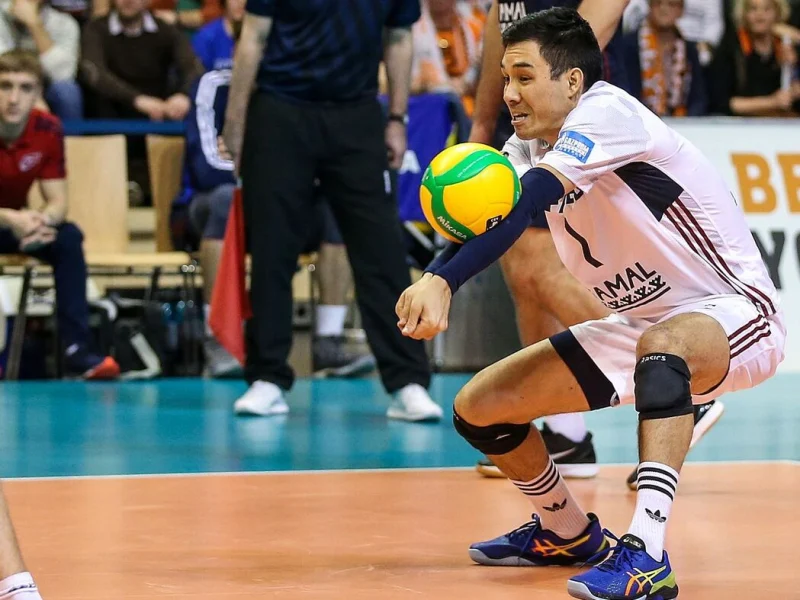
Russia, Italy and the Club World Championship
Shoji moved to Lokomotiv Novosibirsk for 2016–17, beginning the first of two periods in Russia. He spent the following season with Top Volley Latina in Italy before signing with Fakel Novy Urengoy in 2018.
His three seasons with Fakel brought another international club medal. Fakel finished third at the 2018 FIVB Club World Championship, placing Shoji on the podium against a field containing several of the strongest clubs in world volleyball.
Those years also reinforced the demands of the libero position across different volleyball systems. Shoji had moved from NCAA volleyball into leagues in Germany and Austria, then through Russia and Italy, while continuing to play major tournaments with the United States. By 2021, he had nearly a decade of professional experience when he moved to Poland.
Champions League Success with ZAKSA
Shoji joined ZAKSA Kędzierzyn-Koźle before the 2021–22 season and entered the most decorated club period of his career. His first campaign ended with a triple of the Polish Cup, PlusLiga championship and CEV Champions League title.
ZAKSA repeated as European champion in 2023. Shoji therefore became a back-to-back Champions League winner, adding a second Polish Cup in the same season as well as a PlusLiga silver medal. Later in 2023, ZAKSA also won the Polish Super Cup.
He ultimately spent four seasons with the club. When ZAKSA announced his departure in 2025, the club highlighted not only his two Champions League titles but his role as a stabilizing presence in the team’s defensive structure. The period established Poland as the longest continuous stop of Shoji’s professional career to that point.
Asseco Resovia and a Return to Berlin
Shoji remained in Poland for 2025–26, joining Asseco Resovia Rzeszów. The roster featured unusual depth at libero, which limited his playing time compared with the central role he had held through much of his ZAKSA period.
Berlin Recycling Volleys announced his return in July 2026, exactly a decade after his first spell with the club ended. In the club’s official return announcement, Shoji described Berlin as the club that had helped provide a springboard into Europe’s top leagues and said he hoped to contribute experience, positive energy and leadership in the back court.
The transfer also gave Shoji another opportunity to compete in Germany while pursuing a longer-term international objective: he has publicly said he hopes to remain in contention for the Los Angeles 2028 Olympic Games.
Club Career Timeline
| Seasons | Team | Country |
|---|---|---|
| 2009–2012 | Stanford Cardinal | United States |
| 2012–2013 | CV Mitteldeutschland | Germany |
| 2013–2014 | Hypo Tirol Innsbruck | Austria |
| 2014–2016 | Berlin Recycling Volleys | Germany |
| 2016–2017 | Lokomotiv Novosibirsk | Russia |
| 2017–2018 | Top Volley Latina | Italy |
| 2018–2021 | Fakel Novy Urengoy | Russia |
| 2021–2025 | ZAKSA Kędzierzyn-Koźle | Poland |
| 2025–2026 | Asseco Resovia Rzeszów | Poland |
| 2026–present | Berlin Recycling Volleys | Germany |
National Team Career
Shoji joined the U.S. senior national team in 2013 after progressing through American youth, junior and collegiate international teams. His first senior season already produced individual recognition: the United States took bronze at the NORCECA Continental Championship, while Shoji was named Best Libero, Best Passer and Best Defender.
The following year brought his first major global team title. The United States won the 2014 World League, and Shoji also collected MVP, Best Libero, Best Digger and Best Receiver honors at the NORCECA World Championship Qualifier. In 2015, the U.S. won the FIVB World Cup and Shoji was named Best Libero.
Rio 2016 and the First Olympic Bronze
Shoji made his Olympic debut at Rio 2016 alongside his brother Kawika. The United States recovered from a difficult start to the tournament, reached the semifinals and defeated Russia in five sets in the bronze-medal match.
Erik finished the tournament first among all Olympic players in digs at 1.81 per set and second in reception. Those numbers reflected the role he had taken within a U.S. team that relied heavily on its defensive organization and transition game.
Winning bronze together also gave the Shoji brothers a rare family accomplishment at the Olympic level. Their careers had already overlapped at Stanford, but Rio placed them on the same medal-winning senior national team.
World Championship Bronze and VNL Recognition
The United States returned to a global podium at the 2018 World Championship, taking bronze after losing only one match during the tournament. Shoji also helped the U.S. earn bronze in the inaugural 2018 Volleyball Nations League.
His 2019 VNL was one of the clearest statistical examples of his value as a libero. The United States won silver, while Shoji ranked among the tournament’s leading receivers and diggers and was selected as Best Libero on the competition’s Dream Team. Volleyball World credited him with 18.03 percent reception efficiency and 1.50 digs per set during that campaign.
Shoji later competed at the Tokyo Olympics, where the United States finished tenth, before helping the national team return to the VNL medal positions with consecutive silver medals in 2022 and 2023.
The 2023 international season also included a NORCECA Continental Championship gold medal. Shoji was named Best Receiver as the United States won the regional title and later secured qualification for the Paris Olympics.
Paris 2024 and a Second Olympic Medal
Paris 2024 was Shoji’s third Olympic Games. The United States advanced through the tournament to the semifinals before losing a five-set match to Poland, setting up a bronze-medal meeting with reigning world champion Italy.
The U.S. won the bronze match in straight sets. Shoji led all players with 12 digs, repeatedly extending rallies behind a block that also produced nine points. The result gave him a second Olympic bronze medal eight years after Rio.
The medal strengthened a national-team résumé already containing podium finishes at the Olympics, World Championship, World Cup, World League, VNL and NORCECA Championship.
Captaincy and the 2026 International Season
USA Volleyball lists Shoji as having served as team captain in 2025. He remained part of the senior program in 2026 and played through all three preliminary weeks of the Volleyball Nations League before traveling to the Finals in China.
The United States defeated Italy in the quarterfinal and previously unbeaten Japan in a five-set semifinal before Poland won the championship match 3–2. Shoji therefore collected another VNL silver medal, adding to those earned in 2019, 2022 and 2023.
His national-team season ended with an individual milestone at the 2026 NORCECA Men’s Continental Championship in Canada. The U.S. went undefeated and defeated Canada 3–2 in the final, completing the international season with a 28–6 record. Shoji was named tournament MVP, an unusual and significant distinction for a libero in a competition whose award pool also included the primary scoring positions.
Playing Style & Strengths
Shoji’s career has been built around first-contact stability, defensive reading and the ability to keep rallies playable under pressure. Rather than treating reception and digging as isolated skills, his value comes from how consistently those contacts allow the setter and attackers to operate afterward.
His reading of the game was evident before he reached the professional level. At Stanford, John Kosty highlighted Shoji’s ability to read both the hitter and the block, along with his court awareness, technique and hand speed. Those traits became increasingly important as he moved into international volleyball, where attacking speed leaves liberos very little time to react after the ball crosses the net.
Serve reception has been one of his most durable strengths. His Rio 2016 performance placed him second among Olympic receivers, while his 2019 VNL Best Libero award came during a tournament in which he ranked near the top in both reception and digging. In 2023, NORCECA recognized him specifically as Best Receiver.
Shoji also plays with an unusually visible emotional presence for a libero. He communicates constantly, celebrates defensive plays and often becomes one of the players setting the energy of the back court. Berlin identified his positivity and leadership as important reasons for bringing him back in 2026, while Shoji described himself as capable of providing experience and leadership particularly in defensive play.
Longevity has required adaptation as well. Shoji has played in five European countries and across different tactical systems while remaining with the U.S. national team for more than a decade. His effectiveness has depended less on physical size than on anticipation, movement efficiency, platform control and the ability to remain technically stable against elite serving.
Major Achievements
Selected National Team Honors
| Year | Competition | Result |
|---|---|---|
| 2013 | NORCECA Continental Championship | Bronze |
| 2014 | FIVB World League | Gold |
| 2015 | FIVB World Cup | Gold |
| 2016 | Olympic Games | Bronze |
| 2018 | FIVB World Championship | Bronze |
| 2018 | Volleyball Nations League | Bronze |
| 2019 | Volleyball Nations League | Silver |
| 2019 | FIVB World Cup | Bronze |
| 2022 | Volleyball Nations League | Silver |
| 2023 | Volleyball Nations League | Silver |
| 2023 | NORCECA Continental Championship | Gold |
| 2024 | Olympic Games | Bronze |
| 2026 | Volleyball Nations League | Silver |
| 2026 | NORCECA Continental Championship | Gold |
Selected College Honors
| Year | Team | Competition | Result |
|---|---|---|---|
| 2010 | Stanford Cardinal | NCAA Championship | Champion |
Selected Club Honors
| Year / Season | Team | Competition | Result |
|---|---|---|---|
| 2015 | Berlin Recycling Volleys | CEV Champions League | Bronze |
| 2015–16 | Berlin Recycling Volleys | German Championship | Champion |
| 2015–16 | Berlin Recycling Volleys | German Cup | Champion |
| 2015–16 | Berlin Recycling Volleys | CEV Cup | Champion |
| 2018 | Fakel Novy Urengoy | FIVB Club World Championship | Bronze |
| 2021–22 | ZAKSA Kędzierzyn-Koźle | PlusLiga | Champion |
| 2021–22 | ZAKSA Kędzierzyn-Koźle | Polish Cup | Champion |
| 2021–22 | ZAKSA Kędzierzyn-Koźle | CEV Champions League | Champion |
| 2022–23 | ZAKSA Kędzierzyn-Koźle | Polish Cup | Champion |
| 2022–23 | ZAKSA Kędzierzyn-Koźle | CEV Champions League | Champion |
| 2022–23 | ZAKSA Kędzierzyn-Koźle | PlusLiga | Runner-up |
| 2023 | ZAKSA Kędzierzyn-Koźle | Polish Super Cup | Champion |
Selected Individual Awards
| Year | Competition / Organization | Award |
|---|---|---|
| 2009 | AVCA | Newcomer of the Year |
| 2009–2012 | AVCA | First Team All-American — four consecutive selections |
| 2013 | NORCECA Continental Championship | Best Libero |
| 2013 | NORCECA Continental Championship | Best Passer |
| 2013 | NORCECA Continental Championship | Best Defender |
| 2014 | NORCECA World Championship Qualifier | MVP |
| 2014 | NORCECA World Championship Qualifier | Best Libero |
| 2015 | FIVB World Cup | Best Libero |
| 2019 | Volleyball Nations League | Best Libero |
| 2023 | NORCECA Continental Championship | Best Receiver |
| 2026 | NORCECA Continental Championship | MVP |
Personal Life & Interests
Shoji comes from one of the best-known volleyball families in Hawaii. His father Dave’s long coaching career at the University of Hawai‘i put Erik and his siblings around high-level volleyball from an early age, while Kawika’s own career eventually carried both brothers from Stanford to the U.S. national team and the Olympic podium.
Hawaii remains an important part of Shoji’s public identity. In a 2024 interview with HONOLULU Magazine, he spoke about the islands’ volleyball culture and described representing his family and his home state as one of the motivations that continues to matter to him late in his career.
Shoji has also used his platform to discuss inclusion in volleyball. In 2022, he served as an ambassador for Volleyball World’s Equal Jersey campaign, arguing that players and fans should be able to participate in the sport regardless of their background or story.
In June 2025, Shoji publicly came out as queer through a video shared on his social channels. A year later, in a 2026 interview with Outsports, he described feeling greater freedom after making that part of his life public and said he hoped his visibility could help younger athletes feel more comfortable being themselves.
That public profile extends well beyond matches. Shoji has built a substantial following through social media, where his content mixes professional volleyball, travel and everyday life. Berlin also highlighted that reach when announcing his return, describing him as an important ambassador for the sport as well as an experienced player.
Where Is Erik Shoji Playing Now?
Shoji plays for Berlin Recycling Volleys in the German Bundesliga for the 2026–27 season. The club’s current first-team roster lists him as its No. 22 libero.
His return came ten years after the end of his first Berlin spell. That earlier period finished with the 2016 German championship, German Cup and CEV Cup, while the years between the two Berlin chapters took him through Russia, Italy and Poland and included two Champions League titles with ZAKSA.
The 2026 transfer followed one season at Asseco Resovia. Berlin described Shoji as a player expected to provide stability, experience and leadership within a reworked roster, while Shoji said returning to a familiar club and city felt like the right next step.
He also remains active with the United States Men’s National Volleyball Team. His 2026 international season included VNL silver followed by NORCECA gold and the tournament MVP award. Shoji has said that representing the United States at the Los Angeles 2028 Olympic Games remains a goal as he continues his career.
Recent Performance Snapshot
Shoji’s 2026 international season demonstrated that he remained central to the U.S. libero group more than a decade after his senior debut. He was selected throughout the VNL preliminary phase and remained on the roster for the Finals, where the United States reached the championship match and finished second to Poland.
The NORCECA Continental Championship provided an even stronger finish. The United States completed the tournament unbeaten and defeated Canada in five sets in the final. Shoji made a key late defensive play before the match-ending U.S. attack and was subsequently selected as the tournament’s Most Valuable Player.
The award was notable not simply because of his age or length of service, but because liberos rarely accumulate the scoring totals that make other positions more visible in individual-award voting. His recognition reflected the weight placed on his defensive performance across the tournament.
Frequently Asked Questions
How old is Erik Shoji?
Erik Shoji was born on August 24, 1989. He is 37 years old during the 2026–27 club season.
How tall is Erik Shoji?
Shoji is 184 cm tall, approximately 6-foot-0.
What position does Erik Shoji play?
Shoji is a libero. His responsibilities center on serve reception, digging, back-court organization and helping turn defensive contacts into playable transition opportunities.
Which club does Erik Shoji play for?
Shoji returned to Berlin Recycling Volleys for the 2026–27 season after spending 2025–26 with Asseco Resovia Rzeszów in Poland.
What number does Erik Shoji wear?
Shoji wears No. 22 for both Berlin Recycling Volleys and the United States Men’s National Volleyball Team.
How many Olympics has Erik Shoji played in?
Shoji has played at three Olympic Games: Rio 2016, Tokyo 2020 and Paris 2024.
How many Olympic medals has Erik Shoji won?
Shoji has won two Olympic bronze medals with the United States, at Rio 2016 and Paris 2024.
How many Champions League titles has Erik Shoji won?
Shoji won the CEV Champions League twice with ZAKSA Kędzierzyn-Koźle, in 2022 and 2023.
Is Erik Shoji still playing for Team USA?
Yes. Shoji remained active with the United States in 2026, winning VNL silver and the NORCECA Continental Championship. He was named MVP of the NORCECA tournament.
Is Kawika Shoji related to Erik Shoji?
Yes. Kawika Shoji is Erik’s older brother. Both played volleyball at Stanford and represented the United States, and they won Olympic bronze together at Rio 2016.
References
- USA Volleyball — Erik Shoji athlete profile
- Volleyball World — Erik Shoji 2026 Volleyball Nations League player profile
- Berlin Recycling Volleys — Current first-team roster
- Berlin Recycling Volleys — Erik Shoji returns to Berlin for 2026–27
- Berlin Recycling Volleys — Erik Shoji and Team USA win 2026 VNL silver
- CEV — Asseco Resovia roster for the 2026 Champions League
- Stanford Athletics — Erik Shoji player profile
- Stanford Athletics — Shoji brothers named First Team All-Americans
- USA Volleyball — Erik Shoji leads Rio 2016 Olympic diggers
- USA Volleyball — U.S. Men win bronze at Paris 2024
- Volleyball World — Erik Shoji named Best Libero after the 2019 VNL
- USA Volleyball — U.S. Men’s roster for the 2026 VNL Final
- USA Volleyball — U.S. Men win the 2026 NORCECA Continental Championship
- ZAKSA Kędzierzyn-Koźle — Erik Shoji extends his stay with ZAKSA
- ZAKSA Kędzierzyn-Koźle — Erik Shoji leaves after four seasons
- Volleyball World — Erik Shoji: Everyone should be able to play
- HONOLULU Magazine — Paris Bound: A Conversation With Volleyball Star Erik Shoji
- Outsports — Erik Shoji on life after coming out and his return to Berlin