
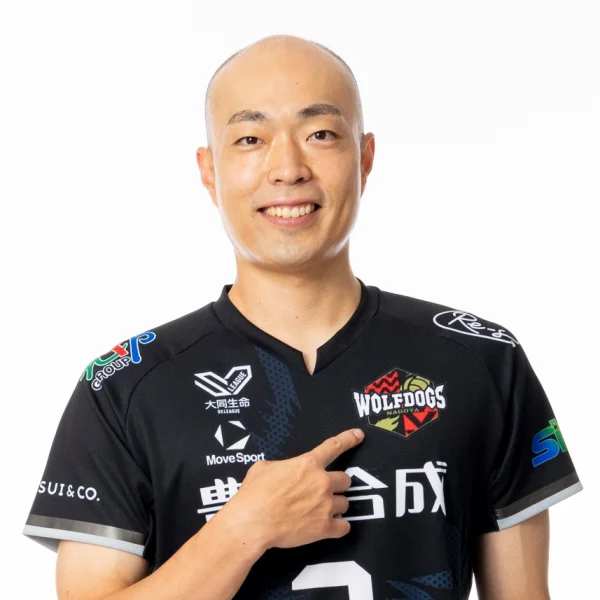
Hideomi Fukatsu has built one of the longest and most unusual setter careers in modern Japanese volleyball. The Aichi-born playmaker spent 12 seasons with Panasonic Panthers, won multiple domestic championships, captained both club and country, and was Japan’s Best Setter at the 2015 Asian Championship. He later moved to Wolfdogs Nagoya in 2024, extending a top-flight career that had already crossed several eras of Japanese men’s volleyball.
His international story gained a new chapter in 2026. At 36, Fukatsu returned to A-team competition after roughly seven years away and became a major part of Laurent Tillie’s Japan side. He appeared through every stage of the 2026 Volleyball Nations League as Japan finished fourth, then started Japan’s run to the Asian Championship title in Fukuoka. The championship secured Japan a place at the Los Angeles 2028 Olympics, while Fukatsu was selected as the tournament’s Best Setter.
Player Information
| Attribute | Detail |
|---|---|
| Full Name | Hideomi Fukatsu |
| Japanese Name | 深津 英臣 |
| Date of Birth | June 1, 1990 |
| Nationality | Japanese |
| Place of Birth | Toyota, Aichi Prefecture, Japan |
| Position | Setter |
| Height | 181 cm (5 ft 11 in) |
| Weight | 77 kg (170 lb) |
| Maximum Reach | 320 cm in his 2026 national-team player listing |
| Block Jump Reach | 305 cm |
| Dominant Hand | Left |
| High School | Seijoh High School |
| University | Tokai University |
| Previous Club | Panasonic Panthers — now Osaka Bluteon (2012/13–2023/24) |
| Current Club | Wolfdogs Nagoya |
| Club Number | 3 |
| National Team | Japan Men’s National Volleyball Team |
| National-Team Number | 3 in the 2026 VNL and Asian Championship |
| Brothers | Akihiro Fukatsu and Takayuki Fukatsu |
Current club and league sources list Fukatsu at 181 cm, while Wolfdogs Nagoya gives his current weight as 77 kg. A 2026 Japanese national-team player guide lists a 320 cm maximum reach and a 305 cm block-jump reach. Historical measurements have varied across competition listings, reflecting changes between older and newer player records.
Early Life & Volleyball Beginnings
Fukatsu was born in Toyota, Aichi Prefecture, and grew up in a family closely tied to volleyball. He is the youngest of three brothers, behind Akihiro and Takayuki Fukatsu, and all three developed into high-level volleyball figures. J SPORTS notes that the brothers began playing while they were in elementary school, giving Hideomi a competitive volleyball environment from an early age.
At Seijoh High School, Fukatsu played setter and also served as captain. His school career included an Inter-High championship that gave Seijoh its first national title. He then moved to Tokai University, following a pathway also taken by his brothers. There he became the regular setter and helped Tokai win the All-Japan Intercollegiate Championship.
One influence followed him into the professional game: former Japan setter Daisuke Usami. Fukatsu later said that Usami was the setter he had admired, and when Fukatsu joined Panasonic he inherited the No. 2 jersey previously worn by him. Internationally, Fukatsu also singled out Iran’s Saeid Marouf as a setter he respected for combining composure with an aggressive approach to running an offense. His discussion of those influences in a 2015 interview offers a useful window into the type of setter he was trying to become. Volleyball Magazine — 2015 Hideomi Fukatsu interview
Club Career
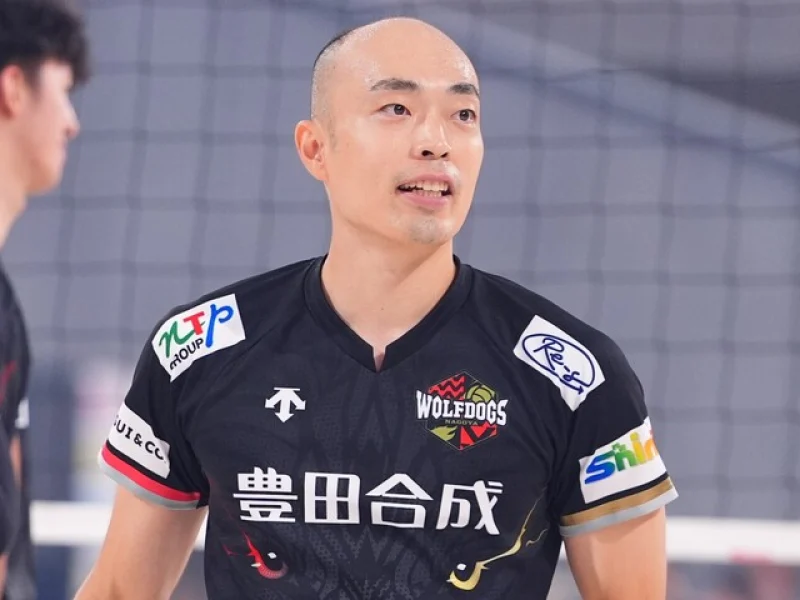
Panasonic Panthers: Twelve Seasons at the Center of the Offense
Fukatsu joined Panasonic Panthers for the 2012/13 season and remained with the organization through 2023/24. His rise was fast. By 2013/14 he was operating as the starting setter as Panasonic won the V.Premier League championship, and the league recognized him with both a Best 6 selection and its Rookie of the Year award.
That first title developed into a long period of domestic success. Fukatsu remained an important part of Panasonic teams that repeatedly reached the final stages of Japan’s major competitions. The defining season came in 2017/18, when Panasonic won the Emperor’s Cup, the V.Premier League and the Kurowashiki Tournament to complete a domestic triple crown. It was the third triple crown in the club’s history, and Fukatsu was among the Kurowashiki Best 6 selections. Panasonic then won the newly structured V.LEAGUE Division 1 again in 2018/19.
His role during that era went beyond distributing the ball. Fukatsu also captained Panasonic, including during the 2017 Emperor’s Cup title run. Leadership was not new to him: in an interview during his captaincy years, he explained that he had served as a captain from elementary school through middle school, high school and university. At Panasonic, that responsibility meant communicating across a roster with a wider range of ages and personalities while still managing the tactical demands of the setter position.
By the time his Panasonic tenure ended in 2024, Fukatsu had spent 12 seasons with the club. His departure closed a period that had included league championships, cup titles, the 2017/18 triple crown and multiple individual recognitions. Rather than signaling retirement, however, the move opened another competitive chapter.
Wolfdogs Nagoya: A New Challenge After Panasonic
Wolfdogs Nagoya announced Fukatsu’s arrival in July 2024. The transfer kept him in Japan’s top division but placed him in a different system after more than a decade with one organization. Fukatsu later explained that one reason Wolfdogs appealed to him was the club’s ambition to help lead Japanese volleyball and its willingness to keep trying new things. He also emphasized that he still wanted to develop as a player, with stable setting identified as one of the qualities expected from him. Volleyball Magazine — Fukatsu on joining Wolfdogs Nagoya and continuing to grow as a setter
His first SV.League season with Wolfdogs brought another individual recognition. Fukatsu was selected as the setter in the 2024/25 regular-season Best 6. He remained a major part of the lineup in 2025/26 as Wolfdogs finished fourth overall and reached the Championship semifinals, where their season ended against Suntory Sunbirds Osaka.
Wolfdogs then renewed his contract for 2026/27. The club’s current roster continues to list Fukatsu as No. 3, making his Wolfdogs period more than a short late-career stop: it has become another sustained phase of his professional career.
Club Career Timeline
| Seasons | Team | Country |
|---|---|---|
| High school years | Seijoh High School | Japan |
| University years | Tokai University | Japan |
| 2012/13–2023/24 | Panasonic Panthers | Japan |
| 2024/25–Present | Wolfdogs Nagoya | Japan |
National Team Career
Fukatsu’s senior Japan career stretches back to the first half of the 2010s. In a 2014 interview, he described that season as his first experience with the senior national team, entering it after establishing himself domestically with Panasonic. By 2015 he had become Japan’s main setter at the Asian Championship in Tehran, where Japan defeated Iran in the final to win the continental title. Fukatsu was named Best Setter of the tournament.
He also played in the 2015 World Cup and the 2016 Olympic qualification campaign. Japan failed to qualify for the Rio Olympics, an experience that remained significant in Fukatsu’s career. His next major international peak came in 2017, when he was appointed Japan captain. Japan won another Asian Championship that summer, and the JVA specifically recorded Fukatsu addressing supporters as captain after the title. He also captained Japan at the 2017 World Grand Champions Cup.
The following years took a different direction. Fukatsu moved away from the center of Japan’s A-team plans and missed both the Tokyo and Paris Olympic cycles. By his own later account, there were periods when he considered giving up on another national-team return. Instead, he continued refining his game in the domestic league. In 2026, at 36, he returned to A-team competition after approximately seven years. Reporting around the comeback described a setter who had reassessed the gap between emotional intensity and the technical level required internationally, then spent the intervening years improving the latter. TBS News DIG — Fukatsu on returning to Japan after seven years and redefining his role as a setter
The comeback quickly became more than a symbolic selection. Fukatsu was part of every phase of Japan’s 2026 VNL campaign, from the preliminary rounds through the Finals. Japan reached the semifinals before losing to the United States, then fell to Slovenia in the bronze-medal match to finish fourth. Fukatsu started the third-place match and finished the tournament as one of Japan’s primary setters.
Japan’s central objective in 2026, however, was the Asian Championship because the continental winner would receive an automatic berth at the Los Angeles 2028 Olympics. In September, Fukatsu started throughout the knockout phase, including the semifinal win over Korea and the final against Iran. Japan won the final 3–0, secured the Olympic quota, and Fukatsu was subsequently named Best Setter. Eleven years after receiving the same individual award at the 2015 Asian Championship, he had again directed an Asian-title-winning Japan team.
Playing Style & Strengths
Fukatsu’s game is built more around control, reading and variation than physical size. At 181 cm, he is shorter than many international front-row players, so his value as a setter comes from how quickly he processes a rally, how he organizes his attackers and how effectively he manages difficult phases of a match.
His setting has long been associated with variety rather than repeatedly leaning on one high-volume attacker. Fukatsu can change the rhythm between the pins and the middle, use quick combinations to keep opposing blockers from settling, and adjust the height or speed of his release depending on the quality of the first contact. His left-handedness also gives him a natural attacking option near the net, adding another decision for blockers to read.
The most revealing description of his later-career identity comes from Fukatsu himself. During Japan’s 2026 VNL campaign, he explained that he sees his greatest responsibility not when an offense is already functioning smoothly, but when the team is under severe pressure. In those moments, his job is to use communication and distribution to restore control. That philosophy helps explain why Japan brought an experienced setter back into a roster containing several elite attackers: the value is not simply the quality of an individual set, but the management of the six-player system when a match becomes unstable.
That approach also fits the setters Fukatsu admired earlier in his career. He cited Daisuke Usami as a formative model and praised Saeid Marouf for playing calmly against any opponent while still remaining aggressive with his choices. Fukatsu’s own career has increasingly combined those ideas: steady delivery, tactical patience and a willingness to change the offensive picture before an opponent becomes comfortable.
Major Achievements
Selected National Team Honors
| Year | Competition | Result |
|---|---|---|
| 2015 | Asian Men’s Volleyball Championship | Gold |
| 2017 | Asian Men’s Volleyball Championship | Gold — Japan captain |
| 2026 | Volleyball Nations League | 4th place |
| 2026 | Asian Men’s Volleyball Championship | Gold — secured Los Angeles 2028 Olympic qualification |
Fukatsu’s Asian Championship career is particularly notable. He was part of Japan’s championship teams in 2015, 2017 and 2026, with significantly different responsibilities in each period: emerging first-choice setter, national-team captain, and later-career veteran returning after years away from A-team competition.
Selected Club Honors
| Season / Year | Competition | Result |
|---|---|---|
| 2013/14 | V.Premier League | Champion |
| 2017 | Emperor’s Cup | Winner |
| 2017/18 | V.Premier League | Champion |
| 2018 | Kurowashiki Tournament | Winner — completed Panasonic’s domestic triple crown |
| 2018/19 | V.LEAGUE Division 1 | Champion |
| 2023 | Emperor’s Cup | Winner |
| 2023/24 | V.LEAGUE Division 1 | Runner-up |
Panasonic’s official club history records the 2017/18 Emperor’s Cup, league and Kurowashiki sweep as the organization’s third domestic triple crown, followed by another league championship in 2018/19. Fukatsu remained with Panasonic through the club’s 2023 Emperor’s Cup victory and its runner-up league finish in 2023/24.
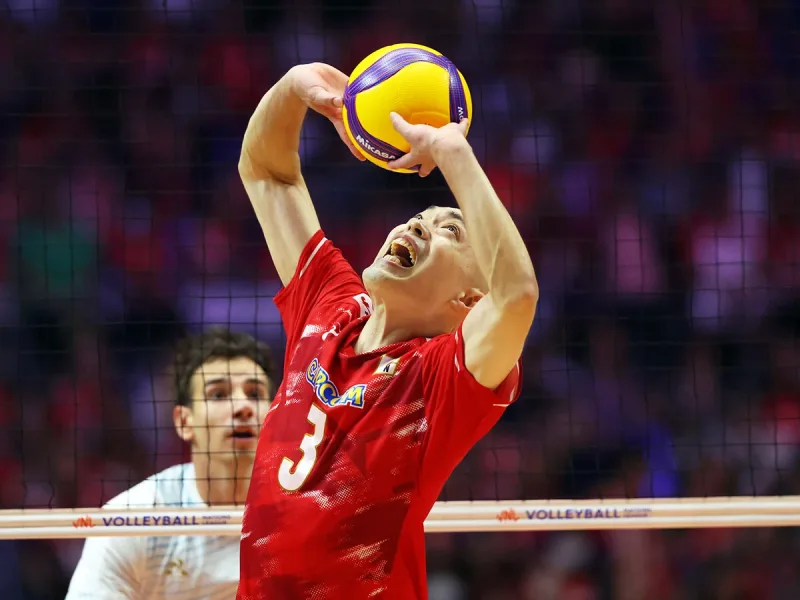
Selected Individual Awards
| Year / Season | Competition | Award |
|---|---|---|
| 2013/14 | V.Premier League | Rookie of the Year |
| 2013/14 | V.Premier League | Best 6 |
| 2015 | Asian Men’s Volleyball Championship | Best Setter |
| 2018 | Kurowashiki Tournament | Best 6 |
| 2024/25 | Daido Life SV.LEAGUE | Regular Season Best 6 — Setter |
| 2026 | Asian Men’s Volleyball Championship | Best Setter |
The gap between Fukatsu’s two Asian Championship Best Setter awards is one of the clearest measures of his longevity: the first came in 2015, while the second arrived in 2026 after his return to Japan’s senior team.
Personal Life & Interests
Volleyball runs through the Fukatsu family. Hideomi is the youngest of three brothers: Akihiro Fukatsu is also a setter and has played at the highest level of Japanese club volleyball, while Takayuki Fukatsu moved into coaching and is currently listed as Wolfdogs Nagoya’s first coach. All three followed the Seijoh High School–Tokai University pathway.
The unusual family connection became especially visible after Hideomi joined Wolfdogs. With Hideomi playing and Takayuki coaching for Wolfdogs while Akihiro represented Tokyo Great Bears, the three brothers could all be involved in the same top-flight match environment. Hideomi described that situation as meaningful because, although he had faced Akihiro many times, having all three brothers participating in one match in their different roles was new.
Wolfdogs’ own player profile gives a few lighter details about Fukatsu away from match analysis. His nickname is “Omi,” his listed favorite food is ramen, and when asked what he finds interesting about volleyball, he points to the difficulty of keeping the ball from touching the floor, connecting the play and ultimately turning that sequence into a point.
Where Is Hideomi Fukatsu Playing Now?
As of September 2026, Fukatsu remains an active setter for Wolfdogs Nagoya in Japan’s SV.League. Wolfdogs confirmed his contract renewal for the 2026/27 season in June, and the club’s current roster lists him as No. 3. That renewal follows two seasons in Nagoya after his 2024 move from Panasonic.
He also remains a registered member of the 2026 Japan Men’s National Volleyball Team. His international season included the entire VNL campaign, where Japan finished fourth, and the Asian Championship in September. Fukatsu started Japan’s major knockout matches in Fukuoka, including the final, as Japan defeated Iran in straight sets to win the continental championship and secure its Los Angeles 2028 Olympic berth. He finished the tournament with the Best Setter award.
Recent Performance Snapshot
| Competition | Team Result | Fukatsu’s Role / Recognition |
|---|---|---|
| 2025/26 Daido Life SV.LEAGUE | Wolfdogs Nagoya finished 4th overall | Starting setter during Wolfdogs’ Championship semifinal run |
| 2026 Volleyball Nations League | Japan finished 4th | Selected for every stage; started the bronze-medal match |
| 2026 Asian Men’s Volleyball Championship | Japan won gold | Starting setter; Best Setter award; Japan secured LA 2028 qualification |
The 2026 international season is significant because Fukatsu’s return was not limited to veteran depth on the roster. He played through the VNL Finals and then held a central setting role during the tournament that delivered Japan’s Olympic qualification.
Frequently Asked Questions
How old is Hideomi Fukatsu?
Hideomi Fukatsu was born on June 1, 1990. He turned 36 in June 2026.
How tall is Hideomi Fukatsu?
Fukatsu is currently listed at 181 cm, or approximately 5 ft 11 in, by Wolfdogs Nagoya, the SV.League and the Japan Volleyball Association.
What position does Hideomi Fukatsu play?
He is a setter. His game is built around distribution, tempo management, reading the block and controlling difficult phases of a match.
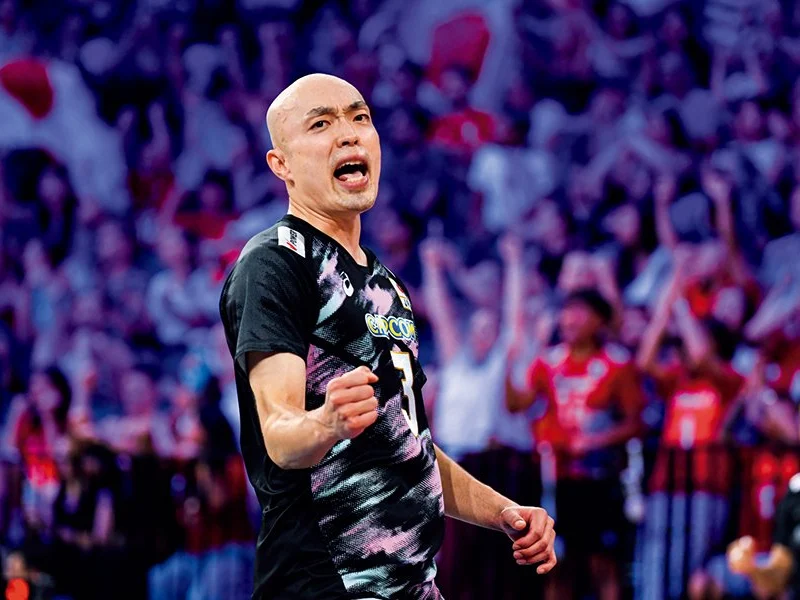
Which club does Hideomi Fukatsu play for?
Fukatsu plays for Wolfdogs Nagoya in Japan’s SV.League. The club renewed his contract for the 2026/27 season.
What number does Hideomi Fukatsu wear?
He wears No. 3 for Wolfdogs Nagoya and also wore No. 3 for Japan during the 2026 Volleyball Nations League and Asian Championship.
Are Akihiro Fukatsu and Hideomi Fukatsu brothers?
Yes. Akihiro is Hideomi’s older brother and is also a setter. Their brother Takayuki is a volleyball coach and currently works as first coach with Wolfdogs Nagoya.
Was Hideomi Fukatsu captain of Japan?
Yes. Fukatsu captained the Japan men’s national team in 2017, including during Japan’s Asian Championship-winning campaign and the World Grand Champions Cup.
Has Hideomi Fukatsu qualified for an Olympics?
Fukatsu played in Japan’s unsuccessful Rio 2016 qualification campaign but did not compete at the Tokyo or Paris Olympics. In September 2026, he helped Japan win the Asian Championship, a result that secured the country’s qualification place for the Los Angeles 2028 Olympics. That team qualification does not by itself guarantee an individual player a place on the eventual 2028 Olympic roster.
References
- Wolfdogs Nagoya — Hideomi Fukatsu official player profile
- Wolfdogs Nagoya — 2026/27 contract renewal announcement
- Japan Volleyball Association — 2026 Japan Men’s National Team registered players
- Japan Volleyball Association — Volleyball Nations League 2026 results
- Japan Volleyball Association — 2026 Asian Men’s Volleyball Championship results
- Japan Volleyball Association — 2015 Asian Men’s Volleyball Championship results and individual awards
- Japan Volleyball Association — Japan reports its 2017 Asian Championship title with Fukatsu as captain
- SV.League — Hideomi Fukatsu official player profile and records
- SV.League — 2024/25 annual awards
- J SPORTS — Hideomi Fukatsu player directory and career background
- Monthly Volleyball — 2026 Hideomi Fukatsu Japan player profile
- Monthly Volleyball — Panasonic announces Fukatsu’s departure after 12 seasons
- Volleyball Magazine — Hideomi Fukatsu interview on his setting influences and career development
- TBS News DIG — Hideomi Fukatsu on his seven-year Japan return and setter philosophy
- Volleyball King — 2026 Asian Championship individual awards