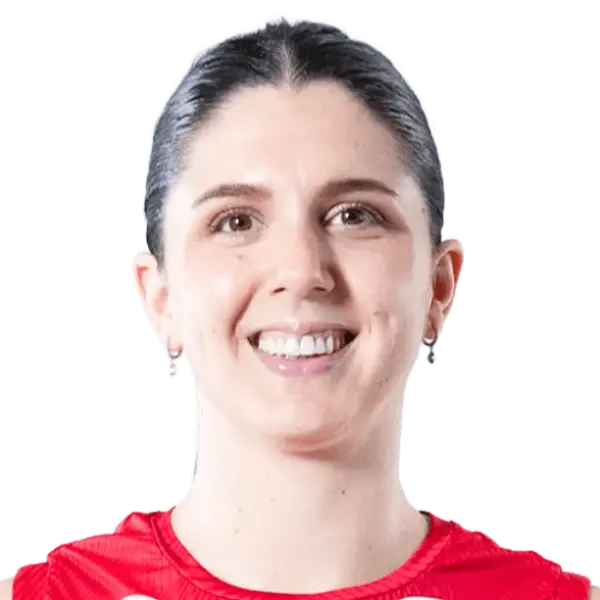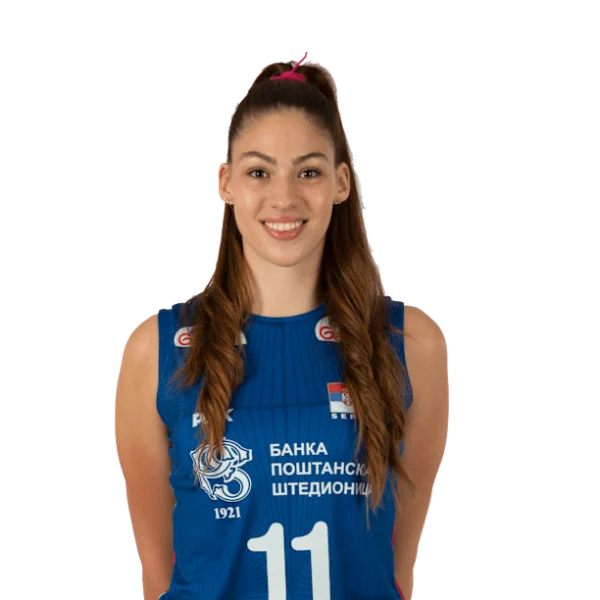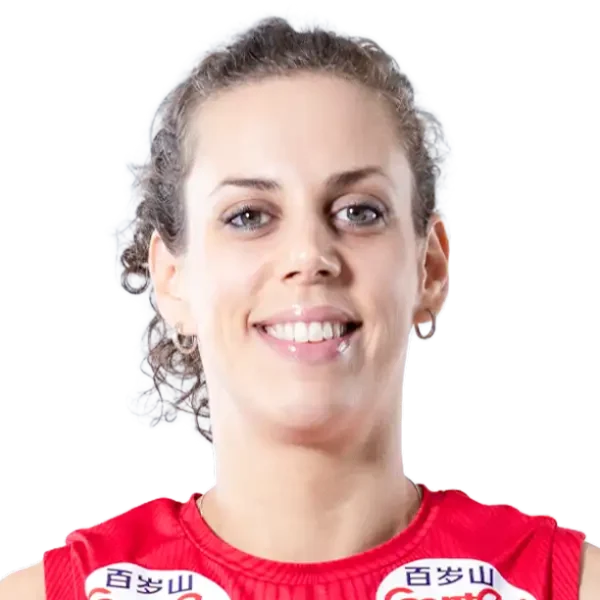
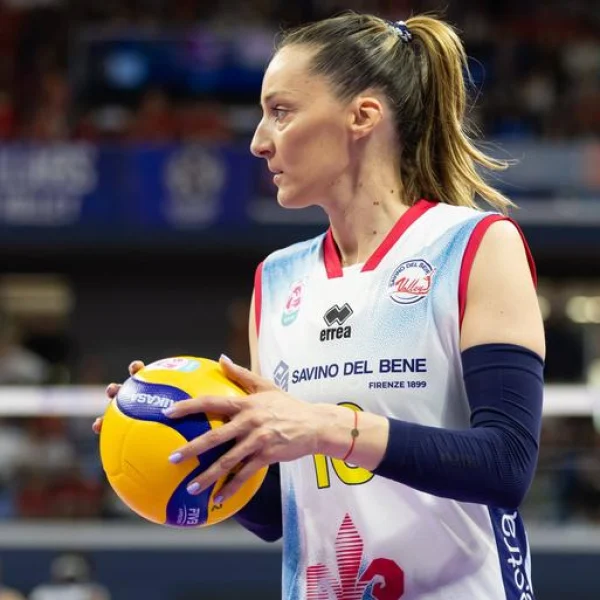
Serbian setter Maja Ognjenović has spent more than two decades at the center of her national team’s most successful era, from the 2006 World Championship bronze to another EuroVolley medal in 2026. Born in Zrenjanin on August 6, 1984, she has competed at five Olympic Games, won the 2018 World Championship, collected Olympic silver and bronze, and won European titles in 2011 and 2019.
Her club career has crossed Serbia, Romania, Italy, Türkiye, Greece, Poland and Russia. Ognjenović has won the Club World Championship with two different clubs, lifted European trophies with Jesi and Eczacıbaşı, and accumulated domestic championships across several leagues. In 2025, more than twenty years after the start of her senior career, she helped Savino Del Bene Scandicci become world club champion and was named the tournament’s Best Setter.
Player Information
| Information | Details |
|---|---|
| Full Name | Maja Ognjenović |
| Native Name | Маја Огњеновић |
| Date of Birth | August 6, 1984 |
| Born | Zrenjanin, Serbia |
| Nationality | Serbian |
| Position | Setter |
| Height | 183 cm |
| Weight | 67 kg |
| Spike Reach | 300 cm |
| Block Reach | 293 cm |
| Dominant Hand | Right |
| Previous Clubs | Poštar, Crvena zvezda, Poštar 064, Metal Galați, Monte Schiavo Jesi, Eczacıbaşı, Olympiacos, Modena, Impel Wrocław, Chemik Police, Nordmeccanica Piacenza, Dinamo Moscow, VakıfBank |
| Current Club | Savino Del Bene Scandicci |
| Club Number | 10 |
| National Team | Serbia Women’s National Volleyball Team |
| National-Team Number | 10 |
| @majaognjenovic10 |
Current Italian-league, Volleyball World and CEV records agree on Ognjenović’s 183 cm height. CEV competition profiles list a 300 cm spike reach and 293 cm block reach, while Olympic records have historically listed her at 67 kg.
Early Life & Volleyball Beginnings
Ognjenović grew up in Zrenjanin in northern Serbia and began practicing volleyball at eight. An FIVB career profile records that she was already playing senior and European competition for local club Poštar by the age of 15.
Volleyball soon required a larger move. After establishing herself in Zrenjanin, Ognjenović left home for Belgrade and joined Crvena zvezda while still in secondary school. In a long-form interview with Danas, she described the move as one of the first major turning points of her career: she wanted the opportunity, but the separation from her family, old school and home city was difficult during the first months.
Education remained important in her family. Ognjenović had been a strong student in Zrenjanin and continued her secondary education while adapting to the demands of professional sport. Her father, who had experience as a volleyball official, supported the move to Belgrade when he believed the sporting opportunity had become too important to ignore.
Crvena zvezda gave her the environment in which she developed from a promising local setter into a national-level player. She won her first senior national championship during that period and was soon placed on the wider senior national-team list by Zoran Terzić, beginning a player–coach relationship that would stretch across more than two decades.
Club Career
Serbia, Romania and the first European trophy
Ognjenović’s formal senior career record begins in the early 2000s with Poštar and Crvena zvezda. She won a Serbian national title with Crvena zvezda before leaving the country in 2006 for her first foreign contract, joining Metal Galați in Romania.
The move immediately added more trophies. Metal Galați won consecutive Romanian league championships during her two seasons there and also lifted the Romanian Cup, giving Ognjenović her first sustained experience as the setter of a championship-winning team outside Serbia.
Italy came next. She joined Monte Schiavo Jesi for 2008–09 and won the CEV Challenge Cup, her first European club trophy. The title also produced one of the earliest major individual awards of her club career: Best Setter of the competition.
Her first stint with Eczacıbaşı followed in 2009–10 before a move to Olympiacos. In Greece, she won the national cup, adding another country to a career that was quickly becoming unusually wide-ranging even before she reached her late twenties.
Modena, Poland and the Chemik years
Ognjenović returned to Italy during the 2011–12 season with Modena. After that short spell, she moved to Poland, first with Impel Wrocław and then with Chemik Police.
Chemik became one of the defining club stops of the middle phase of her career. The team won consecutive Polish championships after arriving in the top division, while Ognjenović also collected the Polish Cup and Super Cup.
Her individual recognition continued alongside those team results. She was named Best Setter of the Polish Cup in 2014 and later received Best Setter recognition in the 2014–15 CEV Champions League.
That Champions League campaign also began a long-running theme in her career. Ognjenović repeatedly reached the closing stages of Europe’s leading club competition with different teams, earning individual honors and several medals, but the Champions League title itself remained elusive.
After Poland, she returned to Italy for 2015–16 with Piacenza. The season was another short Italian stop before she moved back to Eczacıbaşı for a much more successful two-year spell.
Eczacıbaşı, Dinamo Moscow and VakıfBank
Ognjenović rejoined Eczacıbaşı in 2016 and won one of the biggest trophies of her club career almost immediately. The Istanbul side became 2016 FIVB Club World Champion, with Ognjenović directing a lineup built to compete against the strongest teams from Europe and South America.
Eczacıbaşı also reached the 2017 Champions League podium and won the CEV Cup in 2018. By the time she left, Ognjenović had added another European trophy to the Challenge Cup she had won with Jesi nine years earlier.
The next stop was Dinamo Moscow in 2018–19. Her single Russian season produced a domestic sweep: Super Cup, Russian Cup and league championship. Ognjenović also received Best Setter recognition in the Russian Cup.
She returned to Türkiye in 2019, this time with VakıfBank. The second season brought the Turkish Cup and league championship, while VakıfBank reached the 2021 Champions League Super Final. Ognjenović left with another Champions League silver medal but again without the one major European club title missing from her résumé.
Third Eczacıbaşı spell
Eczacıbaşı brought her back for a third period in 2021. The reunion produced another immediate European success: Eczacıbaşı won the 2021–22 CEV Cup, and Ognjenović was named the competition’s MVP as well as Best Setter.
The following season added a Club World Championship bronze and another Champions League final. Eczacıbaşı reached the 2023 Super Final but finished runner-up, leaving Ognjenović with Champions League medals from several clubs and eras without a gold.
By this stage she had already played professional volleyball in seven countries. The constant changes in league, roster construction and attacking personnel were particularly significant for a setter, whose job depends on learning hitters’ preferred tempos, contact heights and solutions under pressure.
Savino Del Bene Scandicci
Ognjenović returned to Italy in 2023 to join Savino Del Bene Scandicci. The move developed into a longer relationship than many of her earlier Italian spells, and she was soon central to several of the club’s best results.
Scandicci reached the 2024 Italian championship final in her first season. A year later, the club advanced to the 2025 Champions League final, where Conegliano won the title.
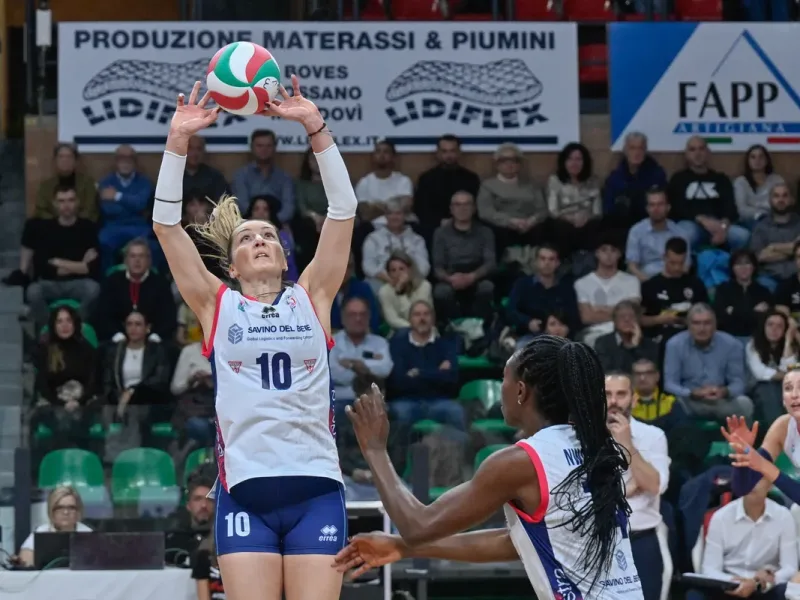
The breakthrough trophy arrived in December 2025. Scandicci defeated Conegliano 3–1 in São Paulo to become Club World Champion for the first time, and the official CEV tournament report named Ognjenović Best Setter of the championship.
The title had extra significance in the context of her career. She had already won the Club World Championship with Eczacıbaşı in 2016; nine years later, she won it again with a different club and earned the positional award at age 41.
Scandicci’s 2025–26 season also included the club’s first Coppa Italia final and a second consecutive Champions League Final Four appearance. Ognjenović served as captain, recording 90 points, 28 winning blocks and 13 aces across 40 appearances in all competitions according to the club’s season review.
In May 2026, Scandicci confirmed her contract for another season, making 2026–27 her fourth consecutive year with the club.
Club Career Timeline
| Seasons | Team | Country |
|---|---|---|
| 2002–03 | Poštar | Serbia and Montenegro |
| 2003–05 | Crvena zvezda | Serbia and Montenegro |
| 2005–06 | Poštar 064 | Serbia and Montenegro |
| 2006–08 | Metal Galați | Romania |
| 2008–09 | Monte Schiavo Jesi | Italy |
| 2009–10 | Eczacıbaşı Zentiva | Türkiye |
| 2010–11 | Olympiacos | Greece |
| 2011–12 | Modena | Italy |
| 2012–13 | Impel Wrocław | Poland |
| 2013–15 | Chemik Police | Poland |
| 2015–16 | Nordmeccanica Piacenza | Italy |
| 2016–18 | Eczacıbaşı VitrA | Türkiye |
| 2018–19 | Dinamo Moscow | Russia |
| 2019–21 | VakıfBank | Türkiye |
| 2021–23 | Eczacıbaşı Dynavit | Türkiye |
| 2023–present | Savino Del Bene Scandicci | Italy |
National Team Career
The first medal and the beginning of Serbia’s rise
Ognjenović made her senior international debut for Serbia and Montenegro in 2005. One year later, the team won bronze at the World Championship in Japan, the first major medal of the modern Serbian women’s program.
The timing placed Ognjenović at the beginning of a transformation. She was not joining an established world champion; she became one of the players around whom a new international contender developed.
After Serbia began competing independently, the medals continued. The national team reached the 2007 European Championship final, and Ognjenović was named Best Setter. That was the first of four EuroVolley Best Setter awards she would collect.
Serbia then won three consecutive European League titles from 2009 through 2011. Ognjenović received Best Setter honors in the latter two editions and again in 2012, when Serbia finished with bronze.
European champion in 2011
The 2011 European Championship gave Ognjenović her first senior major continental title. Serbia won the tournament on home soil, and she was again named Best Setter.
The championship established a pattern that would continue through the next decade. Serbia often built its attack around powerful opposites and efficient middle attackers, but Ognjenović’s distribution gave the offense more than one route to a point.
Former Serbia middle blocker Milena Rašić later explained that Serbia had always liked to attack through the middle, adding that this was especially true with Ognjenović setting. That relationship between setter and middles became one of the most recognizable technical features of Serbia’s best teams.
Ognjenović also helped Serbia win World Grand Prix bronze medals in 2011 and 2013, keeping the team on major international podiums between continental championship cycles.
2015 and the road to an Olympic medal
The 2015 season brought two more significant medals. Serbia finished runner-up at the World Cup and took bronze at EuroVolley, where Ognjenović collected her third Best Setter award at the European Championship.
The following year produced the national team’s first Olympic medal. Serbia reached the final at Rio 2016 before losing to China, taking silver.
For Ognjenović, Rio represented a different level of achievement from the team’s earlier podium finishes. She later described the 2016 Olympic run as especially meaningful because Serbia arrived with ambition but without the expectation that reaching the final was inevitable.
After Rio she stepped away from the national team for a period, a pattern that would recur later in her career. Rest periods became part of how she extended a playing career that increasingly required balancing club seasons with long international summers.
World champion in 2018
Ognjenović returned for the 2018 World Championship in Japan. Serbia reached the final against Italy and won a five-set match to become world champion for the first time.
The result linked two major points in her international career: she had been present for the program’s breakthrough bronze in 2006 and then, twelve years later, was part of the team that reached the top of the world.
Serbia followed the world title by winning EuroVolley 2019. Ognjenović again received Best Setter, her fourth award at the competition after 2007, 2011 and 2015.
Few individual honors describe her consistency better. The four awards cover a twelve-year span and came across very different Serbian teams, from the early medal-winning generation to the world-champion era.
Tokyo bronze and 300 national-team matches
Ognjenović captained Serbia into the Tokyo 2020 Olympic Games, held in 2021. The team lost to the United States in the semifinal but defeated South Korea in the bronze-medal match, giving Ognjenović her second Olympic medal.
During EuroVolley later that summer, she reached another personal landmark. CEV marked her 300th national-team appearance as Serbia advanced through the tournament.
Serbia eventually finished with silver after losing the final to Italy. Ognjenović then took another international break and did not participate when Serbia successfully defended its world title in 2022.
Return for Paris 2024
She came back again in 2023 under Giovanni Guidetti. Serbia won EuroVolley silver and secured Olympic qualification, putting Ognjenović in position for a fifth Games.
Paris 2024 became one of the most symbolic tournaments of her career. She and water polo player Dušan Mandić were selected as Serbia’s Opening Ceremony flagbearers, and Volleyball World noted that Paris would be her fifth Olympic appearance.
Ognjenović turned 40 on August 6, the day Serbia faced Italy in the quarterfinals. Italy won in straight sets and later took the gold medal, while Serbia finished seventh.
Ognjenović initially treated Paris as the end of her national-team career. She had already stepped away and returned before, but after five Olympics and nearly two decades with the senior team, the decision appeared more final.
It was not.
Another return and a historic 10th EuroVolley in 2026
When Zoran Terzić returned as Serbia’s head coach, Ognjenović reconsidered. She rejoined the national-team program in 2026, explaining that the Paris ending had left her feeling that her international career might deserve a better conclusion.
The return led to another historic milestone. At 42, Ognjenović competed in her 10th European Championship, joining Türkiye’s Eda Erdem as the first players to reach ten women’s EuroVolley appearances. A CEV feature on the milestone traced her appearances across 2005, 2007, 2009, 2011, 2013, 2015, 2019, 2021, 2023 and 2026.
Serbia reached the semifinals before losing to Türkiye. The team responded by beating Poland 3–1 for bronze, with Ognjenović directing the attack through Tijana Bošković, Aleksandra Uzelac and Serbia’s middle options.
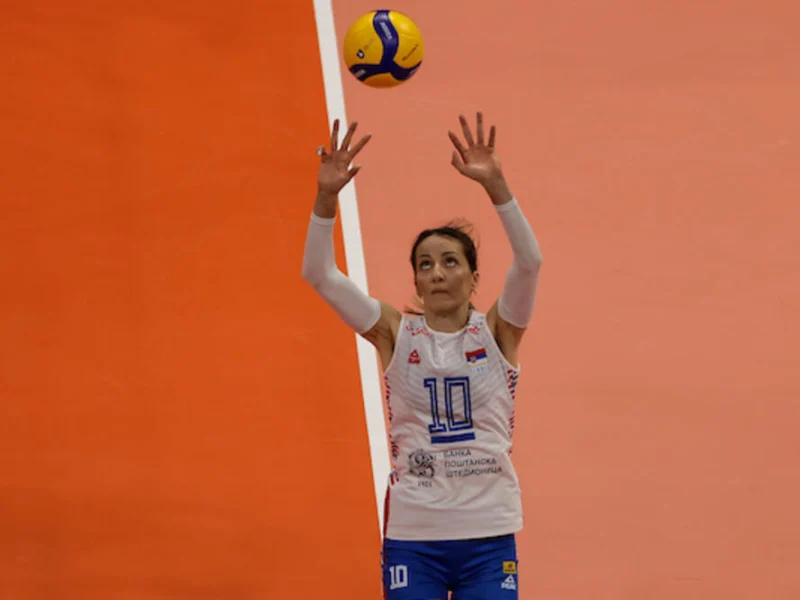
The bronze-medal report quoted Ognjenović saying that the medal meant a great deal after her year away from the team, but she stopped short of declaring another retirement.
The medal was her seventh EuroVolley podium: gold in 2011 and 2019, silver in 2007, 2021 and 2023, and bronze in 2015 and 2026.
Playing Style & Strengths
Ognjenović’s defining strength as a setter is not one fixed tempo or one preferred attacker. It is her ability to change the structure of an offense according to the players around her. Across more than two decades, she has set for very different opposites, outside hitters and middle blockers without becoming tied to a single attacking pattern.
CEV has described her game in terms of a distinctive style and deep understanding of volleyball, and the evidence from Serbia’s strongest teams supports that description. She is comfortable establishing a dominant opposite such as Tijana Bošković while still using the middle often enough to make opposing blockers respect first-tempo attacks.
That middle connection has been particularly important. Milena Rašić said that Serbia traditionally liked to attack through its middles, especially with Ognjenović setting. The result is an offense in which the opposing middle blocker cannot simply release early toward the pins every time reception is good.
Her deception also comes from body control. Ognjenović can hold her shoulders and hands long enough to delay the block’s read, then change direction late. She is willing to set behind herself from stable or imperfect body positions and can alter tempo without making the choice obvious before contact.
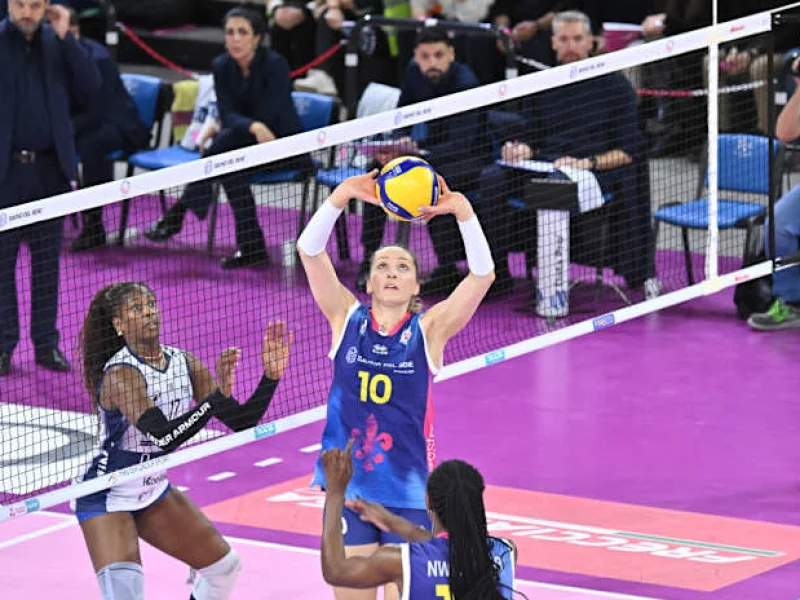
She also scores more directly than many setters. Dumps, second-contact attacks and one-handed solutions are a regular part of her game when the defense abandons the setter zone. During the 2025–26 Italian league season, she scored 30 attack points in addition to her blocking and serving contribution.
At the net, 183 cm gives her enough size to remain a legitimate blocking presence against opposing outside hitters. Scandicci’s 2025–26 season totals credited her with 28 blocks across all competitions, an important contribution for a setter playing through the front row.
The final part of her profile is decision-making under pressure. Setters accumulate information throughout a match: who is passing well, which hitter has a favorable matchup, where the opposing middle is leaning, how much risk the serve has created and which attacker needs another ball after an error. Ognjenović’s career longevity has given her an unusually large bank of those situations.
Major Achievements
Selected National Team Honors
| Year | Competition | Result |
|---|---|---|
| 2006 | FIVB World Championship | Bronze |
| 2007 | CEV European Championship | Silver |
| 2009 | CEV European League | Gold |
| 2010 | CEV European League | Gold |
| 2011 | CEV European League | Gold |
| 2011 | CEV European Championship | Gold |
| 2011 | FIVB World Grand Prix | Bronze |
| 2013 | FIVB World Grand Prix | Bronze |
| 2015 | FIVB World Cup | Silver |
| 2015 | CEV European Championship | Bronze |
| 2016 | Rio Olympic Games | Silver |
| 2018 | FIVB World Championship | Gold |
| 2019 | CEV European Championship | Gold |
| 2020 | Tokyo Olympic Games | Bronze |
| 2021 | CEV European Championship | Silver |
| 2023 | CEV European Championship | Silver |
| 2026 | CEV European Championship | Bronze |
The Olympic medals span two Games and two different phases of Serbia’s golden generation. Her 2018 World Championship title sits between them, while seven EuroVolley medals show the length of her influence on continental competition.
Selected Club Honors
| Year / Season | Competition | Result | Team |
|---|---|---|---|
| 2003–04 | Serbian Championship | Champion | Crvena zvezda |
| 2006–07 | Romanian Championship | Champion | Metal Galați |
| 2007–08 | Romanian Championship | Champion | Metal Galați |
| 2008–09 | CEV Challenge Cup | Champion | Monte Schiavo Jesi |
| 2010–11 | Greek Cup | Champion | Olympiacos |
| 2013–14 | Polish Championship | Champion | Chemik Police |
| 2013–14 | Polish Cup | Champion | Chemik Police |
| 2014–15 | Polish Championship | Champion | Chemik Police |
| 2016 | FIVB Club World Championship | Champion | Eczacıbaşı |
| 2017–18 | CEV Cup | Champion | Eczacıbaşı |
| 2018–19 | Russian Super League | Champion | Dinamo Moscow |
| 2018–19 | Russian Cup | Champion | Dinamo Moscow |
| 2018 | Russian Super Cup | Champion | Dinamo Moscow |
| 2020–21 | Turkish League | Champion | VakıfBank |
| 2020–21 | Turkish Cup | Champion | VakıfBank |
| 2020–21 | CEV Champions League | Runner-up | VakıfBank |
| 2021–22 | CEV Cup | Champion | Eczacıbaşı |
| 2022 | FIVB Club World Championship | Bronze | Eczacıbaşı |
| 2022–23 | CEV Champions League | Runner-up | Eczacıbaşı |
| 2023–24 | Italian Serie A1 | Runner-up | Savino Del Bene Scandicci |
| 2024–25 | CEV Champions League | Runner-up | Savino Del Bene Scandicci |
| 2025 | FIVB Club World Championship | Champion | Savino Del Bene Scandicci |
| 2025–26 | Coppa Italia | Runner-up | Savino Del Bene Scandicci |
| 2026 | Italian Super Cup | Runner-up | Savino Del Bene Scandicci |
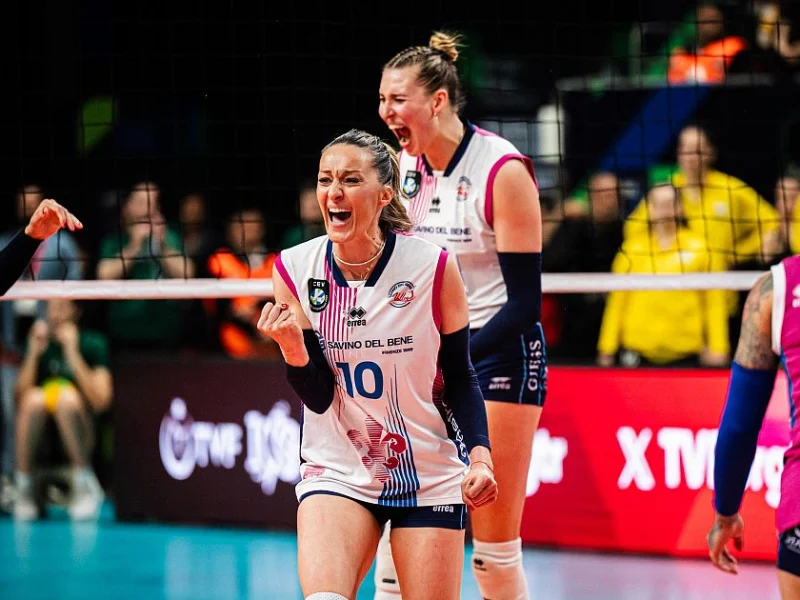
The 2025 Club World Championship gave Ognjenović a second world club title nine years after the first. It also represented Scandicci’s first championship at the event.
Selected Individual Awards
| Year | Competition | Award |
|---|---|---|
| 2007 | CEV European Championship | Best Setter |
| 2009 | CEV Challenge Cup | Best Setter |
| 2010 | CEV European League | Best Setter |
| 2011 | CEV European League | Best Setter |
| 2011 | CEV European Championship | Best Setter |
| 2012 | CEV European League | Best Setter |
| 2014 | Polish Cup | Best Setter |
| 2015 | CEV Champions League | Best Setter |
| 2015 | CEV European Championship | Best Setter |
| 2018 | CEV Cup | Best Setter |
| 2019 | Russian Cup | Best Setter |
| 2019 | CEV European Championship | Best Setter |
| 2020–21 | Turkish League | Best Setter |
| 2021–22 | CEV Cup | MVP / Best Setter |
| 2025 | FIVB Club World Championship | Best Setter |
Her four EuroVolley Best Setter awards are especially notable because they were won in 2007, 2011, 2015 and 2019 — one every four years across a twelve-year period.
Personal Life & Education
Ognjenović has consistently spoken about education as one of the strongest values in her family. Leaving Zrenjanin for volleyball complicated her schooling, but she completed her secondary education and later studied business economics.
She subsequently returned to formal education in sport. In an Arena Sport interview, Ognjenović described completing studies at the Faculty of Sport and Physical Education in Novi Sad while continuing her professional career. She joked that defending her final thesis made her more nervous than any volleyball final.
Reading has remained one of her long-term interests away from the court. She has described it as a habit carried from childhood and from a household in which education and books were important.
Ognjenović was married for nine years to former Serbian water polo international Danilo Ikodinović. Their divorce became public in 2025, and in a 2026 interview she spoke about the end of the marriage while emphasizing the positive parts of that period of her life.
She has spent much of her recent club career living in the Florence area while playing for Scandicci.
Off the Court
Ognjenović’s influence in volleyball has extended beyond match play. In 2021, she was appointed to the FIVB Athletes’ Commission, a body intended to provide players with representation within the sport’s international governance.
Her career has also made her a frequent reference point for younger setters. CEV’s Preparing for Success feature focused on her interpretation of the position and the responsibility that comes with controlling an offense.
That role fits the later phase of her career. Even while remaining an active player, Ognjenović has accumulated the experience of national-team captaincy, multiple Olympic cycles and professional seasons across seven countries, giving her a perspective that extends beyond one tactical system or one league.
Where Is Maja Ognjenović Playing Now?
Ognjenović is playing for Savino Del Bene Scandicci in the 2026–27 season and wears No. 10. It is her fourth consecutive season with the Italian club.
Scandicci entered the season as reigning Club World Champion. The team reached its first Italian Super Cup final on October 24, 2026, taking the opening set against Conegliano before losing 3–1.
Through the first six completed Serie A1 rounds, Scandicci had four wins and two losses. The club’s current 2026–27 season statistics list Ognjenović with 24 points in six appearances and 25 sets, including 17 attack points, five blocks and two aces.
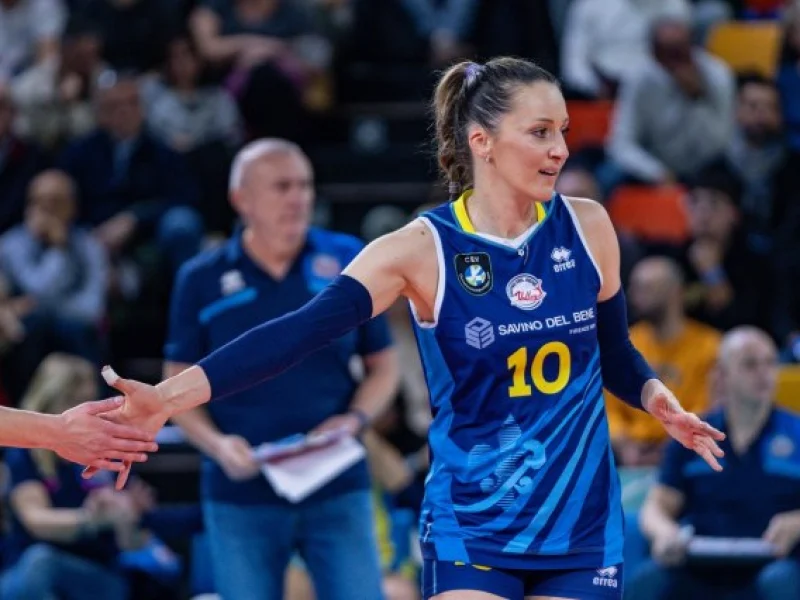
She also remains active with the Serbia Women’s National Volleyball Team after returning in 2026. Serbia’s EuroVolley bronze was her latest major international result, and after the medal match she said it was not yet the moment to state whether she was saying goodbye to the national team.
Recent Performance Snapshot
| Competition / Period | Performance |
|---|---|
| Paris 2024 Olympics | Fifth Olympic appearance; Serbia flagbearer; 8 points across four matches |
| 2024–25 Champions League | Scandicci reached the final |
| 2025 Club World Championship | Champion with Scandicci; named Best Setter |
| 2025–26 Scandicci season | 40 appearances, 90 points, 28 blocks and 13 aces across all competitions |
| 2026 Champions League | Second consecutive Final Four with Scandicci; finished fourth |
| 2026 EuroVolley | 10th EuroVolley appearance; captained Serbia to bronze |
| 2026 Italian Super Cup | Runner-up with Scandicci |
| 2026–27 through early November | Club season page lists 24 points in 6 appearances and 25 sets |
The numbers require context because setter performance is not primarily measured through scoring. Ognjenović’s point production does, however, show how actively she remains involved at the net rather than functioning only as a distributor.
Her more important recent markers are collective and positional: another world club title, another Best Setter award, a return to the Serbian national team at 42 and another European Championship medal.
Frequently Asked Questions
How old is Maja Ognjenović?
Maja Ognjenović was born on August 6, 1984. She turned 42 in August 2026.
What position does Maja Ognjenović play?
She is a setter. Ognjenović is known for varied distribution, strong use of middle attackers, deceptive release and the ability to run offenses built around very different types of hitters.
Which club does Maja Ognjenović play for?
She plays for Savino Del Bene Scandicci in Italy’s Serie A1 during the 2026–27 season.
Is Maja Ognjenović still playing for Serbia?
Yes. After initially leaving the national team following Paris 2024, Ognjenović returned in 2026 and captained Serbia to a bronze medal at EuroVolley.
How many Olympics has Maja Ognjenović played?
Ognjenović has competed at five Olympic Games: Beijing 2008, London 2012, Rio 2016, Tokyo 2020 and Paris 2024. She won silver in Rio and bronze in Tokyo.
How many EuroVolley tournaments has Maja Ognjenović played?
She became the first woman, alongside Eda Erdem, to reach 10 EuroVolley appearances in 2026. Ognjenović has won seven medals at the competition, including gold in 2011 and 2019.
References
- Savino Del Bene Volley — Maja Ognjenović confirmed for the 2026–27 season
- Savino Del Bene Volley — 2026–27 roster and season statistics
- Lega Pallavolo Serie A Femminile — Maja Ognjenović official player profile
- FIVB — Maja Ognjenovic: Still giving
- Volleyball World — Maja Ognjenovic: The objective is clear
- Volleyball World — Ognjenović named Serbia’s flagbearer for Paris 2024
- CEV — “10 is my number”: Maja Ognjenović makes EuroVolley history
- CEV — Serbia wins bronze at the 2026 Women’s EuroVolley
- CEV — Scandicci wins the 2025 Club World Championship
- Eczacıbaşı Sports Club — Welcome back home, Maja Ognjenovic
- CEV — Preparing for Success with Maja Ognjenović
- Danas — Maja Ognjenović on her career, development and early move to Belgrade