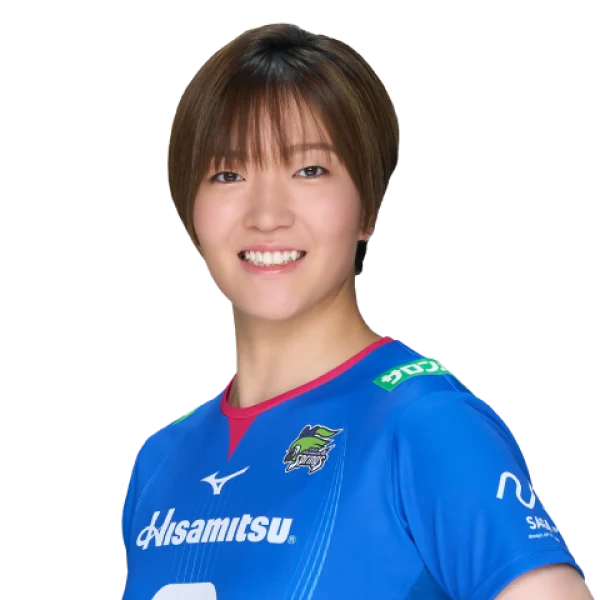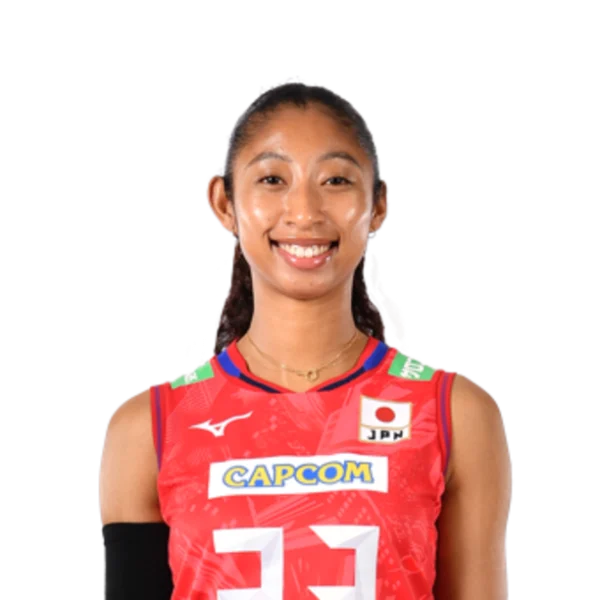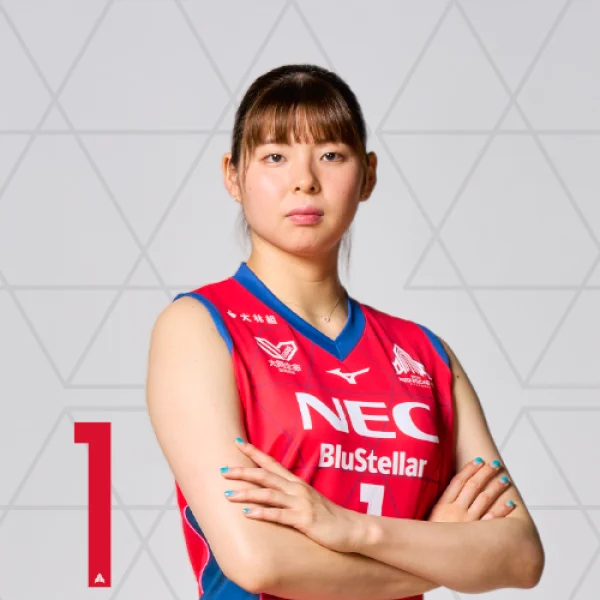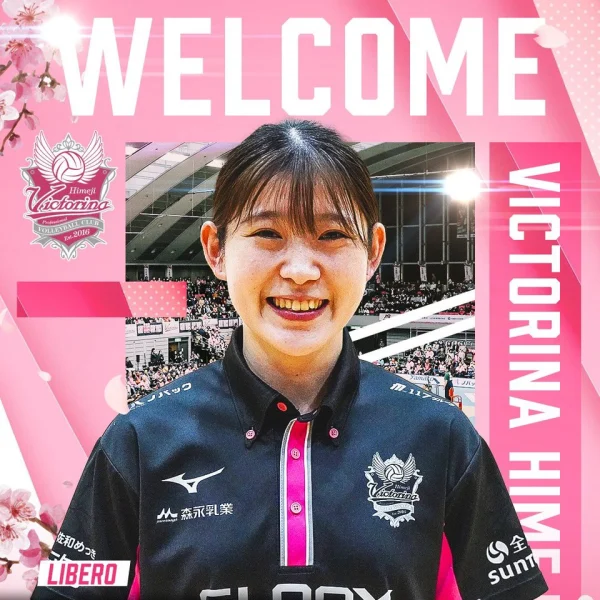
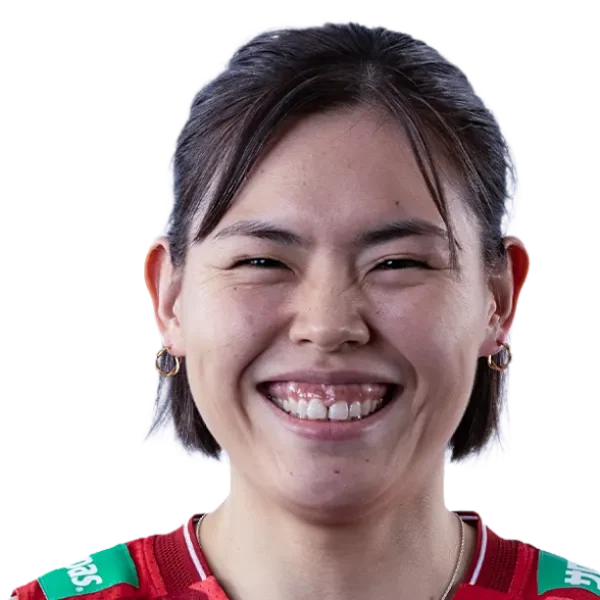
Haruyo Shimamura (born March 4, 1992) is a Japanese middle blocker from Kamakura, Kanagawa. Standing 182 cm, she has represented the Japan women’s national team since 2013 and played at both the Rio 2016 and Tokyo 2020 Olympic Games. Her international career has also included the World Cup, multiple World Championships, an Asian Games silver medal and a bronze-medal run at the inaugural U23 World Championship.
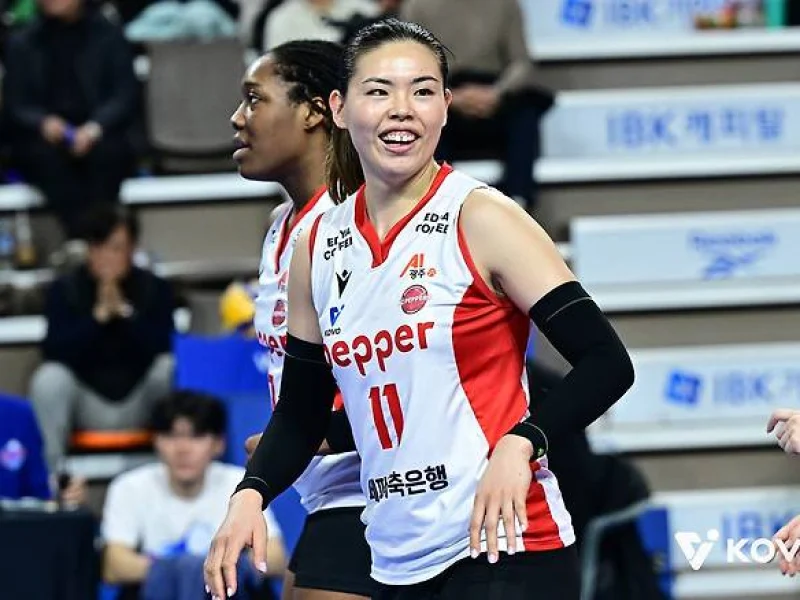
At club level, Shimamura spent 15 seasons with NEC Red Rockets and NEC Red Rockets Kawasaki from 2010 to 2025, winning four Japanese top-division league championships and developing into one of the longest-serving figures in the club’s modern era. At age 33 she made the first overseas move of her senior career, joining Pepper Savings Bank AI Peppers in South Korea for 2025–26. She returned to Japan in 2026 to join Gunma Green Wings, where she wears No. 11 and serves as a vice captain for the 2026–27 season.
Player Information
| Field | Details |
|---|---|
| Full Name | Haruyo Shimamura (島村 春世) |
| Date of Birth | March 4, 1992 |
| Place of Birth | Kamakura, Kanagawa, Japan |
| Nationality | Japanese |
| Position | Middle Blocker |
| Height | 182 cm |
| Weight | 79 kg |
| Spike Reach | 303 cm |
| Block Reach | 287 cm |
| Dominant Hand | Right |
| High School | Kawasaki Municipal Tachibana High School |
| Previous Clubs | NEC Red Rockets / NEC Red Rockets Kawasaki; Pepper Savings Bank AI Peppers |
| Current Club | Gunma Green Wings |
| Club Number | 11 |
| Current Club Role | Vice Captain |
| National Team | Japan Women’s National Volleyball Team |
| Senior National Team | 2013–present |
| National-Team Number | 3 during the 2026 international season |
| Nickname / Court Name | John |
| @nrr1_john |
Shimamura’s current 182 cm height is consistent across the Japan Volleyball Association and Gunma Green Wings. Her updated 2026 physical profile lists a 303 cm spike reach and 287 cm block reach, while her weight and dominant hand are supplemented by established player-database records.
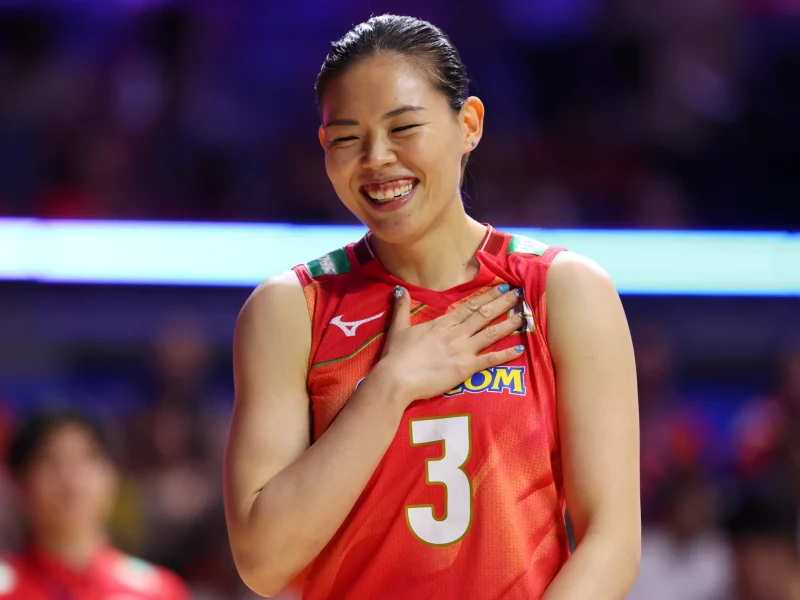
Her club and national-team jersey numbers now differ. Gunma registered her as No. 11 for 2026–27, while she wore No. 3 for Japan during both the 2026 Volleyball Nations League and Asian Championship.
Early Life & Volleyball Beginnings
Shimamura was born and raised in Kamakura, Kanagawa, in a large family with strong sporting influence. She began playing volleyball in the fourth grade of elementary school, joining Koshigoe JVC. Her mother had played volleyball, and Shimamura grew up alongside an older and a younger sister who were also involved in the sport. That family environment gave volleyball a place in everyday life before there was any indication that it would become her profession.
Her junior-high route was unusual for a future Olympian. Koshigoe Junior High School was not a major volleyball program, and Shimamura later described a team that often exited local competitions early. Her physical development was harder to overlook: by the end of junior high she was already around 180 cm and carrying much of her team’s attacking load.
A decisive moment came in her third year of junior high, when she was invited to take part in practice at NEC. In a 2026 Number Web interview, Shimamura recalled arriving nervous and encountering players from Kawasaki Municipal Tachibana High School. That practice did two lasting things. It helped redirect her high-school choice toward Tachibana, and it produced the nickname that has followed her through her career: “John.”
The nickname itself was almost accidental. A future senior at Tachibana remarked that Shimamura somehow looked like a “John,” and teammates began using it. What mattered more was the connection created that day between high school and NEC. Shimamura chose Kawasaki Tachibana partly because it offered a path into training alongside the professional club she had already seen up close.
By high school, the possibility of top-level volleyball had become tangible. Shimamura eventually joined NEC as a designated player in January 2010, beginning a relationship with the club before she had even completed the normal transition into full-time senior competition.
Club Career
From Teenage Prospect to NEC Regular
Shimamura joined NEC Red Rockets in 2010 after graduating from Kawasaki Municipal Tachibana High School. Her entry into the senior game came unusually early: she had already trained with NEC during her school years, and the club brought her into its environment as a designated player before the 2010 season was fully underway.
The first years were developmental rather than an immediate march toward national-team status. Shimamura had the height required for the middle but still needed to adapt physically and technically to senior volleyball. She later spoke candidly about being resistant to some of the demands placed on her as a young professional, including conditioning and weight-management expectations. Over time, that tension gave way to a more mature understanding of what elite performance required.
One early marker arrived in 2012, when Shimamura helped NEC win consecutive V Summer League titles and was named the competition’s MVP. The award did not carry the same weight as a top-division championship, but it was evidence that she was moving from prospect status toward a larger competitive role.
Her progress also began to overlap with the national team. Japan called her into the senior program in 2013, meaning that only a few years after entering NEC she was learning simultaneously from domestic senior competition and international volleyball.
First League Title and Growing Responsibility
NEC’s 2014–15 season became Shimamura’s first major championship campaign. The Red Rockets won the V.Premier League, ending a long wait for another league title, and Shimamura was selected to the Best Six. The combination of team and individual recognition marked her arrival as an established top-division middle blocker rather than simply a young player with international potential.
Her responsibility continued to grow. During the 2015–16 season she served as NEC captain, adding formal leadership to a period in which her role with Japan was also expanding. That season did not end with the league title, but it was important in establishing her as a player capable of carrying responsibility beyond her own rotations.
NEC returned to the top in 2016–17, winning the V.Premier League again. The wider period also included success in Asian club competition, giving Shimamura experience against different tempos, physical profiles and blocking systems outside Japan.
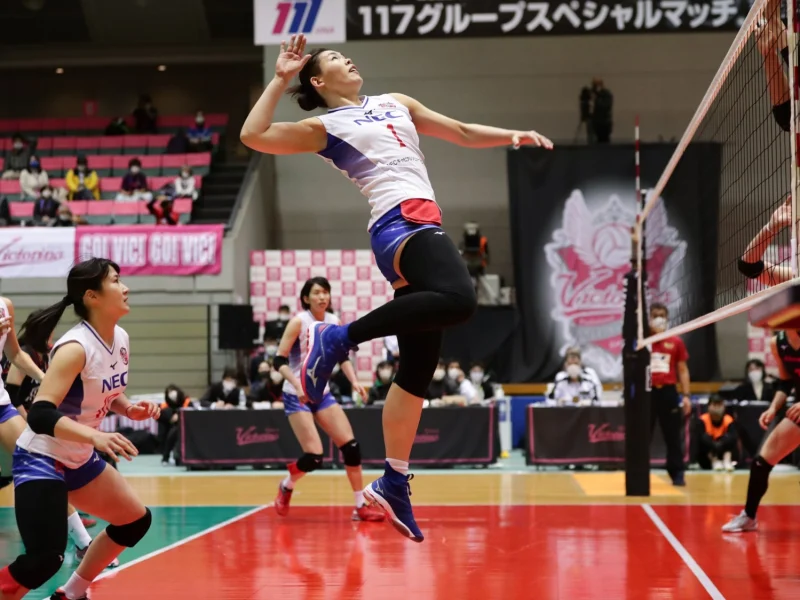
These years established the base of a career that would become unusually long for a middle blocker at one club. Rather than moving through several domestic teams, Shimamura kept developing inside NEC while her international commitments expanded around the club season.
2020–21: Efficiency, Longevity and a New Peak
A decade into her NEC career, Shimamura produced one of her strongest individual domestic seasons. During the 2020–21 V.League campaign, she posted a 51.7% attack success rate and won the league’s Spike Award. She was also selected to the Best Six and received the V.League Honor Award after passing the competition’s long-service appearance threshold.
That combination mattered for two reasons. The efficiency award showed that her attacking game had remained effective well into her veteran years, while the Honor Award quantified how durable her presence in the domestic league had become.
The season also came during an Olympic cycle. Shimamura remained part of Japan’s senior group and ultimately competed at the Tokyo 2020 Olympic Games, held in 2021. She was no longer a young middle trying to establish herself internationally; she had become one of the experienced players connecting NEC’s domestic ambitions with Japan’s national-team program.
Back-to-Back Domestic Doubles
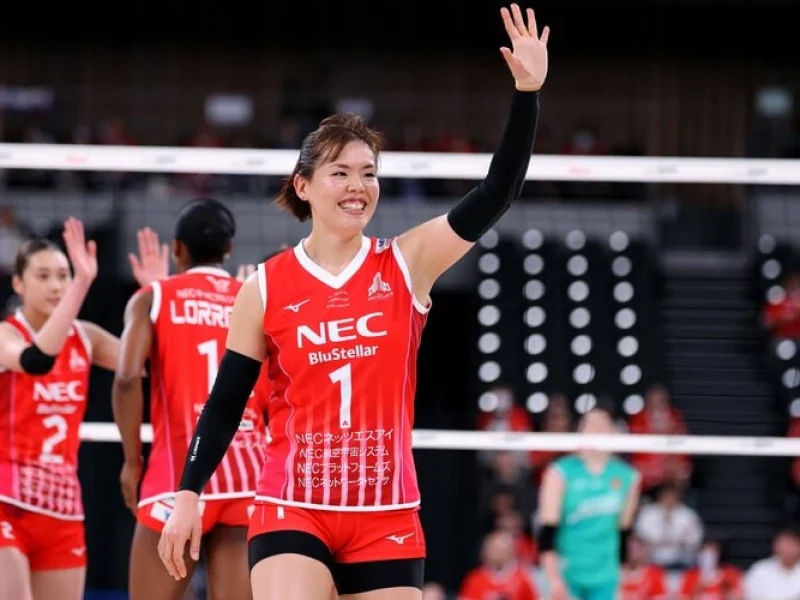
NEC entered another championship period in 2022–23. The club won the Empress’s Cup and then the V.League title, completing its first league-and-cup double. For Shimamura, the championship arrived more than eight years after her first league title with NEC, illustrating the length of her contribution across different generations of teammates.
The following season was even more significant historically. NEC retained both the Empress’s Cup and the V.League championship in 2023–24, becoming the first team in club history to complete consecutive domestic doubles.
Shimamura’s role across those championships was different from the one she had occupied in her twenties. She had become one of the senior reference points of the squad, bringing national-team and Olympic experience to a roster increasingly populated by younger players. Her value was therefore not limited to whether she led a statistical category; she was part of the competitive continuity that allowed NEC to win across changing lineups.
Asian Champion and Best Middle Blocker at 32
The 2024–25 season began with an important international club assignment. NEC competed at the Asian Women’s Club Championship in Thailand and went undefeated through the tournament.
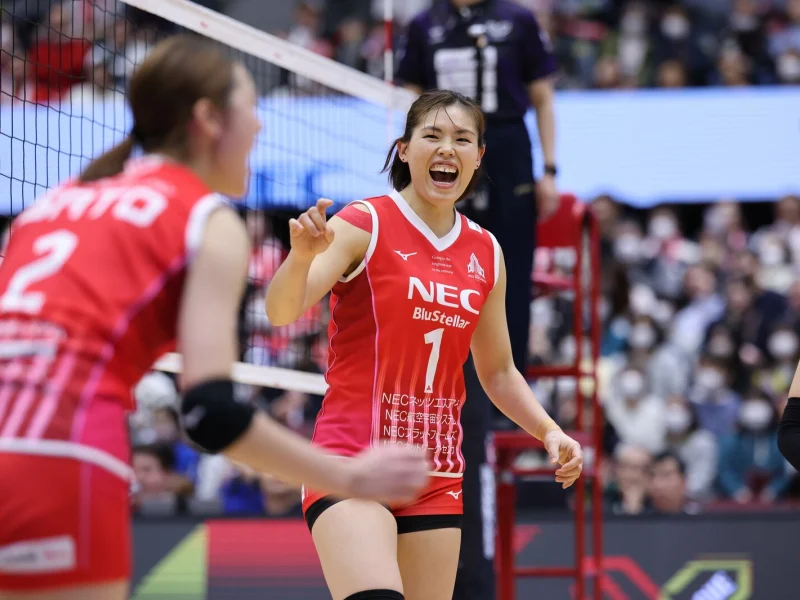
The club won the 2024 Asian Club Championship by taking the final on September 29. Shimamura was named Best Middle Blocker, while NEC also collected the tournament MVP, Best Setter and Best Libero awards through other players. The championship qualified the team for the Club World Championship later that year.
The award was especially notable because Shimamura was 32 and entering what would become her final NEC season. Instead of gradually moving toward a reduced role, she was still producing at a level recognized across Asia.
A Demanding Final NEC Season
The first SV.League season in 2024–25 placed a different workload on Japanese clubs, with a much longer regular-season schedule than the old V.League format. For Shimamura, it became one of the clearest demonstrations of late-career durability.
She played all 43 NEC regular-season matches and remained heavily involved through the championship playoffs, finishing with 50 matches and 171 sets. The official SV.League record credits her with 405 attack points at 48.3%, 95 blocks and six aces for 506 total points across all stages.
The regular season alone produced 361 attack points at 48.5% and 84 blocks. Those numbers helped earn Shimamura a place in the 2024–25 SV.League Best Six at middle blocker, along with the league’s Fair Play Prize.
The season carried extra responsibility off the stat sheet. NEC had lost several experienced figures from the previous era, including retired captain Sarina Koga and departed libero Manami Kojima. Shimamura told Number Web that she initially tried to take on too much responsibility for helping hold the team together before learning to delegate more effectively.
In the same interview reflecting on her final NEC season, former Japan captain Erika Araki highlighted how Shimamura’s blocking had improved. Shimamura herself noted that she had become better at turning touches into direct scoring blocks instead of merely deflecting the ball away.
NEC reached the inaugural SV.League championship final but finished runner-up. The absence of another league title did not make the season a decline: Shimamura had handled one of the heaviest workloads of her career, remained among the league’s Best Six and finished the year with a second major individual recognition after the Asian Club Championship.
In April 2025, NEC announced that Shimamura would leave after 15 seasons. She described the club as an enormous part of her life, having entered directly from high school and stayed through relegation pressure, championships, international tournaments and multiple generations of teammates.
Korea at 33: The First Overseas Club Move
Leaving NEC did not mean easing toward retirement. Instead, Shimamura pursued something she had never done during her first 15 professional seasons: play for a club outside Japan.
Pepper Savings Bank AI Peppers brought her into the Korean V-League for 2025–26 after Australian Asian-quota selection Stephanie Weiler became unavailable because of an Achilles injury. AI Peppers coach Jang Ji-yeon cited Shimamura’s international experience and expected her to contribute not only through attack and blocking but through detailed middle play.
The move was significant because Shimamura was already 33. In her Number Web discussion of the decision, she framed the opportunity with a sense that postponing an overseas challenge again might mean never getting another chance.
That made Korea more than a one-season transaction. Shimamura had spent her entire adult club career inside one organization and suddenly had to work in another country, another league and another team culture. For a middle blocker, that also meant establishing timing with new setters and adapting to different attack and blocking tendencies at an age when most of her career habits were already deeply established.
AI Peppers did not reach the postseason, but the season represented progress for the club. The team recorded 16 regular-season wins, the highest total in franchise history, and Korean reporting noted that the organization considered retaining Shimamura after her first year. She ultimately chose a return to Japan instead.
Gunma Green Wings and a New Leadership Role
Gunma Green Wings announced Shimamura’s signing on June 24, 2026. She returned to the SV.League wearing No. 11 after a season in Korea, giving Gunma a middle blocker with 15 years of NEC experience, two Olympics and more than a decade in Japan’s national-team system.
Her role quickly extended beyond the court. Ahead of the 2026–27 season, Gunma appointed Shimamura vice captain alongside Olivia Różański, supporting captain Minami Takaso. Shimamura said she wanted to pass on the experience and skills she had accumulated while continuing to grow with the team.
That leadership appointment gives the Gunma move a different meaning from the Korean transfer. AI Peppers was Shimamura’s first challenge outside the environment she had known for 15 years; Gunma brings that overseas experience back into Japan and places her explicitly among the senior voices of a developing SV.League team.
Club Career Timeline
| Seasons | Team | Country |
|---|---|---|
| 2010–2025 | NEC Red Rockets / NEC Red Rockets Kawasaki | Japan |
| 2025–26 | Pepper Savings Bank AI Peppers | South Korea |
| 2026–present | Gunma Green Wings | Japan |
National Team Career
Senior Debut and U23 Bronze in 2013
Shimamura received her first senior Japan call-up in 2013, only three years after joining NEC. The same year brought her first international medal when Japan took bronze at the inaugural FIVB Women’s U23 World Championship.
That early phase placed her among a generation of Japanese middles competing for roles behind or alongside more established senior players. She was not immediately a permanent first-choice starter, but the combination of NEC playing time and national-team exposure steadily expanded her responsibilities.
By 2015, Shimamura was part of Japan’s World Cup squad. In the national team’s pre-tournament media activities, she identified the range of her attacking options and her connection with the setter as important strengths, while also emphasizing the value of using her serve to disrupt opponents.
Those traits became central to the kind of middle she would remain throughout her career: mobile rather than purely size-based, comfortable attacking across more than one first-tempo lane and useful from the service line.
Rio 2016: First Olympic Games
Shimamura was selected for the Rio 2016 Olympic Games, her first appearance on volleyball’s biggest international stage. Japan advanced from pool play before losing to the United States in the quarterfinals and finished fifth.
The Olympic selection represented a major shift in status from her 2013 entry into the national team. She was no longer simply gaining senior experience; she had become part of the final Olympic roster at age 24.
That period also coincided with a successful NEC cycle. The experience of moving between a league-title contender and Japan’s international program helped establish the two-track career that defined most of her next decade.
World Championship Experience and Tokyo 2020
Shimamura remained in Japan’s international plans through the next Olympic cycle and competed at the 2018 World Championship. By then she had accumulated years of familiarity with elite international middle play and faster offensive systems.
She returned to the Olympic Games at Tokyo 2020, held in 2021 because of the pandemic. Japan finished tenth, making Shimamura a two-time Olympian.
Her Tokyo appearance came in the same year as one of her strongest domestic individual seasons, when she won the V.League Spike Award and Best Six recognition. The overlap is important: her second Olympics was not simply the continuation of a long national-team tenure; it came while she was still producing elite attacking efficiency at club level.
2022 World Championship and Asian Games Silver
Shimamura continued with Japan after Tokyo rather than ending her international career. She competed at the 2022 World Championship and remained part of the broader senior-team picture as Japan moved into another Olympic cycle.
Her next major medal came at the Hangzhou Asian Games, officially the 2022 Asian Games but staged in 2023 after postponement. Japan reached the final and finished with the silver medal.
By this stage, Shimamura’s international identity had changed substantially from the young middle of 2013. She was now one of the senior players in the program, carrying experience from two Olympics, multiple World Championships and more than a decade of national-team seasons.
A Major Return at the 2025 World Championship
The Paris 2024 Olympic cycle did not include Shimamura on the final Olympic roster, but her senior international career continued afterward. Under Japan’s new cycle, she returned to a major role in 2025 at age 33.
Japan’s 2025 World Championship run became its deepest at the event in years. The team defeated the Netherlands in five sets in the quarterfinal to reach the semifinals, with Shimamura listed among Japan’s starting group. Japan then lost to Türkiye in the semifinal and Brazil in the bronze-medal match, finishing fourth.
The tournament mattered because it showed that Shimamura’s national-team value had survived both age and a changing roster. More than a decade after her first Japan selection, she was still taking the court in the decisive stages of a World Championship rather than remaining only as veteran depth.
2026 VNL: Heavy Veteran Workload
Shimamura remained in Japan’s registered national-team group in 2026 and wore No. 3. Her role during the Volleyball Nations League was substantial.
Volleyball World’s 2026 VNL statistics credit her with 85 points: 70 from attack, 13 from blocks and two from serve. She played across the preliminary phase and the Finals, including an eight-point performance against Brazil in which four of her points came from blocks.
Several preliminary-round matches demonstrated that her attacking role was not merely rotational. She scored 12 points against the Dominican Republic, 12 against Thailand and 12 against Poland. Against Serbia, she converted 10 attacking points from 13 recorded attempts.
For a 34-year-old middle blocker entering her fourteenth year since first joining the senior program, that workload represented more than longevity. Japan was still using Shimamura as a regular scoring option through the middle.
2026 Asian Championship Bronze
Her summer continued at the 2026 Asian Championship. Shimamura again wore No. 3 and produced one of her most efficient international tournaments.
Volleyball World recorded 51 points at the Asian Championship: 42 attacks, eight blocks and one ace. Her listed attack efficiency was 60.87%, providing a strong statistical example of how effective her first-tempo game remained late in her career.
She scored 10 points against South Korea, 11 against Chinese Taipei and 10 in the semifinal against Thailand. In the bronze-medal match against Iran, Shimamura finished with 14 points, including 12 attacks and two blocks, as Japan secured third place.
That bronze became her latest completed senior international tournament of 2026 and reinforced the same theme visible in the VNL: Shimamura was not simply present as an experienced squad member. She continued to receive meaningful offensive volume and front-row responsibility.
Playing Style & Strengths
Shimamura’s game has long been built around mobility and attacking range rather than overwhelming opponents with height alone. At 182 cm, she is smaller than many elite international middle blockers, but her 303 cm spike reach and quick movement allow her to attack different spaces before the opposing block is fully organized.
Her own description of her strengths has consistently emphasized variety. She can score from conventional first-tempo attacks directly in front of the setter, but her game also uses movement across the middle and toward the right side. That wider range forces opposing middle blockers to track her instead of settling into a single vertical blocking assignment.
The 2026 Asian Championship offered a strong late-career example. Shimamura converted at a listed 60.87% attack efficiency across the tournament and scored 42 attack points in six matches. Against Iran in the bronze-medal match she produced 12 attack points, demonstrating that Japan was still prepared to give her substantial first-tempo responsibility in a medal-deciding match.
Her blocking has also evolved. Earlier in her career, attack efficiency was often the most visible statistical feature of her game; by the final NEC season, blocking had become an increasingly important source of value. She recorded 95 blocks across 171 sets in 2024–25, including 84 during the regular season.
That improvement was not accidental. During her final NEC year, former Japan captain Erika Araki specifically noted the greater quality of Shimamura’s blocking. Shimamura agreed that she had become better at turning contacts into direct kills rather than allowing the ball to escape after touching her hands.
The 2026 VNL provided another international example. Shimamura registered 13 block points across the competition, including four against Brazil in Japan’s final match. Those numbers matter because they show that her blocking growth transferred beyond the domestic league.
Serving adds a smaller but persistent layer to her profile. Shimamura has spoken about using the serve to put pressure on reception rather than treating it as a neutral way to begin the rally. The volume of direct aces is modest compared with her attack production, but her ability to serve aggressively gives Japan and her clubs another way to create favorable transition situations.
Her longevity also changes how her playing style should be understood. Shimamura has played under different setters, club coaches, national-team systems and generations of teammates. The through-line is not one fixed tactical pattern; it is the ability to keep her timing and attack options useful as those environments change.
That adaptability was tested most sharply in Korea. After 15 seasons within NEC’s systems and relationships, Shimamura had to establish new setter timing at AI Peppers in her mid-thirties. Returning to Gunma in 2026 created another new combination rather than a return to the familiarity of NEC.
Major Achievements
Selected National Team Honors
| Year | Competition | Result |
|---|---|---|
| 2013 | FIVB Women’s U23 World Championship | Bronze medal |
| 2016 | Rio Olympic Games | 5th place |
| 2021 | Tokyo 2020 Olympic Games | 10th place |
| 2022 Asian Games (held 2023) | Women’s Volleyball | Silver medal |
| 2025 | FIVB Women’s World Championship | 4th place |
| 2026 | Asian Championship | Bronze medal |
Two Olympic appearances anchor Shimamura’s international résumé, but her career extends well beyond those two tournaments. The 2025 World Championship semifinal run and her productive 2026 season came more than a decade after her first senior Japan call-up.
Selected Club Honors
| Season / Year | Competition | Result |
|---|---|---|
| 2014–15 | V.Premier League | Champion |
| 2016–17 | V.Premier League | Champion |
| 2022 | Empress’s Cup | Champion |
| 2022–23 | V.League Division 1 Women | Champion |
| 2023 | Empress’s Cup | Champion |
| 2023–24 | V.League Division 1 Women | Champion |
| 2024 | Asian Women’s Club Championship | Champion |
| 2024–25 | SV.League Women | Runner-up |
NEC’s club history places Shimamura across several distinct championship generations. Her first league title came in 2014–15, another followed in 2016–17, and she was still part of the core when NEC completed consecutive league-and-Empress’s Cup doubles in 2022–23 and 2023–24.
Selected Individual Awards
| Year / Season | Competition | Award |
|---|---|---|
| 2012 | V Summer League | MVP |
| 2014–15 | V.Premier League | Best Six |
| 2020–21 | V.League Division 1 Women | Spike Award |
| 2020–21 | V.League Division 1 Women | Best Six |
| 2020–21 | V.League | V.League Honor Award |
| 2024 | Asian Women’s Club Championship | Best Middle Blocker |
| 2024–25 | SV.League Women | Best Six — Middle Blocker |
| 2024–25 | SV.League Women | Fair Play Prize |
The gap between Shimamura’s first Best Six selection in 2014–15 and another Best Six award in 2024–25 spans a full decade. That longevity is one of the clearest individual markers of her career: she remained capable of earning top-level domestic positional recognition long after her first championship period.
Personal Life & Interests
Shimamura’s connection to Kamakura is a durable part of her biography. She began volleyball at Koshigoe JVC and attended Koshigoe Junior High before moving to Kawasaki Municipal Tachibana High School. Even after spending most of her adult career with NEC, those local roots remained prominent whenever she returned to discuss her development.
Family was central to that beginning. Shimamura grew up with several siblings, including an older and a younger sister who were also involved in volleyball. The sport therefore entered her life as a family activity before it became an elite pathway.
Her “John” nickname has become nearly as recognizable inside volleyball as her given name. As Shimamura explained in her Number Web interview, it began during a middle-school visit to NEC practice when a future Tachibana teammate casually suggested that she looked like a “John.” There was no deeper sporting meaning, yet the name followed her into high school, NEC and eventually the national team. Gunma now lists “John” as her court name.
The nickname also represents an important moment in her development because the same NEC practice session helped shape her decision to attend Kawasaki Tachibana. One apparently casual visit therefore influenced both her public identity and the route that led into a 15-season NEC career.
Her management profile uses the phrase “Be yourself” as a personal motto. That idea has become increasingly fitting as her career has lengthened: Shimamura has continued playing internationally into her mid-thirties without trying to fit a conventional timetable for when a Japanese middle blocker should move overseas, return home or leave the national team.
Where Is Haruyo Shimamura Playing Now?
Shimamura plays for Gunma Green Wings in Japan’s SV.League during the 2026–27 season. She joined the club in June 2026 after completing her first overseas club season with Pepper Savings Bank AI Peppers in South Korea.
Gunma registered Shimamura as No. 11 and later appointed her one of the team’s two vice captains. The club’s 2026–27 leadership announcement places her alongside fellow vice captain Olivia Różański in supporting captain Minami Takaso.
The leadership role makes sense within Gunma’s roster construction. Shimamura brings 15 seasons of NEC experience, a Korean V-League season, two Olympic appearances and more than a decade of national-team volleyball. Her own message after receiving the vice captaincy emphasized passing on that experience and technical knowledge rather than simply holding a title.
Internationally, Shimamura remained an active Japan player throughout the 2026 summer. She played the VNL and the Asian Championship as No. 3, with the August Asian Championship serving as her latest completed senior national-team competition. Japan won bronze, and Shimamura finished the tournament with 51 points.
Recent Performance Snapshot
| Competition / Period | Team | Performance |
|---|---|---|
| 2024–25 SV.League — All Stages | NEC Red Rockets Kawasaki | 50 matches, 171 sets, 506 points, 405 attack points at 48.3%, 95 blocks, 6 aces |
| 2024 Asian Club Championship | NEC Red Rockets Kawasaki | Champion; Best Middle Blocker |
| 2025–26 Korean V-League | Pepper Savings Bank AI Peppers | First overseas club season; AI Peppers recorded a franchise-best 16 wins |
| 2026 Volleyball Nations League | Japan | 85 points: 70 attacks, 13 blocks, 2 aces |
| 2026 Asian Championship | Japan | Bronze medal; 51 points, 42 attacks, 8 blocks, 1 ace; 60.87% attack efficiency |
| 2026–27 SV.League | Gunma Green Wings | No. 11; vice captain |
The most striking recent pattern is continuity across very different environments. Shimamura finished her NEC career with a 50-match domestic season and Best Six recognition, moved immediately into her first Korean campaign, then returned to a significant Japan role during the 2026 international season.
Her Asian Championship numbers are especially relevant to her position. A 60.87% attack efficiency across the tournament shows that she remained a highly efficient first-tempo option at 34, while eight block points supplied the second part of the middle-blocker workload.
The move to Gunma now begins another phase rather than simply returning her to the role she had at NEC. She enters 2026–27 with a new setter group, a new club system and explicit leadership responsibility as vice captain.
Frequently Asked Questions
How old is Haruyo Shimamura?
Haruyo Shimamura was born on March 4, 1992. She is 34 during the 2026–27 club season.
How tall is Haruyo Shimamura?
Shimamura is 182 cm tall. Her 2026 player profile lists a 303 cm spike reach and a 287 cm block reach.
What position does Haruyo Shimamura play?
Shimamura is a middle blocker. Her strongest documented traits include first-tempo attacking efficiency, the ability to attack across multiple lanes and blocking that became increasingly productive during the later stages of her NEC career.
Which club does Haruyo Shimamura play for?
Shimamura plays for Gunma Green Wings in Japan’s SV.League. She joined the club in June 2026, wears No. 11 and serves as a vice captain.
Which clubs has Haruyo Shimamura played for?
Shimamura played for NEC Red Rockets and NEC Red Rockets Kawasaki from 2010 to 2025, Pepper Savings Bank AI Peppers in South Korea during 2025–26, and Gunma Green Wings from 2026 onward.
How long did Haruyo Shimamura play for NEC?
She spent 15 seasons with NEC from 2010 through 2025. During that period she won four Japanese league championships and multiple domestic and Asian club titles.
Did Haruyo Shimamura play at the Olympics?
Yes. Shimamura represented Japan at the Rio 2016 Olympic Games and the Tokyo 2020 Olympic Games, making her a two-time Olympian.
Why is Haruyo Shimamura called “John”?
The nickname began when Shimamura attended an NEC training session as a junior-high student. A future high-school teammate remarked that she looked like a “John,” and the nickname remained with her throughout her career.
When did Haruyo Shimamura first play for Japan?
Shimamura received her first senior Japan call-up in 2013. That year she also helped Japan win bronze at the inaugural FIVB Women’s U23 World Championship.
What number does Haruyo Shimamura wear?
She wears No. 11 for Gunma Green Wings in the 2026–27 season. She wore No. 3 for Japan during the 2026 VNL and Asian Championship.
What is Haruyo Shimamura’s Instagram?
Her official Instagram account is @nrr1_john.
References
- Gunma Green Wings — Haruyo Shimamura signing announcement
- Gunma Green Wings — 2026–27 team leadership announcement
- Gunma Green Wings — 2026–27 player and staff roster
- Japan Volleyball Association — 2026 Japan Women’s National Team registered players
- Japan Volleyball Association — 2026 Volleyball Nations League roster
- Volleyball World — Haruyo Shimamura 2026 VNL player statistics
- Volleyball World — Haruyo Shimamura 2026 Asian Championship player statistics
- Monthly Volleyball — Haruyo Shimamura 2026 Japan player profile
- Momentum Sports — Haruyo Shimamura official athlete profile
- NEC Red Rockets Kawasaki — Haruyo Shimamura departure after 15 seasons
- NEC Red Rockets Kawasaki — Club history
- NEC Red Rockets Kawasaki — 2024 Asian Women’s Club Championship title and awards
- SV.League — Haruyo Shimamura 2024–25 player statistics
- SV.League — 2024–25 Best Six and individual awards
- Number Web — Haruyo Shimamura on her final NEC season and overseas move
- MK Sports — AI Peppers signs Haruyo Shimamura for 2025–26
- Yonhap News Agency — AI Peppers completes a franchise-record 16-win season
- Number Web — Haruyo Shimamura’s roots and early volleyball development
- Number Web — The origin of Haruyo Shimamura’s “John” nickname and route to NEC
- Town News — Haruyo Shimamura’s Kamakura and Koshigoe volleyball roots
- Japan Volleyball Association — Women’s Olympic roster archive
- Japanese Olympic Committee — Haruyo Shimamura athlete profile
- Japan Volleyball Association — 2025 Women’s World Championship results
- Japan Volleyball Association — Japan Women’s National Team 2015 World Cup press conference