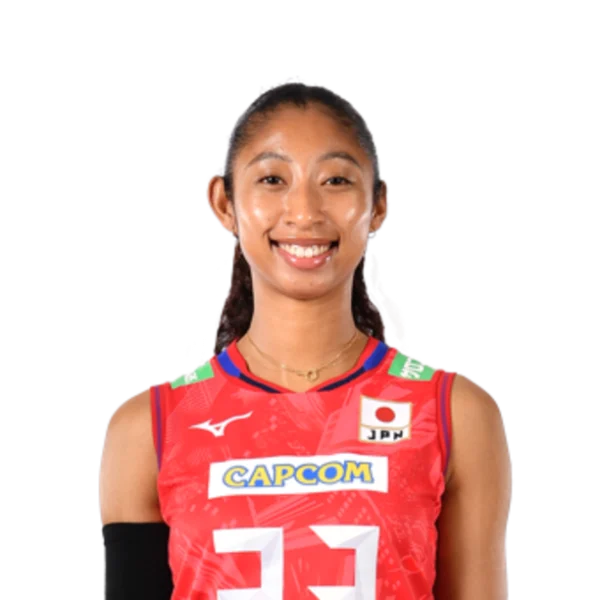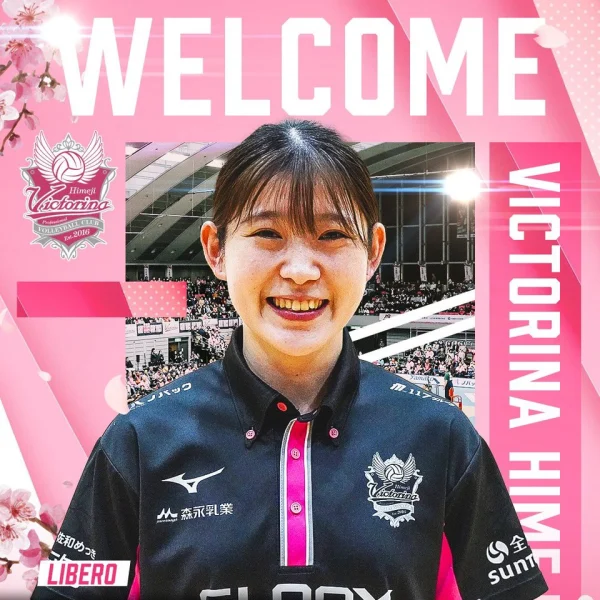

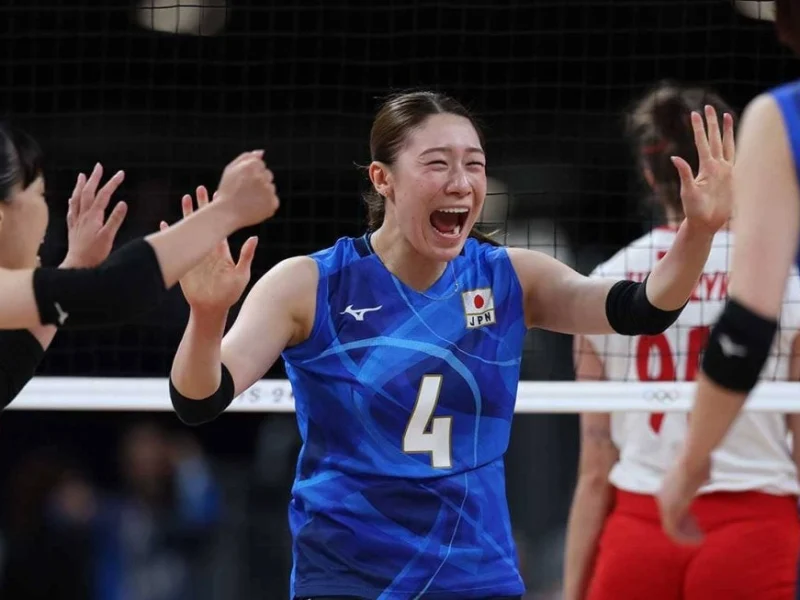
Mayu Ishikawa is a Japanese outside hitter and captain of the Japan Women’s National Volleyball Team who plays for Eczacıbaşı Peron İstanbul in Türkiye. Born in Aichi Prefecture on May 14, 2000, the 174 cm wing spiker developed through Shimokitazawa Seitoku High School and Toray Arrows before moving to Italy in 2023. Her early international résumé already included MVP honors at both the 2019 Asian Championship and the 2019 FIVB Women’s U20 World Championship.
Ishikawa has since become one of Japan’s primary six-rotation attackers. She played at both the Tokyo and Paris Olympics, helped Japan win silver at the 2024 Volleyball Nations League, became national-team captain in 2025 and led Japan to fourth place at the 2025 World Championship, where she was selected as a Best Outside Hitter. At club level, her European career has included seasons with Il Bisonte Firenze and Igor Gorgonzola Novara, a 2025 CEV Cup title with Novara, and a 2026 move to Eczacıbaşı for her first season in Türkiye.
Player Information
| Field | Details |
|---|---|
| Full Name | Mayu Ishikawa |
| Japanese Name | 石川 真佑 |
| Date of Birth | May 14, 2000 |
| Place of Birth | Aichi Prefecture, Japan |
| Nationality | Japanese |
| Position | Outside Hitter |
| Height | 174 cm |
| Spike Reach | 300 cm |
| Block Reach | 285 cm |
| High School | Shimokitazawa Seitoku High School |
| Previous Clubs | Toray Arrows, Il Bisonte Firenze, Igor Gorgonzola Novara |
| Current Club | Eczacıbaşı Peron İstanbul |
| Club Number | 4 |
| National Team | Japan Women’s National Volleyball Team |
| National-Team Number | 4 |
| National-Team Captain | 2025–present |
| Senior National-Team Debut | 2019 |
| Olympic Appearances | Tokyo 2020, Paris 2024 |
| @mayu_00514 |
The current Japan and Eczacıbaşı listings use 174 cm for Ishikawa’s height, while some competition databases have occasionally listed 175 cm. Her current club officially registers her as No. 4, the same number she wears with Japan. Eczacıbaşı’s 2026–27 roster uses the club’s current competition name, Eczacıbaşı Peron İstanbul.
Ishikawa’s Instagram account can be identified confidently as @mayu_00514. It is directly linked in a 2025 interview profile and has also been embedded in Volleyball World coverage of her career in Italy.
Early Life & Volleyball Beginnings
Ishikawa was born in Aichi Prefecture and grew up in a family with a strong sporting background. Her father, Mikihisa, competed in sprinting, while her mother, Midori, played basketball. Her older sister Naomi played volleyball, and her older brother Yuki Ishikawa went on to captain Japan’s men’s national team and build a long professional career in Europe. Volleyball World’s feature on the Ishikawa siblings describes a household in which several sports were already part of everyday life.
Mayu began playing volleyball in the third grade of elementary school. In a later KUMON interview, she recalled balancing school, study and evening club practice from a young age. By junior high school, volleyball had become serious enough that she moved away from her parents to concentrate on the sport, an early indication that her development path would extend well beyond local competition.
She eventually attended Shimokitazawa Seitoku High School in Tokyo, one of Japan’s best-known girls’ volleyball programs. The environment put Ishikawa into high-level national school competition before she entered the professional game, and she helped the school win at national level. Her Japanese Olympic Committee profile continues to list Shimokitazawa Seitoku as her final school.
The transition from promising school player to international-level prospect accelerated in 2019. Ishikawa moved into Toray Arrows while also taking on major responsibility for Japan’s age-group and senior teams. Within the same year, she would win two major international MVP awards and establish herself as one of the most important young outside hitters in Japanese volleyball.

Club Career
Toray Arrows: From High School Star to V.League Regular
Ishikawa’s first professional club was Toray Arrows, where she spent five seasons before moving abroad. The transition kept her in Japan but placed her into a much more physically demanding schedule against experienced professional blockers, servers and defenders.
Her first years with Toray also coincided with a rapid international rise, so club volleyball became the environment in which she had to turn youth-level scoring ability into a complete outside-hitter game. She was no longer responsible only for finishing attacks; serve reception, transition defense and maintaining efficiency across long domestic seasons became equally important.
Toray repeatedly challenged for major domestic honors during her tenure. Ishikawa was part of teams that won the Kurowashiki Tournament in 2019 and 2022, reached three league finals and finished runner-up in the Empress’ Cup in three consecutive seasons. Eczacıbaşı’s later career summary also credits her with a Kurowashiki Best Outside Hitter award and a 2022–23 league Best Outside Hitter recognition.
That final Toray season was especially important for what came next. Ishikawa had already become established with Japan, played at an Olympic Games and carried a substantial domestic workload. Remaining in the same league would have offered continuity; instead, she chose the uncertainty of moving overseas.
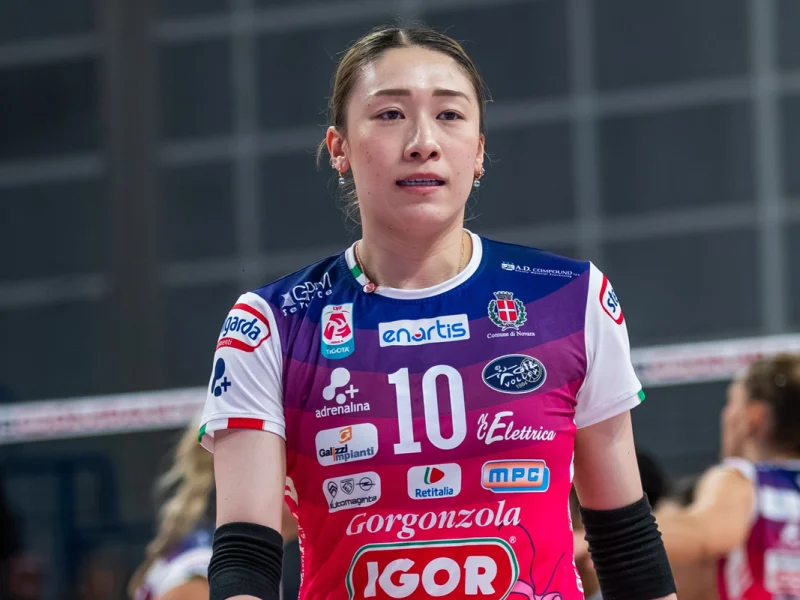
2023–24: First Overseas Season with Il Bisonte Firenze
In May 2023, Ishikawa made her first international club transfer, signing with Il Bisonte Firenze in Italy’s Serie A1. Volleyball World noted that she was leaving Toray after five seasons and moving into one of the deepest women’s domestic leagues in the world. (Volleyball World’s transfer announcement)
The move mattered because it removed nearly every element of familiarity at once. Ishikawa had to adapt to a different language, tactical culture, training environment and style of setting while facing larger blocking systems week after week. Her older brother Yuki, already experienced in Italian volleyball, could offer advice, but Mayu still had to establish an independent role in the women’s league.
She did that quickly. During the 2023–24 regular season, the Italian league’s official statistics credit Ishikawa with 341 points in 25 matches. She produced 313 attack kills, 15 aces and 13 blocks while handling 545 receptions. Her 39.3% attacking success and 36.7% perfect-reception rate showed that her first season in Italy involved substantial responsibility in both scoring and first contact.
The statistical workload is important because Firenze was not using her as an experimental foreign signing. She immediately became one of the team’s principal six-rotation attackers.
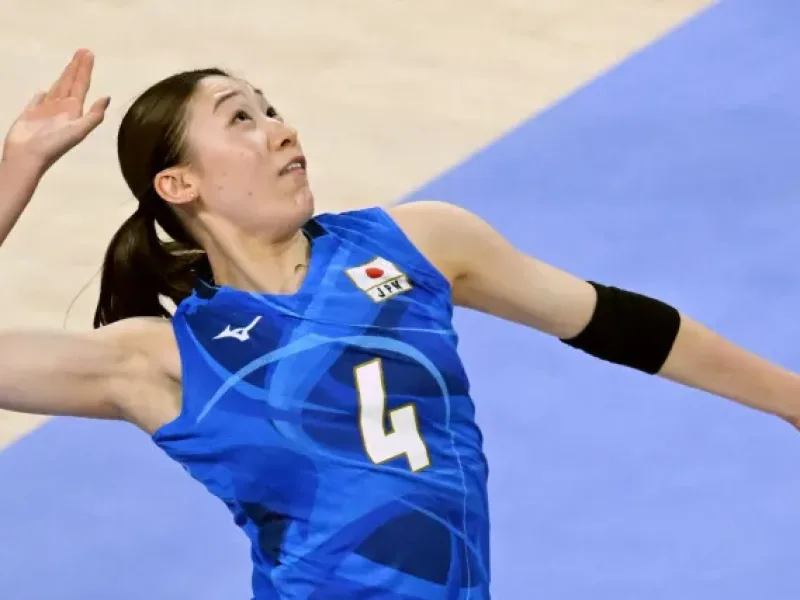
The season also forced Ishikawa to reassess how she dealt with mistakes. In a 2023 interview with Volleyball World, she spoke about wanting greater stability, fewer errors and a better connection with her setter. Rather than describing Italy only as a higher level of competition, she emphasized learning how to stay effective when the match was not unfolding comfortably.
2024–25: Novara and a First European Club Trophy
After one season in Florence, Ishikawa joined Igor Gorgonzola Novara for 2024–25. The transfer changed both expectations and competitive context. Novara entered seasons expecting to challenge for domestic trophies and deep European runs, giving Ishikawa less room for purely developmental performances.
Her first Novara season ultimately produced the biggest club trophy of her career to that point: the 2025 CEV Cup.
Novara beat CS Volei Alba Blaj 3–1 in the opening leg of the final. Ishikawa contributed to a strong fourth-set finish, and CEV’s first-leg report specifically highlighted her performance as Novara pulled away to close the match.
A week later, Novara completed the job with a 3–0 victory in Romania. The CEV championship report records a straight-set 30–28, 25–17, 28–26 win that secured the trophy without requiring a golden set.
The title gave Ishikawa her first European club championship and justified the move from a stable starting role in Firenze to the greater internal competition of Novara.
Her season also included one of Novara’s most significant domestic wins. Late in the Italian playoffs, Novara handed Conegliano a rare defeat, showing that the team could compete directly with the dominant force in Italian women’s volleyball. For Ishikawa, the larger significance was her growing ability to combine reception responsibility with efficient scoring in matches where serving pressure and block height were at Champions League level.
2025–26: A Second Novara Season and Greater Continuity
Ishikawa stayed with Novara for 2025–26 rather than turning her first CEV Cup season into another immediate transfer. That continuity gave her a second year in the same club environment and allowed her to enter the season already familiar with Italian tactical expectations.
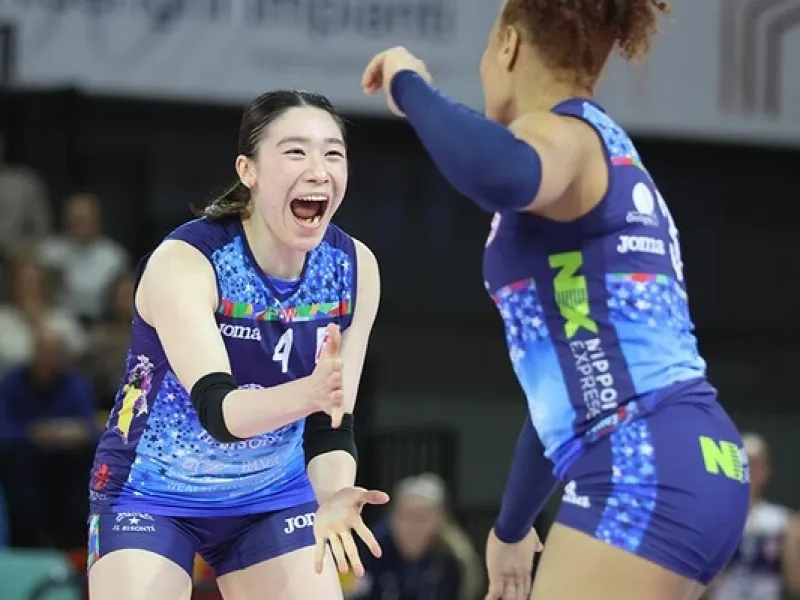
Volleyball World’s 2025–26 Serie A statistics credit her with 307 points, including 283 attack points, 11 blocks and 13 aces. Her attack efficiency finished above 40%, a useful indicator for a player who was still handling outside-hitter reception responsibilities rather than operating as a protected terminal scorer.
This season was less defined by one trophy than the previous year, but it strengthened the broader picture of Ishikawa as an established Serie A outside hitter. By the end of 2025–26, she had completed three consecutive seasons in Italy across two clubs and was no longer simply a Japanese player gaining overseas experience.
That distinction made her next transfer different from the Firenze move. The first move abroad was about proving she could operate outside Japan; the next was about taking an already established European profile into another elite league.
2026–27: Joining Eczacıbaşı Peron İstanbul
On May 29, 2026, Eczacıbaşı announced Ishikawa as a new signing for the 2026–27 season. The club’s official announcement emphasized her international experience, consistency, game discipline and leadership as Japan’s captain.
The move takes her from Italy to Türkiye’s Sultanlar Ligi, another competition with multiple Champions League-level rosters. Eczacıbaşı’s current competition identity is Eczacıbaşı Peron İstanbul, and the official 2026–27 squad lists Ishikawa as No. 4 alongside players including Ekaterina Antropova, Ebrar Karakurt, Aleksandra Uzelac, Dana Rettke and Camilla Weitzel.
The roster context is important. At Firenze, Ishikawa had to carry a large percentage of the attacking and reception workload. At Eczacıbaşı, she joins a deeper group with several high-volume attackers. Her value is therefore not defined solely by points; first-contact stability, transition scoring, defense and the ability to remain useful without monopolizing sets become even more important.
Club Career Timeline
| Seasons | Team | Country |
|---|---|---|
| 2018/19–2022/23 | Toray Arrows | Japan |
| 2023–2024 | Il Bisonte Firenze | Italy |
| 2024–2026 | Igor Gorgonzola Novara | Italy |
| 2026–present | Eczacıbaşı Peron İstanbul | Türkiye |
National Team Career
2019: Two MVP Awards and a Senior Breakthrough
The year 2019 established Ishikawa as more than the younger sister of an already-famous Japanese player.
Japan won the FIVB Women’s U20 World Championship in Mexico after recovering from two sets down to beat Italy 3–2 in the final. Ishikawa led Japan with 19 points in the title match, including five aces. She was then named tournament MVP and Best Outside Hitter. (Volleyball World’s U20 award report)
The importance of that tournament was not simply the medal. Japan went undefeated, and Ishikawa carried a major scoring role against the strongest teams in her age group. The final also demonstrated traits that would remain central to her senior game: serving pressure, the ability to score despite not being an unusually tall outside hitter, and the willingness to take difficult swings late in sets.
That same year, Ishikawa moved into senior international volleyball. Japan won the Asian Championship, and she again received MVP and Best Outside Hitter honors. She also appeared at the FIVB World Cup as Japan accelerated her transition from junior standout to senior outside hitter. Volleyball World’s later career review identifies 2019 as the season in which those junior and senior breakthroughs converged.
Tokyo Olympic Cycle and a Growing Six-Rotation Role
Ishikawa remained in Japan’s plans through the Tokyo Olympic cycle and gradually assumed a larger role on the wing.
One of the clearest signs of that development was reception. By the 2021 VNL, Ishikawa had emerged as one of the tournament’s strongest receivers, an important progression for a player whose early reputation was built heavily on attacking.
She then competed at the Tokyo 2020 Olympic Games, staged in 2021. Japan finished tenth. There was no medal, but the Olympic appearance gave Ishikawa another major tournament before she had reached her mid-twenties.
At the 2022 World Championship, Japan advanced to the quarterfinals and finished fifth. Ishikawa contributed not only as an attacker but also as a server, producing 14 aces across the tournament. That balance between attacking, serve receive and serving was increasingly becoming the reason she remained on court through complete rotations.
2024 VNL Silver and the Paris Olympics
Japan’s 2024 VNL run produced Ishikawa’s first senior world-level medal. The team advanced all the way to the final and finished runner-up, earning silver.
The result mattered for a Japanese group that had been competitive at major events without consistently converting deep runs into podium finishes. Ishikawa was by then a core outside hitter rather than an emerging player, carrying both attacking and reception responsibility throughout the campaign.
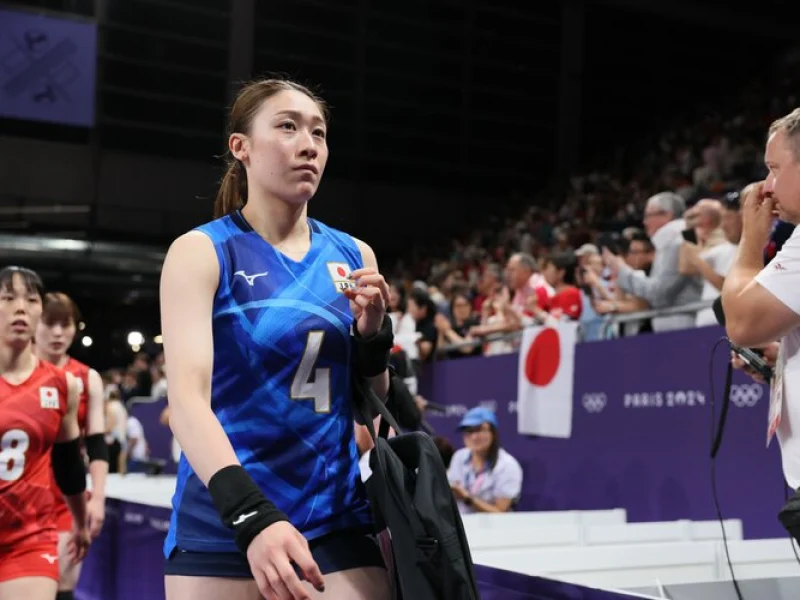
Weeks later, she competed in her second Olympics in Paris. Japan faced Poland, Brazil and Kenya in pool play and finished ninth overall. The Japanese Olympic Committee’s Paris record confirms both her Tokyo and Paris appearances.
The Olympic result was disappointing compared with the VNL silver, but it also marked the end of an international cycle. Longtime captain Sarina Koga retired after Paris, creating a leadership vacancy that would change Ishikawa’s role the following season.
2025: Becoming Japan Captain
Japan appointed Ishikawa captain in 2025, giving her responsibility for a team entering a new era under head coach Ferhat Akbaş.
Her first VNL match as captain immediately put the change into view. Japan swept the Netherlands 3–0, with Ishikawa scoring 15 points. Volleyball World’s match report described it as her first appearance in the captaincy after inheriting the role from Koga.
The captaincy did not reduce her technical workload. She remained one of Japan’s main attackers while also carrying substantial reception and defensive responsibility. Japan eventually finished fourth in the 2025 VNL, narrowly missing another medal.
The more important tournament came later that summer.
2025 World Championship: Captain, Scorer and Best Outside Hitter
Japan reached the semifinals of the 2025 FIVB Women’s World Championship, its deepest run at the event in years. Ishikawa’s role went far beyond ceremonial captaincy.
She scored 141 points in seven matches, including 128 attack points, five blocks and eight aces. Volleyball World’s tournament statistics place her third among all scorers and second in attack kills.
Several matches required her to carry unusually heavy offensive volume. She scored 29 points in Japan’s comeback against Ukraine and 25 in the quarterfinal against the Netherlands. Against the Dutch, Ishikawa scored seven points in the deciding fifth set and finished the match herself as Japan completed a 3–2 comeback to reach the semifinals. (Volleyball World’s quarterfinal report)
Japan lost to Türkiye in the semifinal and Brazil in the bronze-medal match, finishing fourth. Ishikawa therefore left without a team medal, but her individual tournament was one of the strongest of her senior career.
She was selected alongside Brazil captain Gabi as one of the Best Outside Hitters on the World Championship Dream Team. (Volleyball World’s Dream Team announcement)
Her all-around statistics were equally significant. Ishikawa finished the tournament with 73 successful receptions, the highest total of any player, and 73 digs, second only to Italy libero Monica De Gennaro. That combination explains why her tournament value cannot be measured through 141 points alone.
2026: Captaincy Continues, Heavy VNL Scoring and Asian Bronze
Japan retained Ishikawa as captain for 2026. At the national team’s May kickoff press conference, she spoke about bringing players and staff together around the season’s objectives, confirming that the leadership role had become part of her longer-term place in the team rather than a one-year assignment. (JVA’s 2026 national-team press conference)
Her VNL production remained high. Volleyball World credits Ishikawa with 215 points, consisting of 200 attack points, six blocks and nine aces. She averaged 16.54 points per match and finished ninth among the tournament’s scorers. (2026 VNL statistics)
Japan reached the VNL quarterfinals before losing to Brazil. The result was a step back from the medal runs of 2024 and the World Championship semifinal of 2025, but Ishikawa’s offensive workload remained firmly at first-option level.
The 2026 Asian Championship provided another tournament block. Ishikawa scored 69 points across six matches—56 in attack, eight from blocks and five from serve. She produced 23 points in Japan’s semifinal against Thailand, although Japan lost 3–1, before the team recovered to finish with bronze. (Volleyball World’s AVC statistics)
That summer closed with a useful distinction in her international profile. Ishikawa had already been Japan’s primary scorer for several seasons, but 2025 and 2026 added sustained captaincy to the same attacking, reception and defensive workload.
Playing Style & Strengths
Ishikawa is a six-rotation outside hitter whose value comes from combining high-volume scoring with unusually strong serve reception and floor defense.
At 174 cm, she is shorter than many elite international outside hitters. Her scoring therefore depends less on simply contacting the ball above the opposing block and more on approach speed, timing, arm speed, shot selection and the ability to use the block rather than always attack through it.
Her first Serie A season illustrates the workload. Firenze gave Ishikawa 796 attacks across the 2023–24 regular season, from which she produced 313 kills. At the same time, she handled 545 receptions. That is the profile of a full six-rotation outside hitter, not a player protected in passing so she can concentrate only on scoring.
The reception side became even clearer at the 2025 World Championship. Ishikawa finished as the tournament’s statistical best receiver with 73 successful receptions while also ranking third in total scoring and second in attack kills. Few players at that event were carrying a comparable combination of first-contact responsibility and terminal attacking volume.
Her defense also helps Japan extend rallies until its faster transition offense can be re-established. She recorded 73 digs at the same World Championship, second in the competition. For Japan—a team that often compensates for size disadvantages through speed, coverage and repeated defensive contacts—that skill set is tactically important rather than incidental.
Serving has developed into another useful pressure point. Ishikawa was Japan’s leading ace producer at the 2022 World Championship with 14, and she added nine service points during the 2026 VNL. Her serve does not need to produce an ace to be valuable; forcing an opponent away from perfect reception gives Japan’s block-defense system a more manageable attack to read.
Her attacking game has also evolved through Italy. In her first months with Firenze, Ishikawa spoke about the need to reduce errors, become more stable and improve communication with her setter. The challenge was not simply learning to hit harder against larger blocks. It was learning to make better decisions when the first swing was not available. (Her 2023 Volleyball World interview)
The 2026 Asian Championship offered an interesting reminder that her contribution at the net is not limited to attack. She recorded eight block points in six matches despite her 174 cm height. The number does not make blocking the defining feature of her game, but it reflects timing, positioning and reading rather than dependence on reach alone.
Leadership now forms part of the tactical picture as well. Since becoming captain, Ishikawa has remained one of Japan’s heaviest-workload players rather than shifting into a lower-volume veteran role. She leads while still being expected to pass, defend and take decisive swings—a much more demanding form of captaincy than simply providing experience from the court.
Major Achievements
Selected National Team Honors
| Year | Competition | Result |
|---|---|---|
| 2019 | Asian Championship | Champion |
| 2019 | FIVB Women’s U20 World Championship | Champion |
| 2024 | Volleyball Nations League | Silver |
| 2026 | Asian Championship | Bronze |
The 2019 U20 world title remains one of the most important early achievements because Ishikawa was not simply part of the roster. She led Japan with 19 points in the five-set final against Italy and was selected tournament MVP.
The 2024 VNL silver was her first medal at a senior global competition and marked Japan’s breakthrough onto a major world-level podium during her established senior career. Eczacıbaşı’s official career summary also lists the VNL runner-up finish among her principal national-team achievements.
Selected Club Honors
| Year / Season | Competition | Result | Team |
|---|---|---|---|
| 2018–19 | Kurowashiki Tournament | Champion | Toray Arrows |
| 2021–22 | Kurowashiki Tournament | Champion | Toray Arrows |
| 2024–25 | CEV Cup | Champion | Igor Gorgonzola Novara |
The 2025 CEV Cup is Ishikawa’s most significant European club title to date. Novara won both legs of the final against Alba Blaj, including a 3–0 away victory that completed the championship.
Selected Individual Awards
| Year / Season | Competition | Award |
|---|---|---|
| 2018–19 | Kurowashiki Tournament | Best Outside Hitter |
| 2019 | Asian Championship | MVP |
| 2019 | Asian Championship | Best Outside Hitter |
| 2019 | FIVB Women’s U20 World Championship | MVP |
| 2019 | FIVB Women’s U20 World Championship | Best Outside Hitter |
| 2022–23 | Japan V.League | Best Outside Hitter |
| 2025 | Volleyball Nations League | Best Receiver |
| 2025 | FIVB Women’s World Championship | Best Outside Hitter |
| 2025 | FIVB Women’s World Championship | Statistical Best Receiver |
Her 2025 World Championship recognition is particularly notable because it combines an award selected for the tournament Dream Team with a separate statistical distinction. Ishikawa was chosen as a Best Outside Hitter alongside Gabi and also finished first in successful receptions.
Family & Personal Life
Mayu Ishikawa’s family connection to volleyball is unusually strong, but her career has developed independently of her brother’s.
Her older brother Yuki Ishikawa became one of Japan’s most prominent men’s players and was the first sibling to establish a long professional career in Italy. Mayu has acknowledged that his experience helped when she was considering her own move abroad, particularly because he could explain parts of Italian volleyball and life that were difficult to understand from Japan.
Their athletic background extends beyond the two professional volleyball players. Their father competed as a sprinter, their mother played basketball and their older sister also played volleyball. That environment gave Mayu exposure to competitive sport long before she had to decide whether volleyball could become a career.
Living abroad required adaptations that were less visible on court. During her first Firenze season, Ishikawa spoke about cooking Japanese meals for herself, exploring Florence and becoming more comfortable with daily life away from Japan. Those details mattered because the 2023 transfer was not only a tactical challenge; it was the first time she had built a full professional season outside her home country. (Volleyball World’s Italy interview)
Her later reflections show that Italy also changed how she processed mistakes. In her 2025 KUMON interview, Ishikawa explained that she had previously tended to overthink errors, while playing abroad helped her see how quickly teammates could move on to the next rally. She connected that experience with becoming more willing to reset rather than carry one mistake into the next point.
That mindset has become more relevant since she took over the national-team captaincy. Ishikawa has described leadership less as giving speeches and more as thinking independently, acting for the team and continuing to improve personally while asking others to do the same.
Where Is Mayu Ishikawa Playing Now?
Mayu Ishikawa currently plays for Eczacıbaşı Peron İstanbul in Türkiye and wears No. 4. She signed with Eczacıbaşı in May 2026 after completing two seasons with Igor Gorgonzola Novara and three consecutive years in Italy overall. (Eczacıbaşı’s signing announcement)
The move places her in the Sultanlar Ligi for the first time. Eczacıbaşı’s 2026–27 squad also includes several high-level international attackers, so Ishikawa’s role is likely to require a different balance from the one she carried with Firenze or Japan. Reception, defense and low-error transition attacking can be as valuable as leading the team in points on a roster with multiple terminal scorers.
The club now competes under the Eczacıbaşı Peron İstanbul name, with Ishikawa officially listed as No. 4 on its current roster.
Internationally, she remains the captain of the Japan Women’s National Volleyball Team. Japan retained her as captain for 2026, and she continued to carry one of the largest attacking workloads on the squad through the VNL and Asian Championship.
As of October 2026, this combination makes Ishikawa’s current phase distinct from her first move abroad three years earlier. She is no longer leaving Japan to prove that she can handle European volleyball; she is entering another elite league as an established national-team captain, World Championship Dream Team outside hitter and experienced Serie A player.
Recent Performance Snapshot
2025–26 Club Season with Novara
| Statistic | Total |
|---|---|
| Total Points | 307 |
| Attack Points | 283 |
| Block Points | 11 |
| Service Aces | 13 |
| Attack Efficiency | 40.26% |
The 2025–26 season provided a useful final Italian baseline before Ishikawa moved to Türkiye. More than 90% of her points came through attack, but the figure has to be read alongside the reception and defensive workload of her position. She was not operating as a protected opposite; she remained part of Novara’s serve-receive structure while contributing more than 300 points.
2026 Volleyball Nations League
| Statistic | Total |
|---|---|
| Total Points | 215 |
| Attack Points | 200 |
| Block Points | 6 |
| Service Points | 9 |
| Attack Efficiency | 37.59% |
| Average Points per Match | 16.54 |
Ishikawa finished the 2026 VNL with 215 points, ninth among all scorers. Japan had multiple capable wing attackers, including Yukiko Wada and Yoshino Sato, but Ishikawa still carried a first-option workload through much of the competition. (Official VNL statistics)
The total is also useful in comparison with her 2025 World Championship performance. Across both tournaments she remained a high-volume scorer while continuing to occupy a full outside-hitter role in reception and defense.
2026 Asian Championship
| Statistic | Total |
|---|---|
| Matches | 6 |
| Total Points | 69 |
| Attack Points | 56 |
| Block Points | 8 |
| Service Points | 5 |
| Attack Efficiency | 36.84% |
| Best Scoring Match | 23 points vs. Thailand |
The Asian Championship produced lower overall attacking volume than the VNL but a more balanced scoring distribution. Eight block points in six matches stand out for a 174 cm outside hitter, while five aces added another source of direct scoring. (Official AVC player statistics)
Her biggest match came in the semifinal against Thailand, where she scored 23 points. Japan lost the match, but recovered to finish the tournament with bronze.
Frequently Asked Questions
What position does Mayu Ishikawa play?
Mayu Ishikawa is an outside hitter. She plays all six rotations and contributes in attack, serve reception, floor defense and serving rather than functioning only as a front-row scorer.
How tall is Mayu Ishikawa?
Ishikawa is listed at 174 cm by Japan’s national-team program and the 2026 VNL player database. Some individual competition listings have used 175 cm, but 174 cm is the current figure used across multiple primary sources.
Which club does Mayu Ishikawa play for?
She plays for Eczacıbaşı Peron İstanbul in Türkiye for the 2026–27 season. She joined Eczacıbaşı after three seasons in Italy with Il Bisonte Firenze and Igor Gorgonzola Novara.
Is Mayu Ishikawa the captain of Japan?
Yes. Ishikawa became captain of the Japan Women’s National Volleyball Team in 2025 following Sarina Koga’s retirement and retained the role for the 2026 international season.
Is Mayu Ishikawa related to Yuki Ishikawa?
Yes. Yuki Ishikawa is her older brother. Both became senior Japanese internationals and later built professional careers abroad, including extensive experience in European club volleyball.
Has Mayu Ishikawa played at the Olympics?
Yes. She represented Japan at Tokyo 2020 and Paris 2024. Japan finished tenth in Tokyo and ninth in Paris.
What did Mayu Ishikawa win at the 2025 World Championship?
Japan finished fourth, but Ishikawa was selected as a Best Outside Hitter on the tournament Dream Team. She also led the statistical receiver rankings with 73 successful receptions and finished third among all scorers with 141 points.
What is Mayu Ishikawa’s Instagram?
Her official Instagram account is @mayu_00514. The account has been directly identified in interviews and Volleyball World coverage of Ishikawa.
References
- Japan Volleyball Association — 2026 Women’s National Team Press Conference
- Japanese Olympic Committee — Mayu Ishikawa Athlete Profile
- Eczacıbaşı Sports Club — Welcome Mayu Ishikawa
- Eczacıbaşı Sports Club — 2026–27 Eczacıbaşı Peron İstanbul Roster
- Volleyball World — Mayu Ishikawa 2026 VNL Statistics
- Volleyball World — Mayu Ishikawa 2026 Asian Championship Statistics
- Volleyball World — 2025 World Championship Dream Team
- Volleyball World — 2025 World Championship Statistical Leaders
- Volleyball World — Mayu Ishikawa Named 2019 U20 World Championship MVP
- Volleyball World — Mayu Ishikawa’s First International Transfer to Italy
- Lega Pallavolo Serie A Femminile — Mayu Ishikawa 2023–24 Statistics
- CEV — Igor Gorgonzola Novara Crowned 2025 CEV Cup Champions