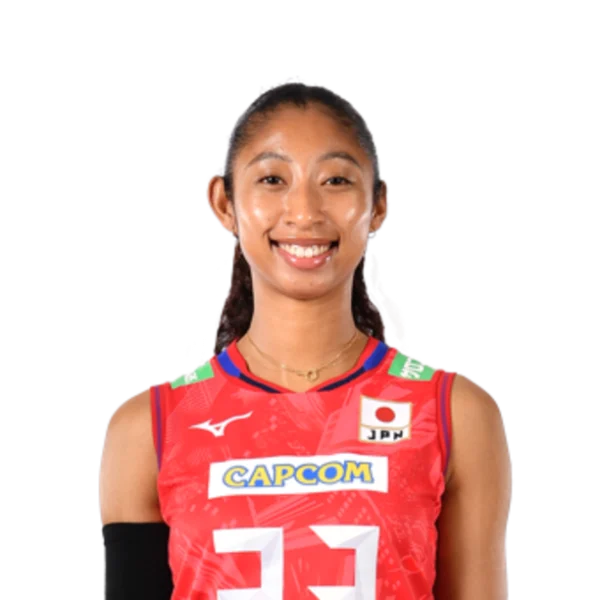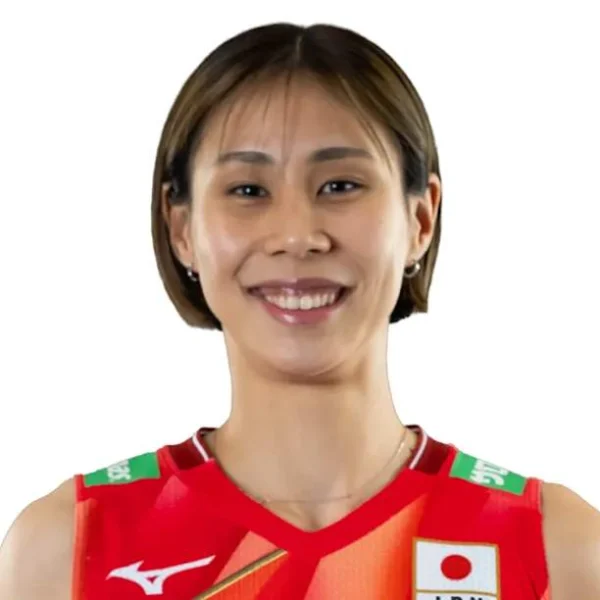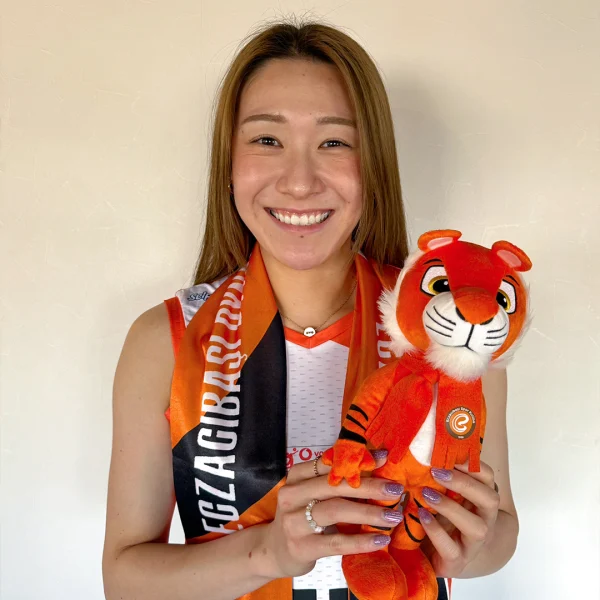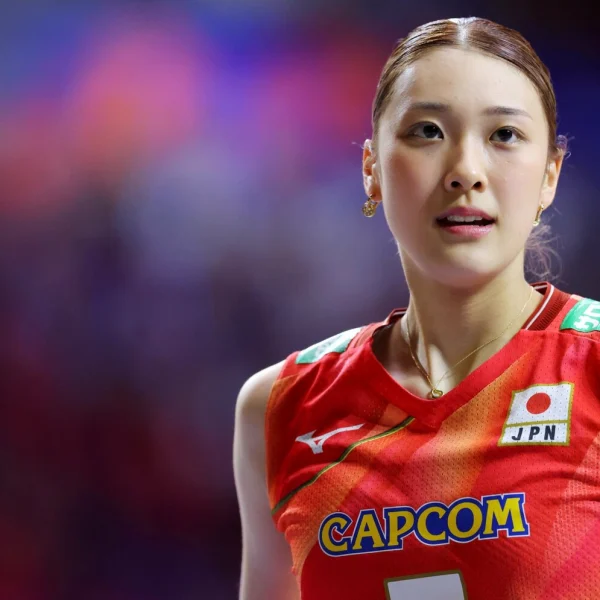
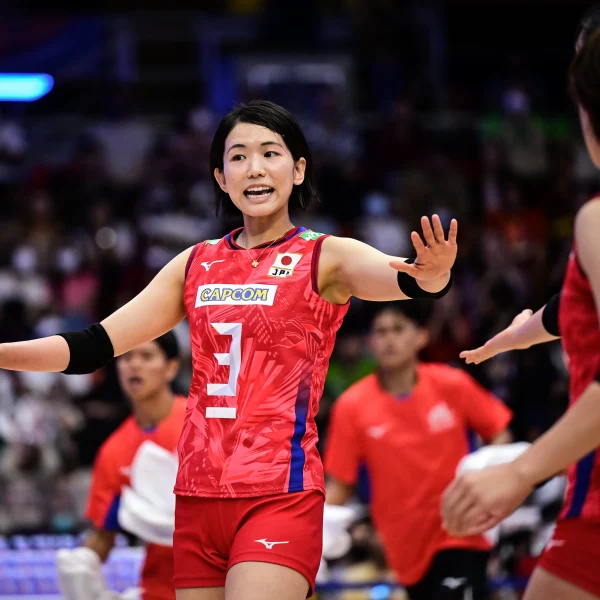
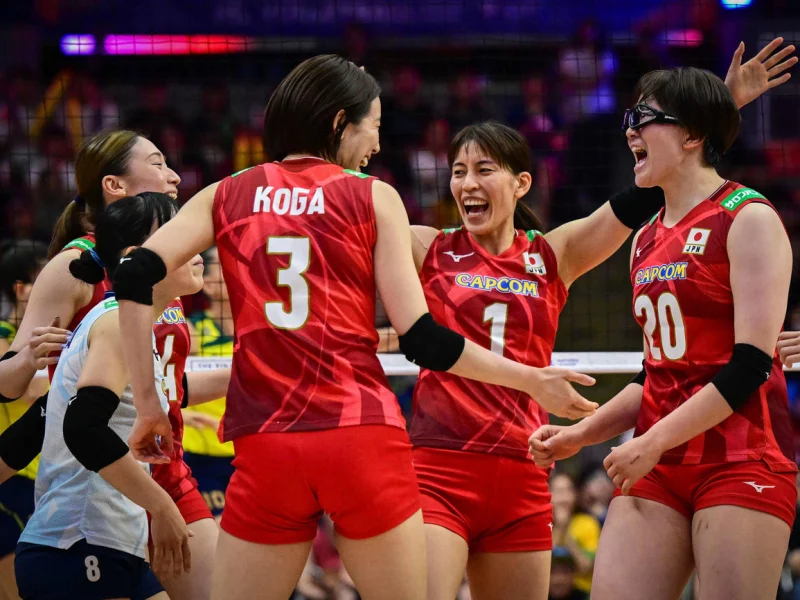
Sarina Koga is a retired Japanese outside hitter who captained the Japan women’s national team from 2022 through the Paris 2024 Olympic cycle. Born on May 21, 1996, in Saga Prefecture, the 180 cm attacker spent her entire senior club career with NEC Red Rockets and represented Japan at both the Tokyo 2020 and Paris 2024 Olympic Games.
Koga entered the senior national-team system as a teenager, recovered from the disappointment of missing the Rio 2016 Olympic roster, and eventually became Japan’s primary attacking outside hitter and captain. Her final international season brought Japan its first Volleyball Nations League medal, a silver in 2024, while her final two domestic seasons ended with consecutive Japanese league titles and consecutive league MVP awards. She retired after Paris 2024 at age 28.
Player Information
| Field | Information |
|---|---|
| Full Name | Sarina Koga |
| Married Name | Sarina Nishida |
| Native Name | 古賀 紗理那 |
| Date of Birth | May 21, 1996 |
| Nationality | Japanese |
| Born | Saga Prefecture, Japan |
| Position | Outside Hitter |
| Height | 180 cm |
| Weight | 66 kg |
| Spike Reach | 305 cm |
| Block Reach | 290 cm |
| Dominant Hand | Right |
| Senior Club | NEC Red Rockets |
| Final Club Number | 2 |
| National Team | Japan Women’s National Volleyball Team |
| National-Team Career | 2013–2024 |
| Final National-Team Number | 3 |
| Career Status | Retired |
| Retirement | August 2024, after the Paris Olympic Games |
| @sarina.koga |
JVA’s 2022 national-team data listed Koga at 180 cm and 66 kg, with a 305 cm spike reach and 290 cm block reach. The Tokyo Olympic roster had previously recorded a 307 cm spike reach, while retaining the same 290 cm block reach; the later JVA figure is used here for consistency with her more recent federation profile.
Early Life & Volleyball Beginnings
Koga was born in Saga Prefecture and began playing volleyball in elementary school. Her mother had played the sport, and Koga started alongside her older sister when she was in second grade. By the end of junior high school, she had already grown to 180 cm and was attracting national attention. In 2011, she helped her school reach third place at the All-Japan Junior High School Championship and received an individual outstanding-player award.
She continued her development at Kumamoto Shin-ai Girls’ High School, one of the schools most closely associated with her early rise. Koga quickly moved beyond domestic school competition. As a first-year high school player, she represented Japan at the 2012 Asian U17 Championship and helped the team win gold while earning both the tournament MVP and Best Scorer awards.
The following year accelerated her career further. At 16, Koga was selected for Japan’s senior national-team program while still in high school. She also played at the 2013 FIVB U23 World Championship, where Japan won bronze and Koga was selected as one of the tournament’s best outside hitters. FIVB later highlighted those youth achievements as the foundation of her rapid transition into senior international volleyball.
Koga’s senior club destination was settled before she had finished school. NEC Red Rockets secured her after significant domestic interest, and she appeared as a prospective player during the 2014–15 V.Premier League season. In the championship match against Hisamitsu Springs, Koga came off the bench and scored 13 points as NEC won its first league title in a decade.
Club Career
Immediate Impact with NEC
Koga’s entire senior club career was spent with NEC Red Rockets, a level of continuity that became unusual among top international players of her generation. Although her formal first full season was 2015–16, she had already contributed to NEC’s 2014–15 championship as a prospective player before graduating from high school.
Her first complete professional season brought the V.Premier League Best Newcomer award. The following year produced a much larger breakthrough. NEC won the 2016 Asian Women’s Club Championship, and Koga was named tournament MVP. The club then won the 2016–17 V.Premier League championship, with Koga taking both the league MVP and Best Six honors.
Those results established her as more than a national-team prospect. By her early twenties, Koga had already been the most valuable player of both a continental club championship and Japan’s top domestic league.
Becoming NEC’s Primary Outside Hitter
The years that followed did not produce an uninterrupted run of championships, but Koga became increasingly central to NEC’s offense. Her role required substantially more than terminal attacking. As a Japanese outside hitter, she remained involved in serve reception while carrying a high number of swings, including difficult transition and out-of-system balls.
A February 2022 V.League weekend illustrated that workload. Koga scored 17 points in a four-set victory over Toyota Auto Body Queenseis and then produced 25 points against Toray Arrows the next day, including five blocks. Volleyball World described her as NEC’s leading figure even though the two-match weekend ended with one win and one loss.
That period also coincided with a larger role for Japan. The same player who had once been fighting to establish herself as an international starter was now expected to carry major offensive responsibility for both club and country.
Back-to-Back Domestic Doubles at the Finish
Koga’s final two seasons became the most successful sustained domestic stretch of her career.
NEC won the Empress’s Cup in 2022, with Koga named MVP, before winning the 2022–23 V.LEAGUE Division 1 Women title. Koga received league MVP, Best Six and Best Server honors. The following season NEC retained both major trophies: it won another Empress’s Cup and repeated as V.League champion, with Koga again taking MVP honors in both competitions.
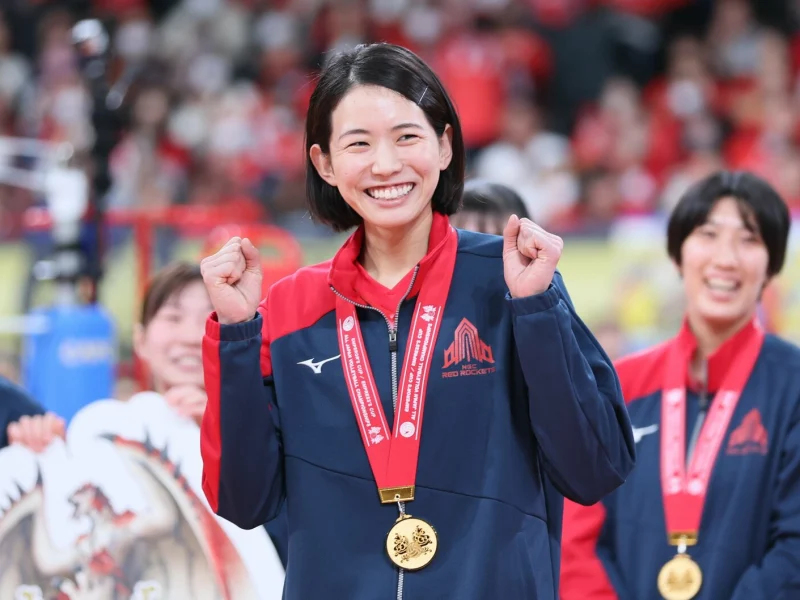
The final championship gave her consecutive league titles in the last two seasons of her career. NEC’s retirement announcement credited Koga with four Japanese league championships overall, two Empress’s Cups, three league MVP awards and two Empress’s Cup MVP awards during her time with the organization.
The timing made the finish distinctive. Koga did not spend her last seasons gradually moving away from a primary role. She retired after two straight league MVP campaigns while still serving as NEC’s main attacking outside hitter and Japan’s national-team captain.
National Team Career
Teenage Debut and Early International Recognition
Koga entered Japan’s senior national-team structure in 2013 while still in high school. Her early international résumé was already substantial: Asian U17 gold and MVP in 2012, U23 World Championship bronze and a Dream Team outside-hitter selection in 2013, followed by her transition into regular senior competition.
The 2015 FIVB World Cup was an early indication that Koga could contribute in both major responsibilities of the outside-hitter position. She finished among the tournament’s leading scorers while also receiving the Best Receiver award. NEC’s official career summary later retained that receiving distinction among her principal national-team achievements.
That rise made her omission from the 2016 Rio Olympic roster especially significant. Koga had played through the Olympic qualification process but was one of the final players left out when Japan selected its 12-player Olympic squad.
The setback became a real dividing point in her international career. She returned to NEC, continued developing, and later spoke about the years after Rio as a period in which she had to change how she approached elite international volleyball rather than simply rely on being viewed as Japan’s next major attacker.
Asian Champion and the Road to Tokyo
Koga returned to major international success in 2017 when Japan won the Asian Championship. She was named tournament MVP, giving her a major senior national-team individual award four years after her first senior selection.
She remained part of Japan’s core through the 2018 World Championship and 2019 World Cup. At the 2019 World Cup, she scored 94 points as Japan finished fifth. By the 2021 Volleyball Nations League, she had developed into Japan’s primary scorer as the team reached the semifinals and finished fourth.
Tokyo 2020, played in 2021, finally gave Koga the Olympic appearance she had missed five years earlier. Official Olympic records listed her as a 180 cm right-handed outside hitter with a 307 cm spike reach at the Games. Japan ultimately finished tenth.
The Olympic result was disappointing for a host team hoping to challenge for the knockout rounds, but Koga’s international career continued rather than ending with Tokyo.
Captaincy and a Larger Offensive Role
When Masayoshi Manabe returned as Japan’s head coach in 2022, he appointed Koga captain. The decision formalized a role she had already begun to occupy through scoring responsibility and experience.
Japan began the 2022 VNL with a long winning run, and Koga continued to handle a heavy attacking workload. Against the Netherlands, she scored 31 points, all from attack, despite Japan losing in five sets.
At the 2022 World Championship, Japan reached the quarterfinals and finished fifth. Koga’s tournament was interrupted by injury during the first phase, but she returned during the second round against Belgium. That return mattered because Japan’s offense had been built with its captain as a central high-ball option.
She remained captain through 2023, when Japan competed in the Olympic qualification tournament but narrowly missed securing its Paris place there. Qualification was eventually completed through the FIVB World Ranking during the 2024 VNL.
VNL Silver and the Final Olympic Season
Koga’s last national-team season became one of Japan’s strongest in the modern VNL era.
Japan reached the 2024 VNL final for the first time. In the quarterfinal against China, Koga scored a match-high 22 points in a straight-set victory. During the Finals she finished third among all scorers with 57 points and second in attack points with 55. She also appeared among the leading players in both digging and receiving statistics, a useful snapshot of the two-way responsibility she carried.
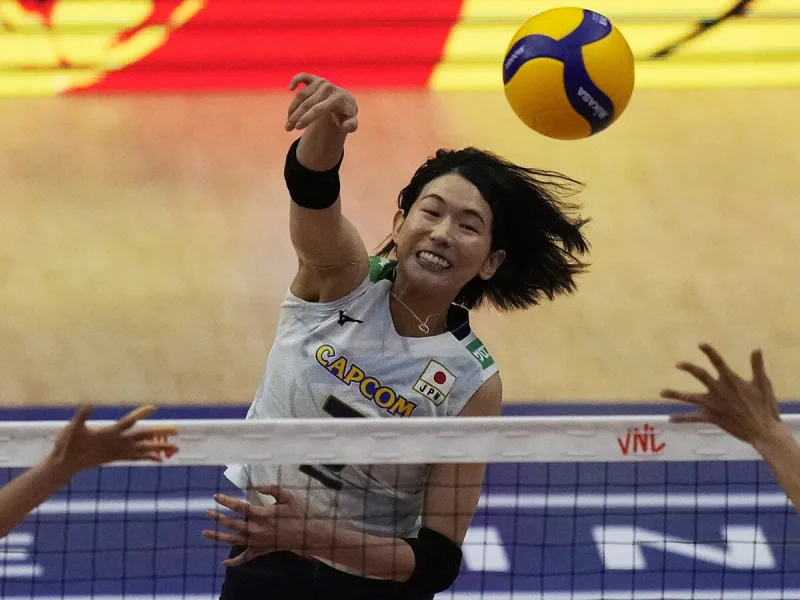
Italy defeated Japan 3–1 in the gold-medal match, but the silver was Japan’s first medal in the Volleyball Nations League. Koga was selected as one of the tournament’s two Best Outside Hitters alongside Myriam Sylla.
Paris 2024 was her second Olympic appearance and her final tournament. Koga scored 26 points against Poland in Japan’s opening match and finished the three-match pool stage with 52 points. Japan defeated Kenya in its final match but was eliminated before the quarterfinals, finishing ninth overall.
Koga scored 16 points against Kenya in what became the final competitive match of her career. After the match, she was applauded by the crowd and embraced by her teammates as her 11-year senior national-team career came to an end.
Playing Style & Strengths
Koga’s value as an outside hitter came from the combination of scoring volume and first-contact responsibility. At 180 cm, she was not unusually tall by international outside-hitter standards, so her offense depended heavily on approach timing, speed into the ball, shot selection and the ability to find scoring angles against larger blocks.
Her cross-court attack became one of her most recognizable offensive patterns. Koga could hit hard through that angle, but her production was not based solely on power. She became increasingly effective at changing direction late, attacking off the block and scoring against established defensive formations rather than requiring perfect one-on-one situations.
The amount of offense Japan could place on her was especially visible late in her career. She scored 31 attack points against the Netherlands in the 2022 VNL and produced 25 kills among her 26 points against Poland at Paris 2024. Those matches came against large European blocks and show the extent to which Japan trusted her as a high-volume left-side option.
What separated Koga from a scoring specialist was that Japan could ask for that workload without removing her from serve reception. Her 2015 World Cup Best Receiver award came early in her international career, while her 2024 VNL Finals statistics again placed her among the competition leaders in both scoring and backcourt categories.
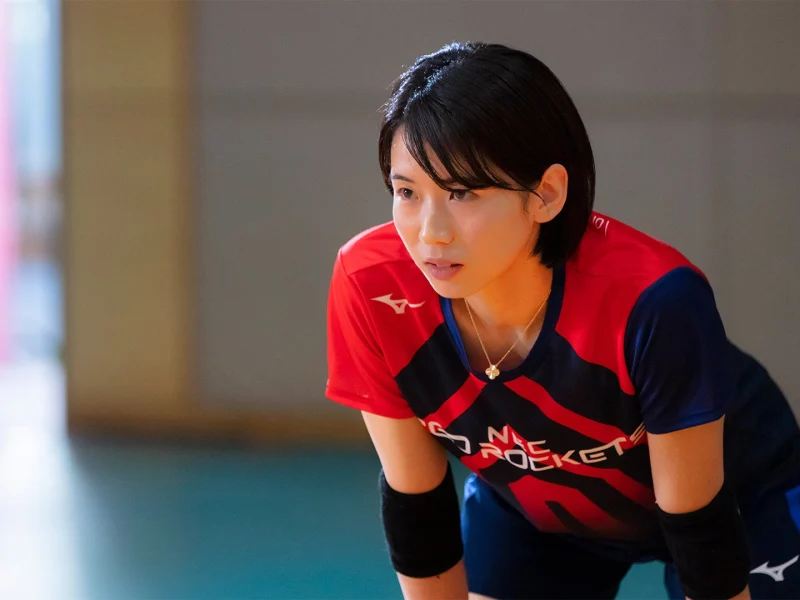
Her serve also changed across her career. Koga later acknowledged that serving had once been a weakness, but she became more willing to use it aggressively in pressure situations. In a post-retirement interview, she identified an ace on Brazil’s match point at Paris 2024 as a moment that demonstrated how far that part of her game had developed.
The result was an outside hitter whose role remained recognizably Japanese—receive, defend, transition and attack—but who also became capable of carrying the scoring volume normally associated with larger international wings.
Major Achievements
Selected National Team Honors
| Year | Competition | Result |
|---|---|---|
| 2012 | Asian U17 Championship | Gold |
| 2013 | FIVB U23 World Championship | Bronze |
| 2015 | Montreux Volley Masters | Silver |
| 2017 | Asian Championship | Gold |
| 2024 | Volleyball Nations League | Silver |
Selected Club Honors
| Year / Season | Team | Competition | Result |
|---|---|---|---|
| 2014–15 | NEC Red Rockets | Japan V.Premier League | Winner |
| 2016 | NEC Red Rockets | Asian Women’s Club Championship | Winner |
| 2016–17 | NEC Red Rockets | Japan V.Premier League | Winner |
| 2022 | NEC Red Rockets | Empress’s Cup | Winner |
| 2022–23 | NEC Red Rockets | V.LEAGUE Division 1 Women | Winner |
| 2023 | NEC Red Rockets | Empress’s Cup | Winner |
| 2023–24 | NEC Red Rockets | V.LEAGUE Division 1 Women | Winner |
Selected Individual Awards
| Year / Season | Competition | Award |
|---|---|---|
| 2012 | Asian U17 Championship | MVP |
| 2012 | Asian U17 Championship | Best Scorer |
| 2013 | FIVB U23 World Championship | Best Outside Hitter |
| 2015 | FIVB World Cup | Best Receiver |
| 2015–16 | Japan V.Premier League | Best Newcomer |
| 2016 | Asian Women’s Club Championship | MVP |
| 2016–17 | Japan V.Premier League | MVP, Best Six |
| 2017 | Asian Championship | MVP |
| 2022 | Empress’s Cup | MVP |
| 2022–23 | V.LEAGUE Division 1 Women | MVP, Best Six, Best Server |
| 2023 | Empress’s Cup | MVP |
| 2023–24 | V.LEAGUE Division 1 Women | MVP, Best Six |
| 2024 | Volleyball Nations League | Best Outside Hitter |
NEC’s final career summary records four Japanese league championships, two Empress’s Cups and three league MVP awards during Koga’s tenure.
Personal Life & Relationships
Koga is married to Japanese opposite Yuji Nishida, one of the leading players of Japan’s men’s national team. The couple publicly announced their marriage on December 31, 2022. Their relationship attracted particular attention within international volleyball because both were active Japanese national-team players competing at the sport’s highest level.
They continued to compete under their established sporting names after marriage. International competition databases have also used the name Sarina Nishida, while Japanese volleyball coverage and Koga’s own public work have continued to use Sarina Koga prominently.
Koga’s family also influenced the beginning of her volleyball career. She has said that she started the sport in elementary school after following her mother and older sister’s connection to volleyball. That early family influence eventually led to a career that lasted from junior competition through two Olympic Games.
Post-Retirement Work
Koga’s final match came in August 2024, but she has remained publicly involved in sport after leaving professional volleyball.
In July 2025, KADOKAWA published her first essay, Kōkai Shinai Sentaku (“A Choice Without Regret”), a 240-page book built around the decisions, setbacks and relationships that shaped her playing career. The publisher describes it as her first extended account of the thinking behind decisions she made from her teenage national-team years through retirement.
She has also appeared in talks and sports-related public events. In interviews immediately after retirement, Koga spoke about an interest in eventually working with young players who seriously want to reach the Japanese national team, particularly through volleyball clinics rather than immediately entering a conventional full-time coaching position.
Her post-playing identity therefore remains connected to volleyball, but in a different form from the club-and-national-team schedule that defined her twenties.
Where Is Sarina Koga Now?
As of October 2026, Koga is retired from professional volleyball. She has not played for a club or the Japan women’s national team since the Paris 2024 Olympics. Japan’s 2025 national-team pool formally moved into its next cycle without its former captain, with Mayu Ishikawa taking over the leadership role.
NEC held Koga’s retirement ceremony at Todoroki Arena on October 12, 2024, after the club’s first match of the new SV.League era. The ceremony included a final ceremonial serve, a talk with supporters and a tribute to the career she had spent entirely with the Red Rockets organization.
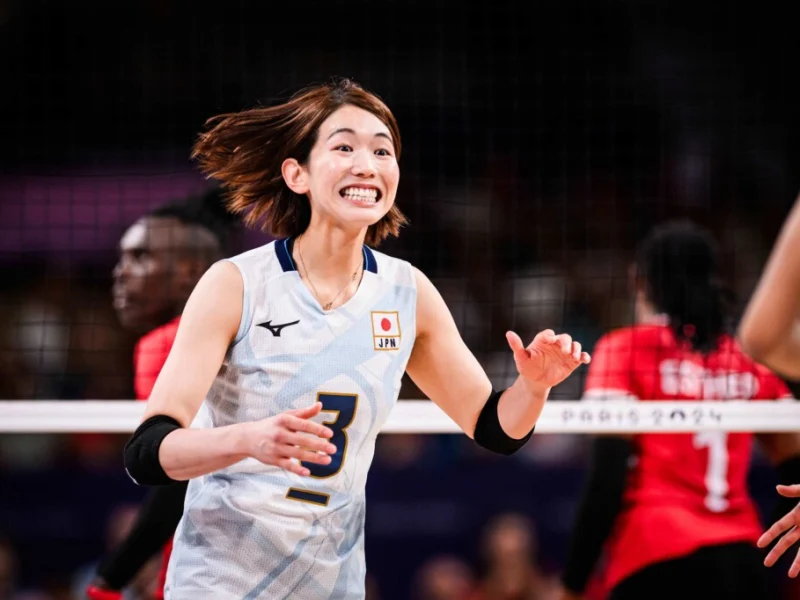
Her retirement was a deliberate career decision rather than a consequence of being unable to continue at elite level. In a post-retirement interview, Koga said VakıfBank had approached her about playing in Türkiye after Paris, but she declined because she had already decided to finish her career.
By 2025 and 2026, her public work had expanded into publishing, speaking engagements and other sports-related appearances. Her competitive career, however, remains closed: the Paris Olympics were her final official tournament.
Frequently Asked Questions
Is Sarina Koga retired?
Yes. Koga retired from professional volleyball after the Paris 2024 Olympic Games. Her final competitive match was Japan’s pool-stage victory over Kenya on August 3, 2024.
How tall is Sarina Koga?
Koga is 180 cm tall. JVA listed her at 66 kg with a 305 cm spike reach and 290 cm block reach in its 2022 national-team data.
What position did Sarina Koga play?
She played outside hitter. Her role combined high-volume left-side attacking with serve reception, backcourt defense and, later in her career, national-team captaincy.
Which clubs did Sarina Koga play for?
Koga spent her entire senior club career with NEC Red Rockets in Japan. She first appeared for NEC as a prospective player during the 2014–15 championship season and remained with the organization until her retirement in 2024.
How many Olympics did Sarina Koga play?
Koga competed at two Olympic Games: Tokyo 2020, held in 2021, and Paris 2024. Japan finished tenth in Tokyo and ninth in Paris.
Who is Sarina Koga’s husband?
Koga is married to Japanese volleyball player Yuji Nishida, an opposite for the Japan men’s national team. They announced their marriage at the end of 2022.
References
- NEC Red Rockets Kawasaki — Sarina Koga retirement announcement and career honors
- Japan Volleyball Association — 2024 Japan women’s national-team roster
- Japan Volleyball Association — 2022 VNL roster and Sarina Koga measurements
- Japanese Olympic Committee — Sarina Koga Olympic athlete profile
- FIVB — Player of the Week: Sarina Koga
- Volleyball World — Success is a team effort for Koga
- Volleyball World — 2024 VNL Dream Team awards
- Volleyball World — Koga steps away as Japan beat Kenya in Paris
- Volleyball World — VNL Power Couple: Yuji and Sarina Nishida
- Number Web — Sarina Koga post-retirement interview
- Japan Professional Sports Association — Sarina Koga career biography
- KADOKAWA — Kōkai Shinai Sentaku by Sarina Koga