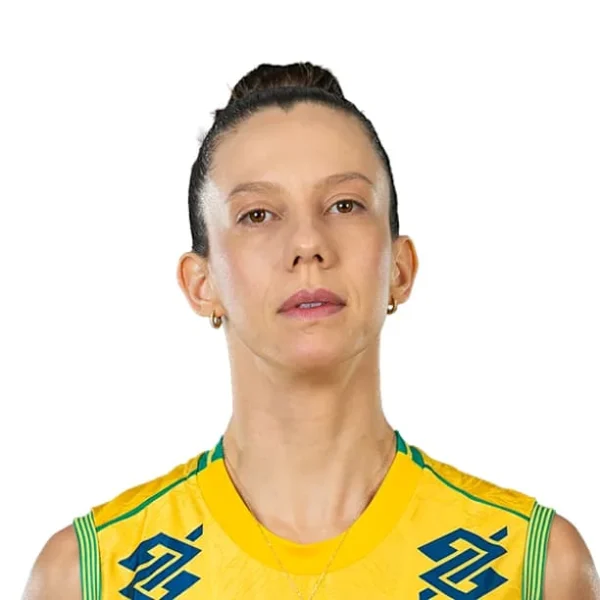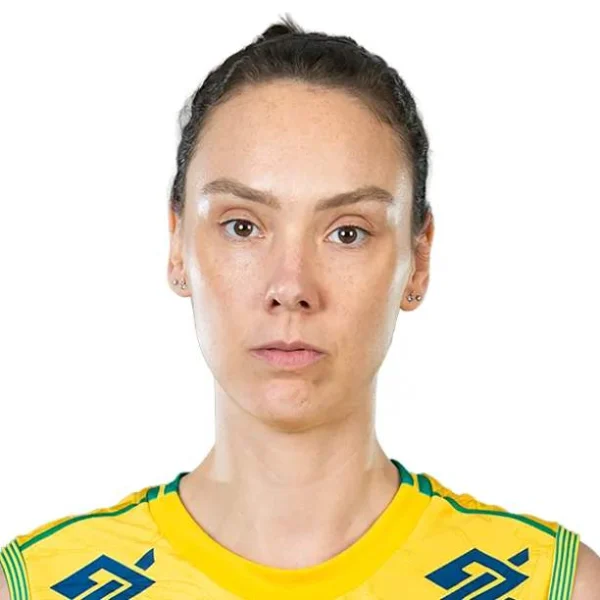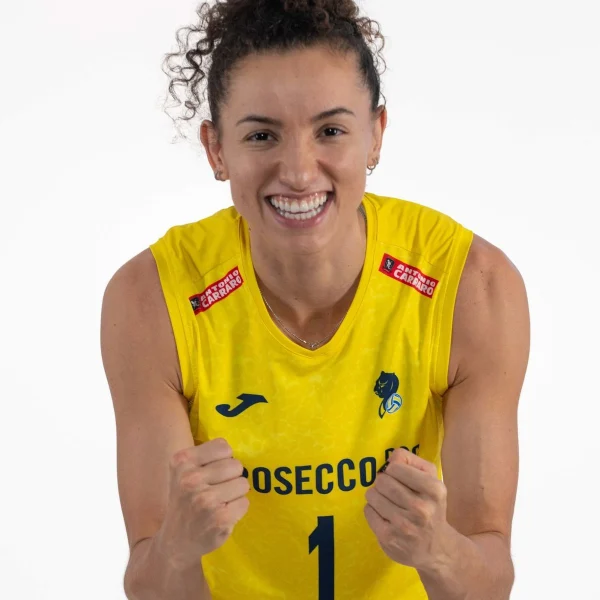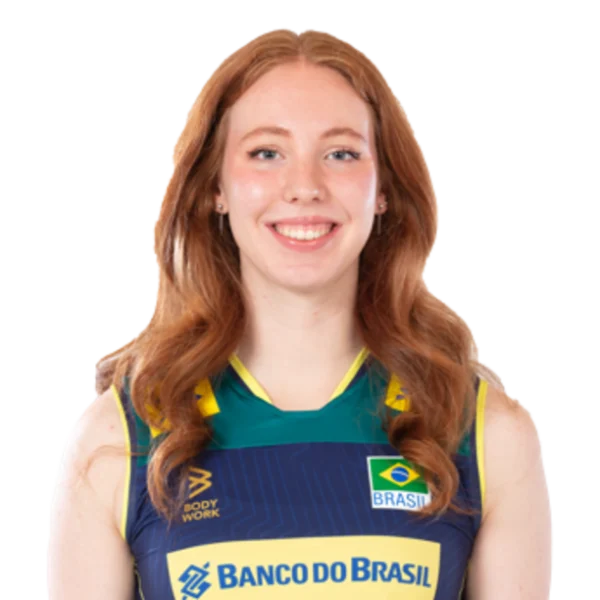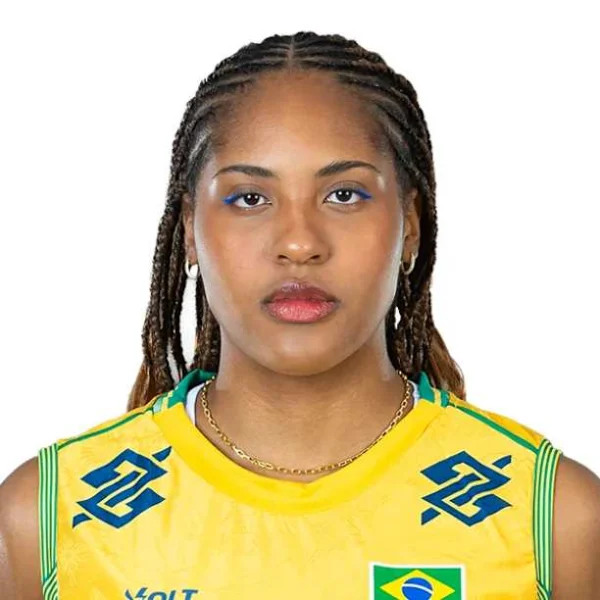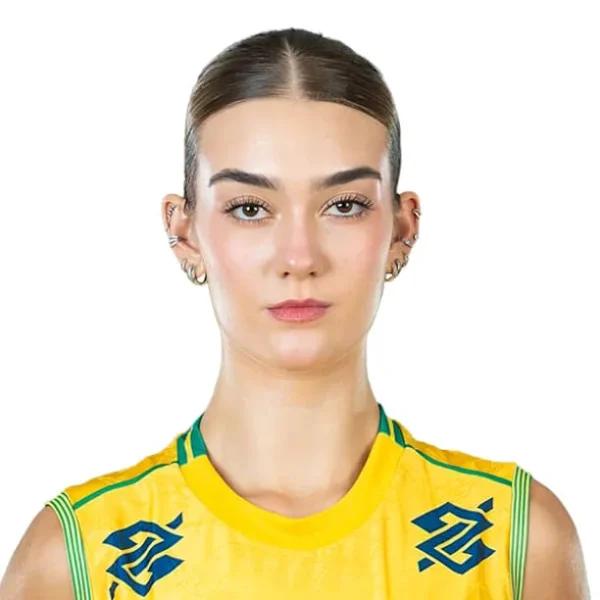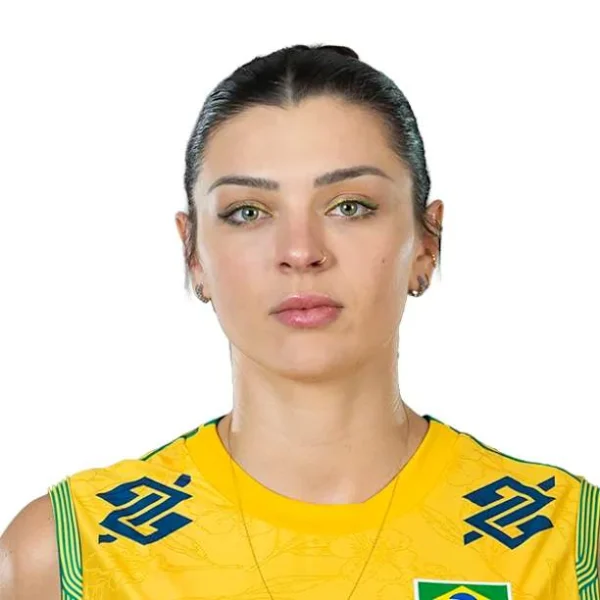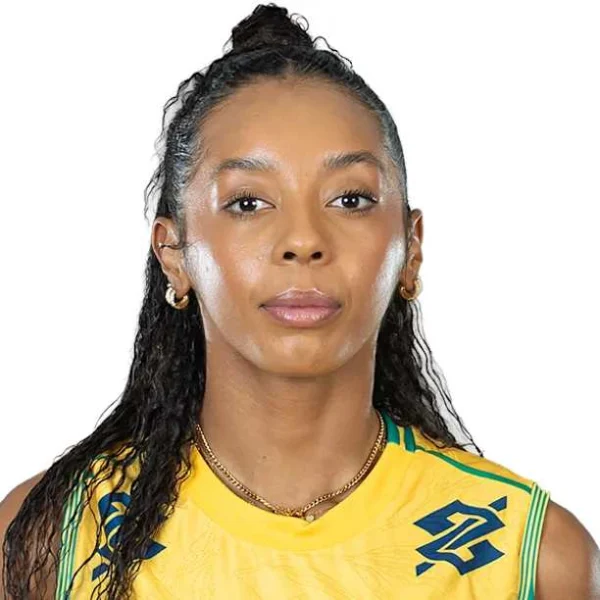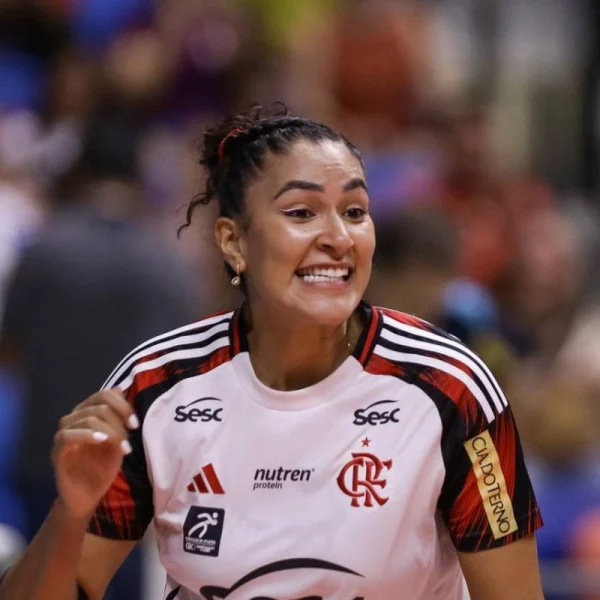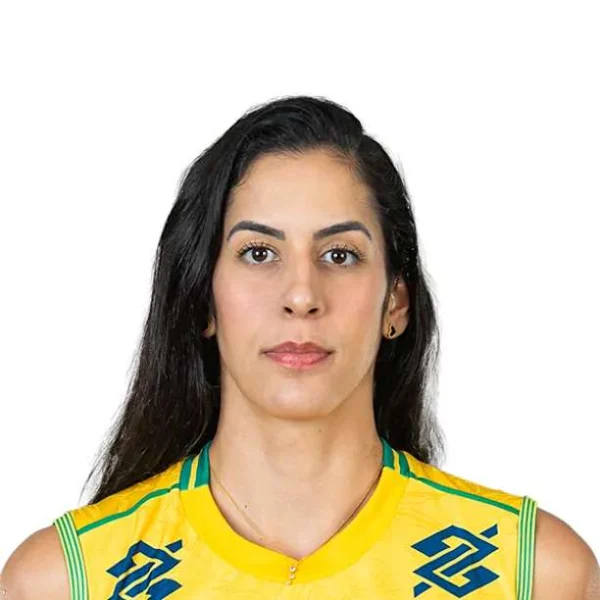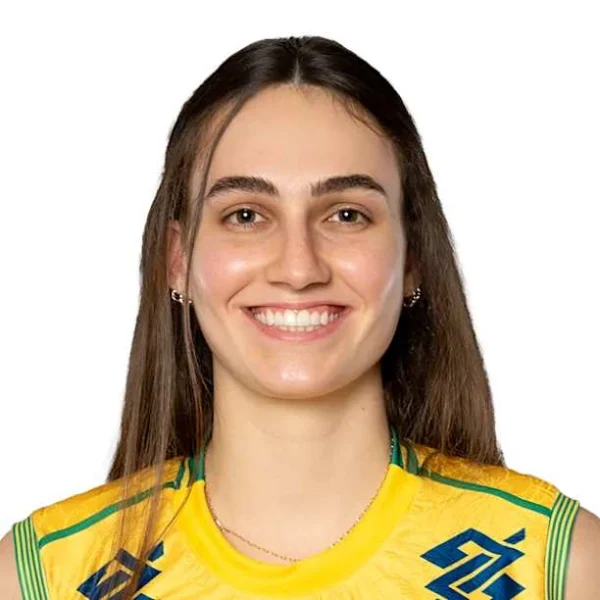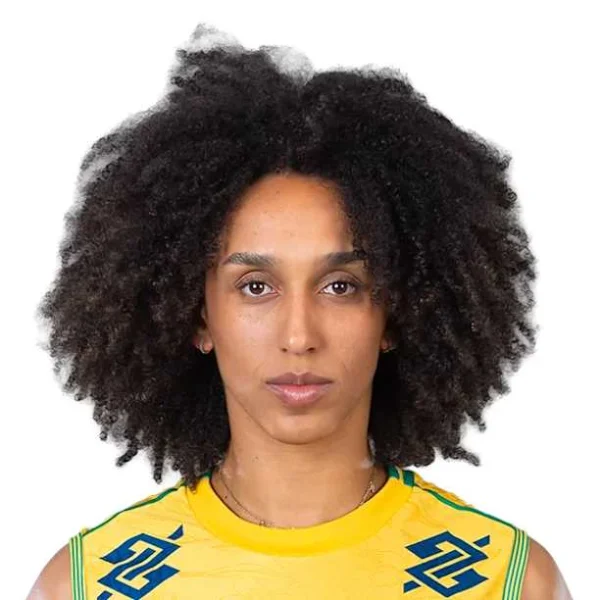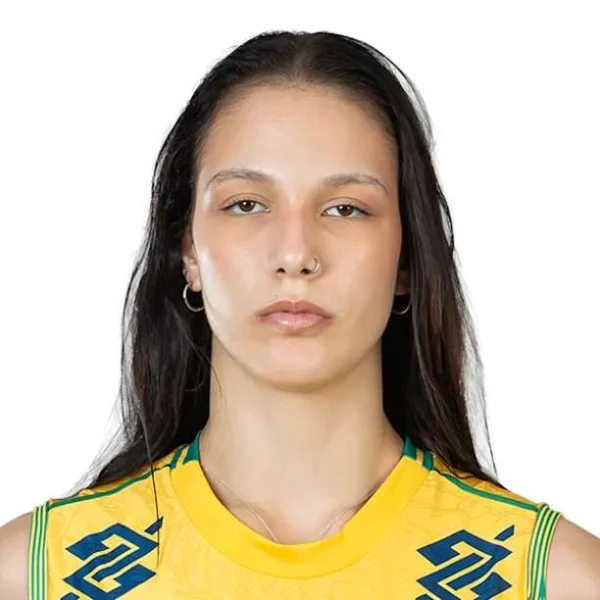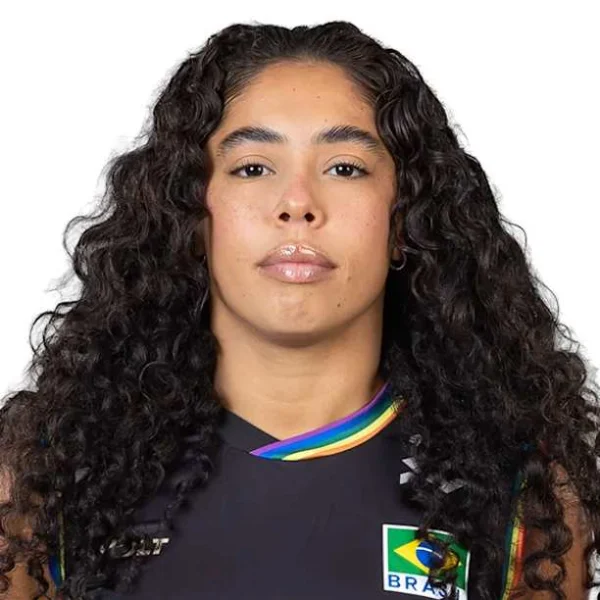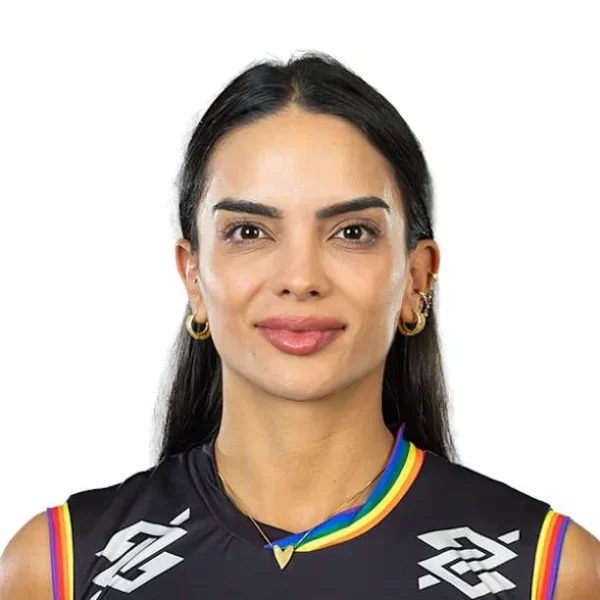
The Brazil women’s national volleyball team represents Brazil in senior international volleyball and is governed by the Confederação Brasileira de Voleibol (CBV) within the South American Volleyball Confederation (CSV). José Roberto Guimarães continues as head coach, with Gabriela “Gabi” Guimarães serving as captain. Brazil are currently No. 2 in the FIVB Women’s World Ranking, behind Italy, and have already secured their place at the Los Angeles 2028 Olympic Games.
Brazil’s modern record combines sustained Olympic success with repeated appearances on global podiums. The team won consecutive Olympic titles at Beijing 2008 and London 2012, added silver at Tokyo 2020 and bronze at Paris 2024, and has reached six World Championship podiums despite still pursuing a first world title. In the current cycle, Brazil followed a 2025 World Championship bronze medal with a second consecutive VNL silver in 2026, then completed an unbeaten South American Championship to earn the continent’s direct Olympic place for LA28.
Team Information
| Field | Detail |
|---|---|
| Official Team Name | Brazil Women’s National Volleyball Team |
| Native Name | Seleção Brasileira Feminina de Voleibol |
| Country | Brazil |
| Gender | Women |
| National Federation | Confederação Brasileira de Voleibol (CBV) |
| FIVB Code | BRA |
| Confederation | Confederación Sudamericana de Voleibol (CSV) |
| Head Coach | José Roberto “Zé Roberto” Guimarães |
| Captain | Gabriela “Gabi” Guimarães |
| FIVB World Ranking | No. 2 — 420 points — View full FIVB rankings |
| Current Cycle | 2026–28 / Los Angeles 2028 cycle |
| Los Angeles 2028 Status | Qualified — 2026 South American champions |
| 2027 FIVB Women’s World Cup Status | Qualified — through the 2026 South American Championship |
| Olympic Best Result | Gold — 2008, 2012 |
| World Championship Best Result | Silver — 1994, 2006, 2010, 2022 |
| VNL Best Result | Silver — 2019, 2021, 2022, 2025, 2026 |
| South American Championship Best Result | Champions — 24 titles through 2026 |
| Official Website | CBV official website |
| Official Video Channel | Canal Vôlei Brasil / CBV YouTube |
Volleyball World’s current ranking table places Brazil second with 420 points, behind Italy and ahead of Türkiye, the United States and Poland. The value is a current snapshot rather than a permanent team attribute and should be refreshed whenever the profile receives a material update.
CBV’s official website is the primary federation destination for the national team, while the federation also operates the Canal Vôlei Brasil video presence linked directly from its website. Social handles that could not be independently confirmed from the federation’s current official-site links are intentionally not guessed here.
From Global Contender to Olympic Champion
Brazil’s women were already established internationally before the program’s Olympic championship era. During the 1990s, the team developed into a regular medal contender, reaching the 1994 World Championship final and taking Olympic bronze at Atlanta 1996. Another Olympic bronze followed at Sydney 2000, establishing a sequence of podium-level teams before Brazil made the final step to Olympic gold.
José Roberto Guimarães took charge of the women’s national team in 2003. He had already won Olympic gold with Brazil’s men in Barcelona in 1992, and with the women he constructed the most successful Olympic period in the program’s history. Brazil won the Beijing 2008 title and successfully defended it at London 2012. FIVB records credit Guimarães with both women’s Olympic championships as well as nine World Grand Prix titles during his tenure.
The London title was especially significant because Brazil recovered from a difficult start to the tournament before defeating the United States 3–1 in the gold-medal match. Players such as Sheilla Castro, Fabiana Claudino, Fofão, Jaqueline Carvalho, Thaísa Menezes and Paula Pequeno became central figures of the wider championship era across the 2008 and 2012 cycles.
Brazil did not repeat as champion at Rio 2016, where China eliminated the hosts in the quarterfinals, but the program returned to the Olympic final at Tokyo 2020. The United States won the gold-medal match, leaving Brazil with silver. Paris 2024 produced another podium: after a five-set semifinal defeat to the United States, Brazil beat Türkiye 3–1 for bronze, taking the country’s women’s Olympic medal total to six.
The current generation is now working through a different challenge. Brazil remain high in the world ranking and regularly reach the closing stages of major tournaments, but Italy, Türkiye, the United States and other leading programs have created a tightly contested top level. Brazil’s 2025–26 results show both sides of that position: multiple medals and major wins, but also a continuing search for a first VNL championship and first World Championship gold.
Brazil at the Olympic Games
Brazil have appeared at every women’s Olympic volleyball tournament since Moscow 1980. Their medal record now consists of two gold medals, one silver and three bronzes. The first podiums were bronze at Atlanta 1996 and Sydney 2000 before the back-to-back championship teams of Beijing 2008 and London 2012. Tokyo 2020 brought silver, followed by another bronze at Paris 2024.
| Olympic Games | Result |
|---|---|
| Atlanta 1996 | Bronze |
| Sydney 2000 | Bronze |
| Beijing 2008 | Gold |
| London 2012 | Gold |
| Tokyo 2020 | Silver |
| Paris 2024 | Bronze |
| Los Angeles 2028 | Qualified |
Brazil’s place at Los Angeles 2028 was secured much earlier than in the previous Olympic cycle. By winning the 2026 South American Championship, Brazil claimed the continental direct quota and extended their uninterrupted Olympic participation to a 13th consecutive Games. That removes Olympic qualification pressure from the 2027 global season and allows the national team to approach the next World Cup as both a championship target and part of its longer LA28 preparation.
World Championship and Other Global Competition History
The World Championship remains the major senior title missing from Brazil’s record. The national team have reached the final four times, taking silver in 1994, 2006, 2010 and 2022. They also earned bronze medals in 2014 and 2025, giving Brazil six World Championship podiums.
The 2025 tournament in Thailand offered another illustration of how close the team remains to the top. Brazil pushed eventual champion Italy to five sets in the semifinal, losing 15–13 in the deciding set. One day later, Brazil recovered to beat Japan 3–2 in the bronze-medal match. Captain Gabi scored 35 points, and the victory delivered Brazil’s sixth World Championship medal.
Gabi was subsequently named to the tournament Dream Team as one of its outside hitters. The medal also extended a run in which the current Brazilian core has repeatedly reached the closing weekend of major global events even when the final title has remained out of reach.
The next global championship is the 2027 FIVB Volleyball Women’s World Cup. Brazil secured qualification through their 2026 continental championship campaign. Because the Olympic berth is already guaranteed, the tournament can be approached without the additional pressure of using it as an LA28 qualifying route.
Brazil in the Volleyball Nations League
The Volleyball Nations League has been one of the clearest examples of Brazil’s consistency and unfinished business. Brazil have reached the final five times — 2019, 2021, 2022, 2025 and 2026 — and finished with silver on each occasion. A first VNL championship therefore remains one of the major titles missing from the program’s modern record.
In 2025, Brazil won 13 of 15 matches before facing Olympic champion Italy in the final in Łódź. Italy recovered after losing the opening set and won 3–1, leaving Brazil with its fourth VNL silver.
Brazil returned to the final in 2026 despite significant changes during the competition. Gabi was unavailable for important parts of the campaign, while middle blocker Júlia Kudiess suffered an ACL injury against the United States at the end of the preliminary phase and was ruled out of the Finals. Brazil still reached the championship match in Macao before Türkiye won 3–1. The Brazilians ended the VNL with 11 victories and four defeats.
The tournament also demonstrated the attacking depth available to Guimarães. Ana Cristina finished with 256 points, fifth among all VNL scorers, while Júlia Bergmann added 235. Before her injury, Kudiess registered 42 blocks, tied for the highest total in the competition, while Diana finished with 39.
Those numbers help explain why Brazil were able to absorb absences and still reach another final. The team’s 2026 run was not dependent on one scorer: wing production, middle-blocking pressure and serving all contributed across different phases of the tournament.
South American Championship
Brazil’s position within South American women’s volleyball is historically dominant, and the 2026 championship extended that record. Playing at the Maracanãzinho in Rio de Janeiro, Brazil won all five matches without dropping a set and defeated Argentina 3–0 in the decisive match. The title was Brazil’s 24th South American championship and 16th consecutive title.
The competitive consequence went beyond another continental trophy. The championship awarded South America’s direct Olympic quota, so the victory confirmed Brazil for Los Angeles 2028. Brazil, Argentina and Colombia also secured the region’s places in the 2027 FIVB Volleyball Women’s World Cup.
Gabi returned for the tournament after missing the VNL Finals and was named MVP. Roberta was selected as the tournament’s setter and Ana Cristina as one of its outside hitters. The title match also showed the depth available on the wings: Gabi scored 13 points, Júlia Bergmann supplied 12 from the bench and Tainara added 11 after Rosamaria left the match injured.
2026 Current National Team Pool
CBV registered 30 players for the 2026 Volleyball Nations League. Brazil did not publish a separate broader year-long senior registration list, so this 30-player VNL registration is the strongest official wide-pool source for the 2026 senior cycle. It should not be confused with a final 14-player match roster: the active VNL lineups changed during the competition, while the South American Championship later used its own separate 14-player squad.
The club column below reflects the latest 2026–27 affiliation that could be verified where available. For players whose status changed after the initial May registration, later club information is used rather than carrying forward an outdated club automatically.
| Player | Position | Club / Team | Height |
|---|---|---|---|
| Bruninha (Bruna Costa) | Setter | Sancor Seguros Vôlei Londrina | 170 cm |
| Kenya Malachias | Setter | 2026–27 club not confirmed after Batavo Mackenzie departure | 185 cm |
| Macris Carneiro | Setter | Dentil/Praia Clube | 178 cm |
| Roberta Ratzke | Setter | Denso Airybees | 185 cm |
| Vivian Lima | Setter | Sesc RJ Flamengo | 182 cm |
| Drussyla Costa | Outside Hitter | Dentil/Praia Clube | 182 cm |
| Gabriela “Gabi” Guimarães | Outside Hitter | Imoco Volley Conegliano | 180 cm |
| Júlia Bergmann | Outside Hitter | Savino Del Bene Scandicci | 191 cm |
| Karina Barbosa | Outside Hitter | Sesc RJ Flamengo | 182 cm |
| Maiara Basso | Outside Hitter | Gerdau Minas | 188 cm |
| Ana Cristina Souza | Outside Hitter / Opposite | Fenerbahçe | 192 cm |
| Helena Wenk | Outside Hitter / Opposite | LOVB Miami | 198 cm |
| Rosamaria Montibeller | Outside Hitter / Opposite | Denso Airybees | 185 cm |
| Jaque Schmitz | Opposite | Sesc RJ Flamengo | 186 cm |
| Jheovana Sebastião | Opposite | Gerdau Minas | 194 cm |
| Kisy Nascimento | Opposite | Lokomotiv Kaliningrad | 191 cm |
| Sabrina Machado | Opposite | Dentil/Praia Clube | 181 cm |
| Tainara Santos | Opposite | Sesc RJ Flamengo | 190 cm |
| Diana Duarte | Middle Blocker | Sesi Vôlei Bauru | 194 cm |
| Júlia Kudiess | Middle Blocker | Igor Gorgonzola Novara | 192 cm |
| Lanna Machado | Middle Blocker | Dentil/Praia Clube | 187 cm |
| Larissa Besen | Middle Blocker | Osasco São Cristóvão Saúde | 190 cm |
| Lívia Santos | Middle Blocker | Sesi Vôlei Bauru | 187 cm |
| Lorena Viezel | Middle Blocker | Sesc RJ Flamengo | 190 cm |
| Luzia Nezzo | Middle Blocker | Gerdau Minas | 199 cm |
| Kika Motta | Libero | Fluminense | 165 cm |
| Marcelle Arruda | Libero | Osasco São Cristóvão Saúde | 163 cm |
| Natinha | Libero | Dentil/Praia Clube | 162 cm |
| Nyeme Costa | Libero | Gerdau Minas | 175 cm |
| Paulina de Souza | Libero | Batavo Mackenzie | 174 cm |
The pool was deliberately wider than the first-team group used through most of the VNL. CBV also operated a Brazil B program in 2026 to keep additional players training and competing, with Kenya, Vivian, Karina, Maiara Basso, Jaque Schmitz, Jheovana, Lanna, Larissa Besen, Lívia Santos, Kika and Paulina among the players who spent time in that pathway. José Roberto Guimarães explicitly described the B team as a way to evaluate players who could move into the senior group when form or availability created an opportunity.
2026 South American Championship Squad
The continental championship used a separate 14-player competition roster:
| Position | Players |
|---|---|
| Setters | Roberta Ratzke, Vivian Lima |
| Opposites | Sabrina Machado, Tainara Santos |
| Outside / Opposite | Ana Cristina Souza, Helena Wenk, Rosamaria Montibeller |
| Outside Hitters | Gabi Guimarães, Júlia Bergmann |
| Middle Blockers | Diana Duarte, Lorena Viezel, Luzia Nezzo |
| Liberos | Marcelle Arruda, Nyeme Costa |
That squad won the South American title and secured the LA28 berth. It is an event roster and does not replace the wider 30-player senior registration above.
Coaching Staff
| Role | Name | Organization / Context |
|---|---|---|
| Head Coach | José Roberto Guimarães | Brazil / CBV |
| Assistant Coach | Paulo Coco | Brazil Women’s National Team |
| Assistant Coach | Fofão | Brazil Women’s National Team |
| Assistant Coach | Sassá | Brazil Women’s National Team |
| Strength & Conditioning Coach | José Elias Proença | Brazil Women’s National Team |
Guimarães remains the defining figure of Brazil’s modern women’s program. He has led the women since 2003 and coached the Olympic championship teams of 2008 and 2012. His wider Olympic résumé also includes the men’s gold medal at Barcelona 1992, making him a three-time Olympic champion as a head coach.
The staff was expanded in 2026 with two former Olympic champions. Fofão joined as an assistant coach in May, followed by Sassá, with CBV announcing that the two would work in training and alternate across international travel assignments. Paulo Coco continued as an assistant and even took charge of the team for a 2026 VNL match when Guimarães was unavailable.
Playing Identity and Team Style
Brazil’s current team is built around a combination of physical attacking options and an increasingly influential middle game. The 2026 VNL provided particularly clear evidence of the latter. Júlia Kudiess recorded 42 blocks before her tournament ended because of injury, while Diana finished with 39. During the Finals, Luzia led all players with ten blocks despite appearing only in the knockout phase.
That blocking strength does not mean Brazil operate as a purely middle-oriented team. The attacking structure can shift substantially depending on who is available. Gabi provides reception stability, transition scoring and leadership from the outside, while Ana Cristina offers a taller, high-terminal attacking option. Júlia Bergmann has developed into another high-volume scorer and Rosamaria, Tainara, Kisy, Helena and Sabrina give Guimarães several possible configurations across opposite and outside-hitter roles.
Ana Cristina’s 2026 VNL numbers show the importance of the new attacking core. She scored 256 points — 218 in attack, 21 in block and 17 from serve — while Bergmann finished with 235. In the VNL Finals alone, Ana Cristina recorded 78 points, second only to Türkiye’s Melissa Vargas.
Setter choice also changes the profile of the offense. Roberta remains one of the principal options and was named best setter at the 2026 South American Championship, while Macris gives Brazil another experienced international setter. Vivian’s inclusion in the continental championship squad added another option to the senior cycle.
Defensively, Brazil have several experienced libero and reception combinations, but the 2026 season also illustrated the importance of roster depth. The team reached the VNL final despite losing Kudiess and playing without Gabi during the Finals, then reintegrated Gabi for the South American Championship and finished the continental tournament without dropping a set.
Rather than defining Brazil by one permanent tactical formula, the current version is better understood as a physically strong, multi-option team capable of changing its attacking distribution according to personnel. Its highest level appears when serving and blocking create transition opportunities without sacrificing enough reception stability to keep the middle attack involved.
Major Honors
| Competition | Best / Major Results |
|---|---|
| Olympic Games | Gold: 2008, 2012; Silver: Tokyo 2020; Bronze: 1996, 2000, 2024 |
| FIVB World Championship | Silver: 1994, 2006, 2010, 2022; Bronze: 2014, 2025 |
| Volleyball Nations League | Silver: 2019, 2021, 2022, 2025, 2026 |
| South American Championship | 24 titles through 2026; 16 consecutive through 2026 |
| FIVB World Grand Prix | Multiple championships, including nine under José Roberto Guimarães after 2003 |
Brazil’s Olympic record is the strongest part of the senior team’s global résumé, while the World Championship and VNL remain the two major competitions in which repeated final appearances have not yet produced a title. The 2026 South American championship added another continental trophy while also accomplishing the more immediate objective of Olympic qualification.
Key Players Across Generations
| Player | Position | Era / Years | Note |
|---|---|---|---|
| Fernanda Venturini | Setter | 1990s–2000s | Major setter of Brazil’s rise into a consistent global medal contender |
| Fofão | Setter | 1990s–2008 | Olympic champion in 2008; returned to the national program as an assistant coach in 2026 |
| Sheilla Castro | Opposite | 2000s–2010s | Leading scorer across the back-to-back Olympic championship era |
| Fabiana Claudino | Middle Blocker | 2000s–2010s | Two-time Olympic champion and long-time national-team captain |
| Jaqueline Carvalho | Outside Hitter | 2000s–2010s | Core member of the Beijing 2008 and London 2012 championship teams |
| Thaísa Menezes | Middle Blocker | 2000s–2024 | Two-time Olympic champion and one of Brazil’s most decorated middle blockers |
| Gabriela “Gabi” Guimarães | Outside Hitter | 2010s–current | Current captain; Olympic silver and bronze medalist and multiple global Dream Team selection |
| Ana Cristina Souza | Outside Hitter | 2020s–current | High-volume attacker and one of the central figures of the LA28 generation |
| Júlia Bergmann | Outside Hitter | 2020s–current | Current starting-level wing and major scorer during the 2025–26 global cycle |
| Júlia Kudiess | Middle Blocker | 2020s–current | Leading blocker in the current generation and a key middle before her 2026 ACL injury |
The transition between generations has been gradual rather than abrupt. The back-to-back Olympic champion group established an exceptionally high standard, while the next cycle retained players such as Gabi and added younger pieces including Ana Cristina, Bergmann, Kudiess, Diana, Luzia and Helena. Gabi has become the clearest bridge between eras: after entering the senior team in 2013, she progressed from a younger wing in the Rio cycle to captain, Olympic medalist and one of the central players of the current team.
Fofão’s return as an assistant in 2026 also creates a direct link between Brazil’s championship history and the current staff. CBV described her appointment as an opportunity to bring her playing and development experience into the senior program.
Rivalries and Key Matchups
Italy has become one of Brazil’s most important current global reference points. Italy defeated Brazil in the 2025 VNL final and then survived a five-set World Championship semifinal against the Brazilians before winning the world title. Brazil answered by beating Italy 3–2 during the 2026 VNL preliminary phase, while the two programs continued to occupy the top positions of the world ranking.
The United States carries both recent and historical Olympic significance. Brazil lost the Tokyo 2020 gold-medal match to the Americans and was eliminated by the United States in the Paris 2024 semifinal. The matchup therefore remains one of the most consequential in Brazil’s Olympic-era history.
Türkiye has become another major matchup in the current cycle. The teams sit near each other in the world ranking, and Türkiye defeated Brazil 3–1 in the 2026 VNL final. With both teams already qualified for LA28 through continental championships, their meetings now sit squarely within the group of matches that can define major international podiums.
Within South America, Argentina remains the most relevant continental opponent. Brazil’s long run of South American titles gives the matchup an uneven historical record, but Argentina entered the final day of the 2026 championship undefeated and challenged Brazil closely in the opening set before the hosts pulled away to win 3–0.
Qualification Path and the LA28 Cycle
Brazil’s most important qualification question of the current cycle is already settled. Under the Los Angeles 2028 system, each 2026 continental champion receives a direct Olympic quota. Brazil claimed South America’s place by winning the continental championship on September 13, 2026.
The qualification extends Brazil’s Olympic streak to 13 consecutive appearances, beginning with Moscow 1980. It also changes the strategic value of the 2027 season. Brazil will not need the World Cup or the later ranking route to secure its Olympic place, allowing Guimarães to use the next global competitions to pursue titles, evaluate depth and shape the roster that will eventually compete in Los Angeles.
Brazil are also qualified for the 2027 FIVB Volleyball Women’s World Cup. The South American Championship provided three regional places, with Brazil, Argentina and Colombia taking them. Brazil therefore enter 2027 with both their next world championship participation and their LA28 Olympic berth already confirmed.
Brazil in 2026
Brazil finish the 2026 international season in a strong position: No. 2 in the world, VNL silver medalists, South American champions, qualified for the 2027 World Cup and qualified for Los Angeles 2028. The combination gives the team both immediate competitive credibility and unusual planning security for the next Olympic cycle.
The season also tested the depth behind the most established names. Gabi missed significant VNL action, Kudiess suffered a serious knee injury, and the staff used a broad registration pool plus a parallel B-team program. Brazil still reached the VNL final and later completed the continental championship unbeaten.
Several players are also entering new club environments before the 2027 national-team season. Roberta has moved to Denso Airybees, Bergmann to Scandicci, Júlia Kudiess to Novara, Helena to LOVB Miami and a number of domestic players have changed Superliga clubs. Kudiess arrived in Novara in October to continue rehabilitation from her ACL injury rather than immediately return to competition.
The main competitive question now is whether Brazil can convert repeated late-stage appearances into another global championship. Since 2024, the team has taken Olympic bronze, VNL silver twice and World Championship bronze. That consistency keeps Brazil among the central teams of the international game, but the VNL and World Championship titles remain open targets for the current generation.
Recent Performance Snapshot
| Competition | Result | Context |
|---|---|---|
| Paris 2024 Olympic Games | Bronze | Beat Türkiye 3–1 in bronze-medal match |
| 2025 Volleyball Nations League | Silver | 13 wins in 15 matches; lost final to Italy 1–3 |
| 2025 World Championship | Bronze | Beat Japan 3–2 after five-set semifinal loss to Italy |
| 2026 Volleyball Nations League | Silver | 11 wins, four losses; lost final to Türkiye 1–3 |
| 2026 South American Championship | Gold | 5–0 record, no sets lost; secured LA28 qualification |
The pattern is unusually consistent. Brazil have reached the podium at four consecutive major global events across the 2024–26 period when counting the Olympics, 2025 VNL, 2025 World Championship and 2026 VNL, before adding another continental championship.
FAQ
Who is the head coach of Brazil’s women’s national volleyball team?
José Roberto “Zé Roberto” Guimarães is the head coach. He has led Brazil’s women since 2003 and coached the team to Olympic gold at Beijing 2008 and London 2012.
Who is Brazil’s current captain?
Gabriela “Gabi” Guimarães is Brazil’s captain. She returned to lead the team at the 2026 South American Championship, where Brazil won the title and she was named tournament MVP.
What is Brazil’s current FIVB women’s world ranking?
Brazil are No. 2 in the current FIVB Women’s World Ranking, with approximately 420 ranking points in the October 2026 snapshot.
Has Brazil qualified for the Los Angeles 2028 Olympics?
Yes. Brazil qualified directly by winning the 2026 South American Championship in Rio de Janeiro.
How many Olympic gold medals has Brazil won in women’s volleyball?
Brazil have won two Olympic gold medals, at Beijing 2008 and London 2012. The team also has one silver and three bronze medals.
Has Brazil ever won the Women’s World Championship?
No. Brazil’s best result is silver, achieved in 1994, 2006, 2010 and 2022. The team also won bronze in 2014 and 2025.
Has Brazil won the Volleyball Nations League?
Brazil have not yet won the VNL. They have finished second five times: 2019, 2021, 2022, 2025 and 2026.
Is Brazil qualified for the 2027 Women’s World Cup?
Yes. Brazil qualified through the 2026 South American Championship together with Argentina and Colombia.
References
- Volleyball World — FIVB Women’s Volleyball World Ranking
- Confederação Brasileira de Voleibol — 2026 Women’s VNL Registered Players
- Confederação Brasileira de Voleibol — Brazil Win the 2026 South American Championship and Qualify for LA28
- FIVB — Brazil Keep CSV Crown to Confirm LA28 Qualification
- Confederação Brasileira de Voleibol — Brazil Finish as 2026 VNL Runners-Up
- Confederação Brasileira de Voleibol — Brazil Take Silver in the 2025 VNL
- FIVB — Brazil Beat Japan for Bronze at the 2025 World Championship
- FIVB — Brazil Leave Paris 2024 With Olympic Bronze
- FIVB — Brazil Women’s Olympic Qualification and Historical Record for Paris 2024
- FIVB — José Roberto Guimarães and Brazil’s Olympic Championship Record
- Volleyball World — 2026 VNL Women’s Best Scorers
- Volleyball World — 2026 VNL Women’s Best Blockers
- Confederação Brasileira de Voleibol — Fofão Joins Brazil Women’s Coaching Staff
- Confederação Brasileira de Voleibol — Sassá Joins Brazil Women’s Coaching Staff
- Confederação Brasileira de Voleibol — Official CBV Website