
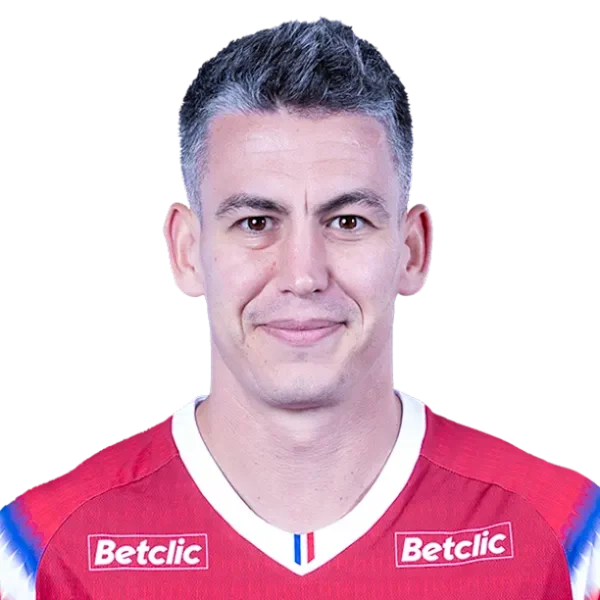
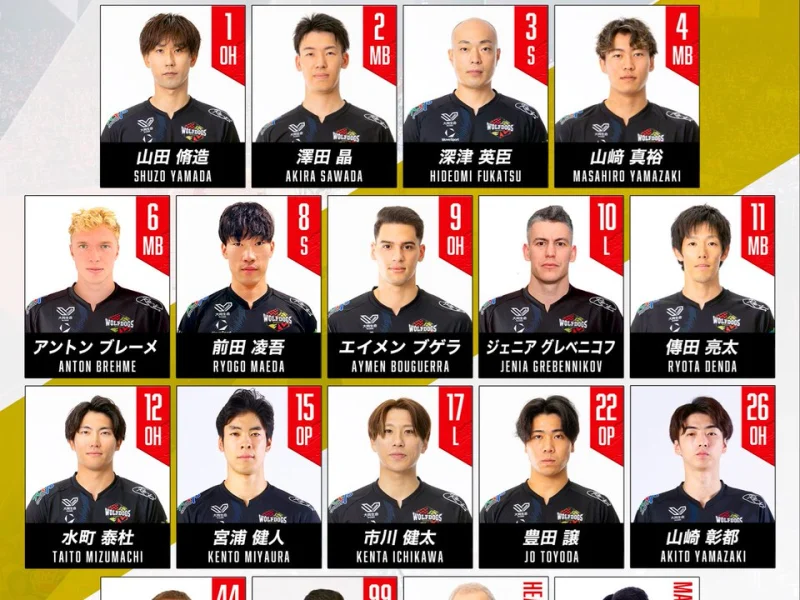
French libero Jenia Grebennikov won Olympic gold with France at Tokyo 2020 and Paris 2024 and was named Best Libero at both tournaments. Born in Rennes in 1990, he now plays for Wolfdogs Nagoya in Japan after five seasons with Zenit Saint Petersburg, extending a club career that has taken him through five different national leagues.
Grebennikov did not grow up expecting to specialize at libero. His father and coach, Boris, moved him into the position during his teenage years after Grebennikov had spent his early development wanting to attack. The change became the defining technical decision of his career: since making his senior France debut in 2011, he has won two Olympic titles, the 2015 European Championship, World League and VNL gold medals, major club trophies in Germany and Italy, and a long list of Best Libero awards across international and club volleyball.
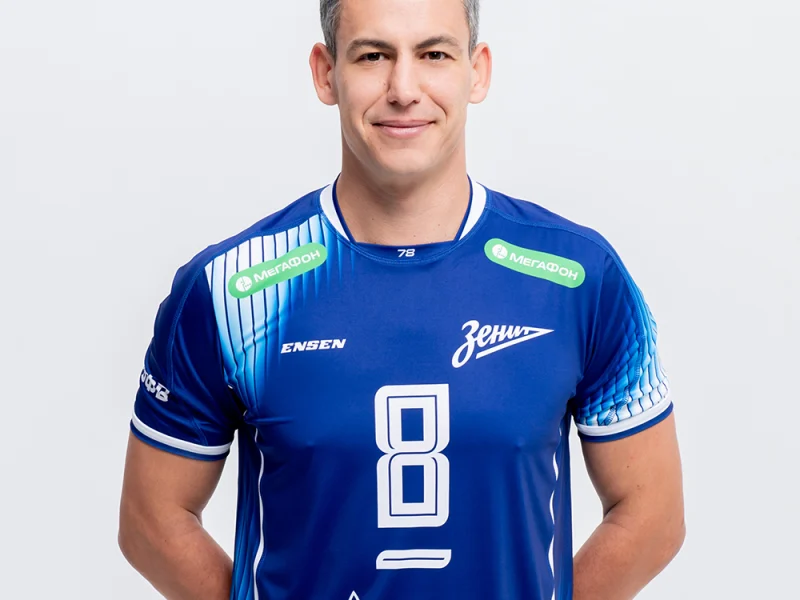
Player Information
| Field | Details |
|---|---|
| Full Name | Jenia Grebennikov |
| Date of Birth | 13 August 1990 |
| Place of Birth | Rennes, France |
| Nationality | French |
| Gender | Male |
| Position | Libero |
| Height | 188 cm (6 ft 2 in) |
| Weight | 87 kg (192 lbs) |
| Spike Reach | 345 cm |
| Block Reach | 300 cm |
| Dominant Hand | Right |
| Development Club | Rennes Volley 35 |
| Previous Clubs | Rennes Volley 35; VfB Friedrichshafen; Cucine Lube Civitanova; Trentino Volley; Modena Volley; Zenit Saint Petersburg |
| Current Club | Wolfdogs Nagoya |
| Club Number | 10 |
| National Team | France Men’s National Volleyball Team |
| Senior National Team Since | 2011 |
| National-Team Number | 2 |
| Career Status | Active |
| @grebennikov_jenia |
Wolfdogs Nagoya’s current profile lists Grebennikov at 188 cm with a 345 cm maximum reach, while France’s Olympic athlete profile lists his weight at 87 kg. Historical competition records have varied more on block reach; the Tokyo Olympic listing used 300 cm. His Instagram identity is also corroborated by FIVB’s player feature, which embeds posts from @grebennikov_jenia.
Early Life & Volleyball Beginnings
Grebennikov grew up in a volleyball family in Rennes. His father, Boris, had played the sport professionally and later coached at the club where Jenia developed, meaning volleyball was part of his environment long before it became his profession.
It was not his only sport. As a teenager, Grebennikov divided his attention between volleyball and ice hockey before eventually choosing volleyball when continuing both alongside school became impractical. He entered the senior pathway with Rennes Volley 35 and signed his first professional contract while still a teenager.
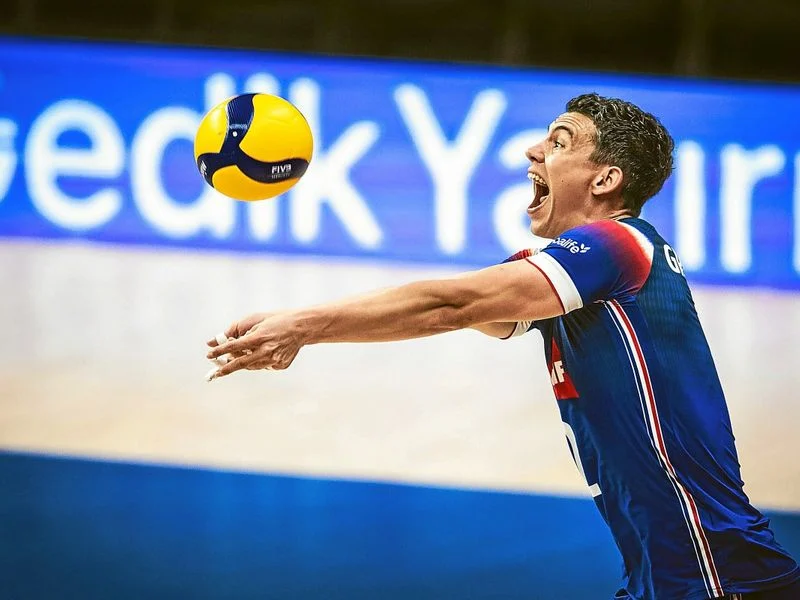
The most important developmental decision came when his father redirected him toward libero. In a CEV feature, Grebennikov recalled that at around 16 his father felt he was too small and did not hit hard enough to reach the highest level as an attacker. Grebennikov initially struggled with the new role because attacking had been the part of volleyball he enjoyed most.
The adjustment took time. Grebennikov later explained that defense eventually became the part of the position he loved, particularly the opportunity to extend rallies with difficult saves. The qualities he identified as essential for a libero — speed, reading the flight of the ball, reception and defensive feel — became recurring features of his own game.
By 2008, he was playing senior volleyball with Rennes. Three years later, he had already broken into the French national team.
Club Career
From Rennes to a First Major Move Abroad
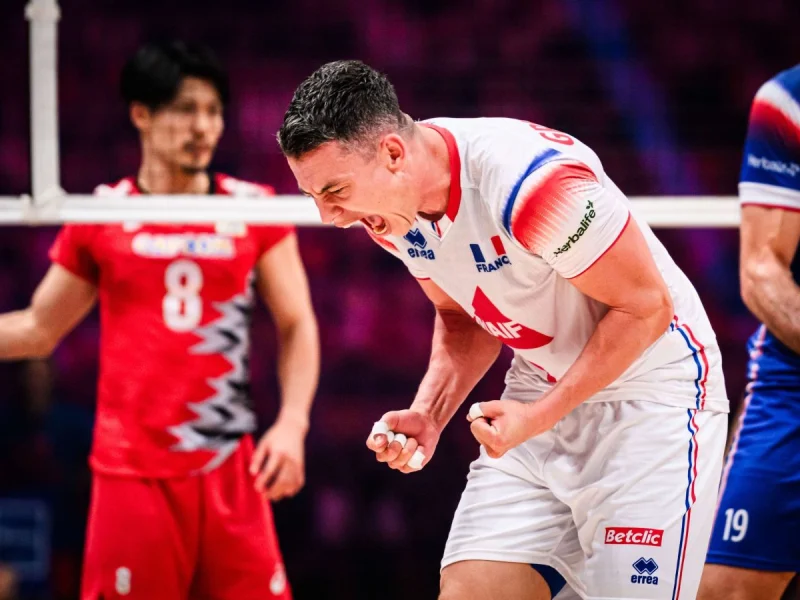
Grebennikov spent the opening stage of his senior career with Rennes Volley 35 from 2008 to 2013. His performances established him as one of the most promising young liberos in French volleyball and brought both individual recognition and a first significant club trophy.
Rennes won the Coupe de France in 2012, while Grebennikov was also recognized individually during his final seasons in the French league. By the time he left in 2013, he was already a France international and had built enough of a reputation to move directly into one of Germany’s leading clubs.
VfB Friedrichshafen became his first foreign team. The two-year period delivered immediate silverware: Friedrichshafen won the German Cup twice during his stay and completed the 2014–15 season as German champions.
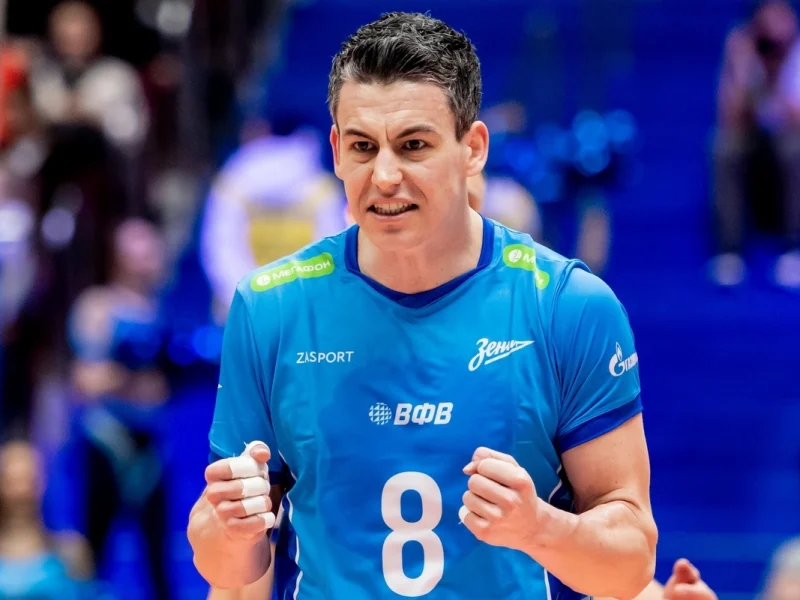
The move was important beyond the trophies. Grebennikov had transitioned from a young player developing in his home city to the starting libero of a club accustomed to domestic title races and European competition.
Six Seasons in Italy and a Club World Title
Italy became the central club stage of Grebennikov’s prime years. He joined Cucine Lube Civitanova in 2015 and remained in the SuperLega for six consecutive seasons across Lube, Trentino Volley and Modena Volley.
His three years with Lube produced one of the most successful periods of his club career. The 2016–17 season ended with the Italian championship and Coppa Italia double, while Lube also competed deep into the Champions League and Club World Championship.
Grebennikov’s individual recognition in Europe became unusually consistent. He was named Best Libero in three consecutive editions of the CEV Champions League from 2016 through 2018, an achievement that reflected his standing even in seasons when Lube did not win the tournament.
The 2017 Club World Championship brought another Best Libero award and a silver medal. One year later, after moving from Lube to Trentino, Grebennikov went one step further.
Trentino won the 2018 FIVB Club World Championship, giving Grebennikov his first world title at club level. The tournament again ended with him receiving the Best Libero award. His first Trentino season then continued with European success as the Italian club won the 2018–19 CEV Cup.
After two seasons in Trento, Grebennikov spent 2020–21 with Modena. The move was shorter than his other major Italian chapters, and in 2021 he left the SuperLega after six straight seasons to begin a long period in Russia.
Five Seasons with Zenit Saint Petersburg
Zenit Saint Petersburg signed Grebennikov in 2021, beginning what became the longest uninterrupted club spell of his career outside Rennes.
The five-season period did not reproduce the European schedule he had experienced in Germany and Italy, but Grebennikov remained one of the most prominent liberos in the Russian league. Zenit’s club profile records him as the Russian Superleague’s Best Libero in both 2022–23 and 2025–26.
His versatility also produced an unusual moment in European competition before Russian clubs left the CEV calendar. When Zenit encountered roster problems, Grebennikov was used outside his normal libero role and demonstrated that his skill set extended beyond reception and floor defense, contributing in other phases despite having spent his professional career as a specialist.
Zenit finished runner-up in the 2024–25 Russian championship, and Grebennikov’s final season with the club included another silver medal in the Russian Cup.
By the time he left Saint Petersburg in 2026, he had spent five seasons with the club — longer than any of his previous foreign-team stays.
Wolfdogs Nagoya and a First Season in Japan
Wolfdogs Nagoya announced Grebennikov as a new foreign signing for 2026–27, opening the first Japanese chapter of his career.
The move gave him experience in a fifth foreign volleyball system after Germany, Italy, Russia and his native France. In Wolfdogs’ announcement, Grebennikov described the Japanese league as fast, technical and intense, with particular strength in defense and discipline — characteristics closely aligned with the position that has defined his own career.
Wolfdogs assigned him number 10. The club’s October 2026 preseason presentation confirmed that he was preparing for his first season in Japan alongside fellow new foreign signings Anton Brehme and Donovan Džavoronok.
Club Career Timeline
| Seasons | Team | Country |
|---|---|---|
| 2008–2013 | Rennes Volley 35 | France |
| 2013–2015 | VfB Friedrichshafen | Germany |
| 2015–2018 | Cucine Lube Civitanova | Italy |
| 2018–2020 | Trentino Volley | Italy |
| 2020–2021 | Modena Volley | Italy |
| 2021–2026 | Zenit Saint Petersburg | Russia |
| 2026–present | Wolfdogs Nagoya | Japan |
National Team Career
From a 2011 Debut to a 2014 World Championship Award
Grebennikov entered the France senior team in 2011. French federation records from that period place his first senior cap in May, beginning an international career that would eventually span four World Championships and multiple Olympic cycles.
The first major global tournament to establish his individual reputation was the 2014 World Championship. France finished fourth, narrowly missing a medal, but Grebennikov was selected as the tournament’s Best Libero.
That award preceded an even more successful 2015 season.
France won the World League for the first time and then captured the European Championship, defeating Slovenia in the final. Grebennikov was named Best Libero at EuroVolley, giving him major individual awards at consecutive global and continental championships.
The national team’s medal sequence continued with World League bronze in 2016 and another World League gold in 2017.
VNL Recognition and the Road to Tokyo
When the Volleyball Nations League replaced the World League, Grebennikov remained central to France’s defensive structure.
The inaugural 2018 VNL provided unusually detailed statistical evidence of his role. According to FIVB, he finished the final round with 14 digs and 32 receptions, led France’s receivers with a 14.47% efficiency rate and also recorded 22 running sets. France finished with silver, and Grebennikov was named Best Libero.
France later took VNL bronze in 2021, the immediate prelude to the Tokyo Olympics.
Tokyo transformed the international legacy of that French generation. France had never won an Olympic medal in men’s volleyball before the tournament, yet advanced through the knockout rounds and defeated the Russian Olympic Committee in a five-set gold-medal match.
Grebennikov completed the tournament as Olympic champion and was selected as the Best Libero of the Tokyo 2020 Dream Team.
VNL Gold and a Second Olympic Championship
France followed its Olympic breakthrough with another major title in 2022, winning the Volleyball Nations League. Grebennikov was again selected as Best Libero, adding the award to the one he had received in the competition’s inaugural 2018 edition.
The team returned to the VNL podium in 2024 and won another gold medal ahead of the Paris Olympics.
Paris gave France the rare opportunity to defend an Olympic volleyball title at home. After surviving a five-set quarterfinal against Germany, the hosts defeated Italy in the semifinal and Poland in straight sets in the gold-medal match.
The result made France back-to-back Olympic champions. It also produced another individual repeat for Grebennikov: Volleyball World named him Best Libero at Paris 2024, three years after he had received the same distinction in Tokyo.
Winning the same Olympic positional award at consecutive Games reinforced something already visible across his international career. His major individual honors were not confined to one peak season: they stretched from the 2014 World Championship through EuroVolley, World League, VNL and two Olympics.
2025 World Championship and France’s 2026 Transition
Grebennikov remained with France for the 2025 World Championship in the Philippines, his fourth appearance at the tournament. France entered as double Olympic champion but did not progress from its pool, making the event a very different international experience from the medal-heavy seasons that preceded it.
France changed direction during the 2026 international summer. Grebennikov appeared in the country’s broader VNL player registration, but the French federation explained that several established double Olympic champions — including Grebennikov, Earvin Ngapeth, Jean Patry, Barthélémy Chinenyeze, Yacine Louati and Nicolas Le Goff — were being rested while a younger group handled the campaign.
Grebennikov was also not among the two liberos in France’s final EuroVolley 2026 squad. The summer therefore functioned as a rest and transition period rather than another full tournament cycle for him.
Playing Style & Strengths
Grebennikov’s defensive reading is the clearest technical signature of his career. His own description of the libero position emphasizes speed and the ability to watch the ball continuously in order to anticipate its destination, and that approach is visible in the way he defends attacks that have already beaten the block. Rather than relying only on reaction speed, his positioning often gives him access to balls that initially appear outside a normal defensive range.
The 2018 VNL provides one of the strongest statistical snapshots of that role. In the final round, Grebennikov handled 32 receptions and 14 recorded digs, the highest defensive workload on the French side, while finishing as France’s leading receiver by the competition’s efficiency measure. Those numbers accompanied his Best Libero award rather than being drawn from an isolated regular-season match.
Reception stability is equally important to his profile. France has repeatedly built offenses around setters such as Benjamin Toniutti and Antoine Brizard, and Grebennikov’s capacity to absorb difficult serve pressure gives those setters more opportunities to run first-tempo and combination offense. His individual awards at the 2014 World Championship, 2015 European Championship, 2018 VNL, Tokyo Olympics, 2022 VNL and Paris Olympics show that this level of ball control has persisted through changing teammates, coaches and tournament formats.
His second-contact ability adds another layer. FIVB’s 2018 VNL data credited him with 22 running sets during the final round, unusually visible production for a libero. When the setter takes the first defensive contact, Grebennikov is comfortable stepping into the second ball and preserving attacking options rather than merely sending a high emergency set to the outside.
There is also a creative quality to his defense. Grebennikov has described spectacular saves and emergency setting as some of the aspects he enjoys most about playing libero. That does not mean his game depends on highlight plays; the larger value is that the same body control and reading that produce spectacular digs also support routine reception over hundreds of contacts.
Major Achievements
Selected National Team Honors
| Year | Competition | Result |
|---|---|---|
| 2015 | FIVB World League | Gold Medal |
| 2015 | CEV European Championship | Gold Medal |
| 2016 | FIVB World League | Bronze Medal |
| 2017 | FIVB World League | Gold Medal |
| 2018 | Volleyball Nations League | Silver Medal |
| 2021 | Volleyball Nations League | Bronze Medal |
| 2021 | Tokyo 2020 Olympic Games | Gold Medal |
| 2022 | Volleyball Nations League | Gold Medal |
| 2024 | Volleyball Nations League | Gold Medal |
| 2024 | Paris Olympic Games | Gold Medal |
France’s two Olympic titles are the defining team achievements of Grebennikov’s international career. The Tokyo championship was the first Olympic men’s volleyball medal in French history, while the Paris victory made France the first men’s team since the United States in 1988 to successfully defend the Olympic title.
Selected Club Honors
| Season / Year | Competition | Team | Result |
|---|---|---|---|
| 2012 | French Cup | Rennes Volley 35 | Champion |
| 2014 | German Cup | VfB Friedrichshafen | Champion |
| 2015 | German Cup | VfB Friedrichshafen | Champion |
| 2014–15 | German Championship | VfB Friedrichshafen | Champion |
| 2016–17 | Italian Cup | Cucine Lube Civitanova | Champion |
| 2016–17 | Italian Championship | Cucine Lube Civitanova | Champion |
| 2018 | FIVB Club World Championship | Trentino Volley | Champion |
| 2018–19 | CEV Cup | Trentino Volley | Champion |
| 2024–25 | Russian Championship | Zenit Saint Petersburg | Runner-up |
| 2026 | Russian Cup | Zenit Saint Petersburg | Runner-up |
Selected Individual Awards
| Year / Season | Competition | Award |
|---|---|---|
| 2014 | FIVB World Championship | Best Libero |
| 2015 | CEV European Championship | Best Libero |
| 2016 | FIVB World League | Best Libero |
| 2016–2018 | CEV Champions League | Best Libero in three consecutive editions |
| 2017 | FIVB Club World Championship | Best Libero |
| 2018 | Volleyball Nations League | Best Libero |
| 2018 | FIVB Club World Championship | Best Libero |
| 2021 | Tokyo 2020 Olympic Games | Best Libero |
| 2022 | Volleyball Nations League | Best Libero |
| 2022–23 | Russian Superleague | Best Libero |
| 2024 | Paris Olympic Games | Best Libero |
| 2025–26 | Russian Superleague | Best Libero |
The span of those awards is unusual even for a player with Grebennikov’s longevity. His first global Best Libero award came at the 2014 World Championship; a decade later, he received the same positional honor at the Paris Olympics.
Where Is Jenia Grebennikov Playing Now?
Jenia Grebennikov plays for Wolfdogs Nagoya in Japan’s SV.League for the 2026–27 season. He joined the club after five seasons with Zenit Saint Petersburg and wears number 10. Wolfdogs list him at 188 cm with a 345 cm maximum reach and describe the move as his first season in Japanese volleyball.
The transfer gives Grebennikov another distinct late-career challenge after long periods in Italy and Russia. Wolfdogs entered the season with Grebennikov as one of three new international additions, alongside Anton Brehme and Donovan Džavoronok.
His situation with France is more nuanced. Grebennikov remained listed in France’s wider 2026 VNL pool as number 2, but the federation explicitly rested him and several other double Olympic champions during the summer. He was not included in the final EuroVolley 2026 squad, whose libero places went to Benjamin Diez and Luca Ramon. There has been no equivalent tournament run for Grebennikov in 2026 after his appearance at the 2025 World Championship.
Frequently Asked Questions
How tall is Jenia Grebennikov?
Jenia Grebennikov is 188 cm tall, approximately 6 feet 2 inches. Wolfdogs Nagoya also list his maximum reach at 345 cm.
What position does Jenia Grebennikov play?
Grebennikov is a libero. His father and coach moved him into the position during his teenage years after he had initially preferred attacking roles.
Which club does Jenia Grebennikov play for?
Grebennikov plays for Wolfdogs Nagoya in Japan. He joined the club for the 2026–27 season after five years with Zenit Saint Petersburg.
What number does Jenia Grebennikov wear?
He wears number 10 for Wolfdogs Nagoya. His long-standing national-team number with France is 2.
How many Olympic gold medals has Jenia Grebennikov won?
Grebennikov has won two Olympic gold medals with France: Tokyo 2020, which was played in 2021, and Paris 2024. He was named Best Libero at both tournaments.
Is Jenia Grebennikov still with the France national team?
Grebennikov remained in France’s wider 2026 VNL registration, but the federation rested him along with several other double Olympic champions and he was not selected for the final EuroVolley 2026 roster. His most recent major tournament appearance for France was the 2025 World Championship.
References
- Wolfdogs Nagoya — Jenia Grebennikov official player profile
- Wolfdogs Nagoya — Jenia Grebennikov 2026–27 signing announcement
- Équipe de France — Jenia Grebennikov athlete profile
- FIVB — Jenia Grebennikov player feature
- CEV — Celebrating 25 Years of the Libero’s Reign
- FFVolley — France men’s national team 2011 EuroVolley media guide
- Zenit Saint Petersburg — Jenia Grebennikov official player profile
- FIVB — Grebennikov’s defence shines in the 2018 VNL
- Volleyball World — Tokyo 2020 men’s Dream Team
- Volleyball World — 2022 VNL Dream Team
- Volleyball World — France win the 2024 VNL
- Volleyball World — Paris 2024 Dream Team and Best Libero award
- FFVolley — Jenia Grebennikov ahead of his fourth World Championship in 2025
- FFVolley — France’s 2026 VNL transition and rested Olympic champions
- FFVolley — France’s EuroVolley 2026 squad
- Olympic Games Tokyo 2020 — Men’s volleyball official results book