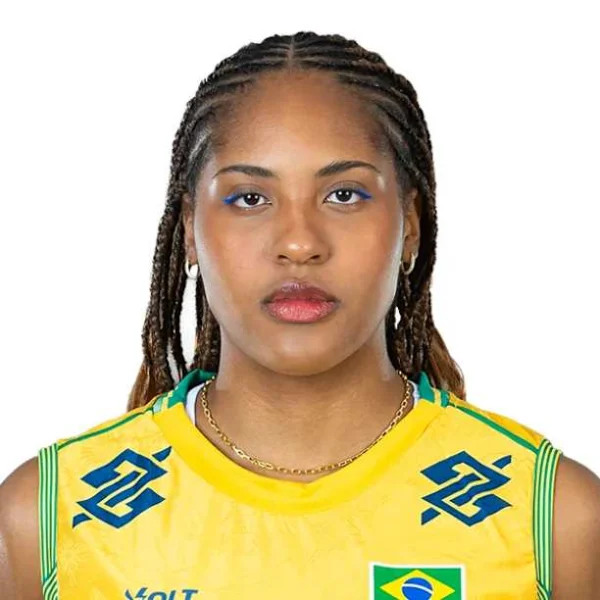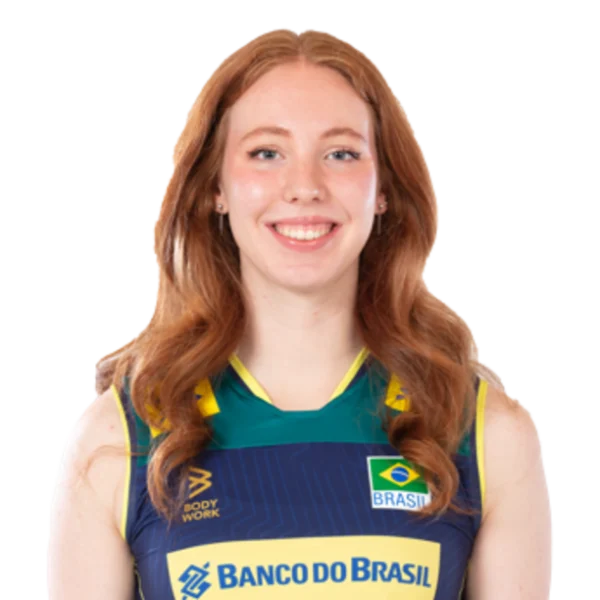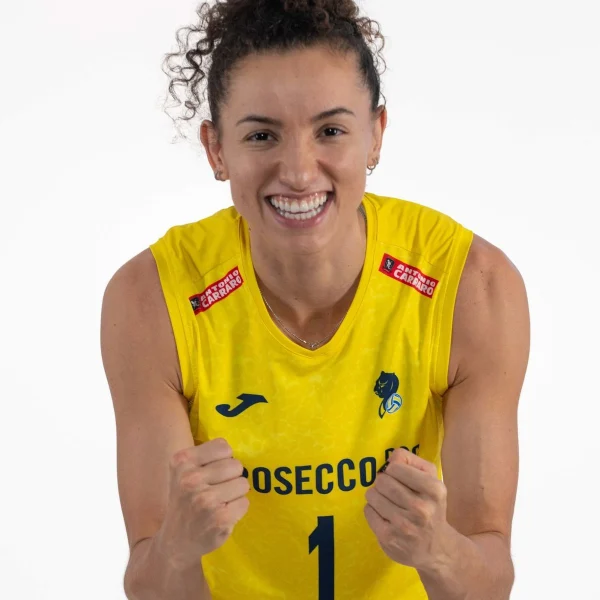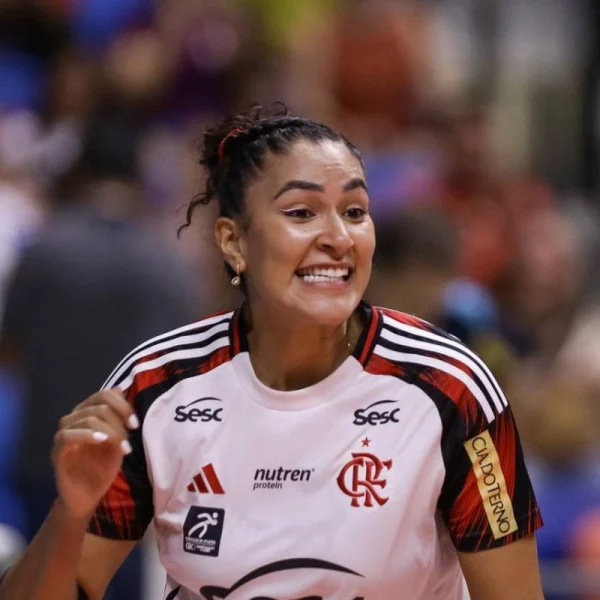
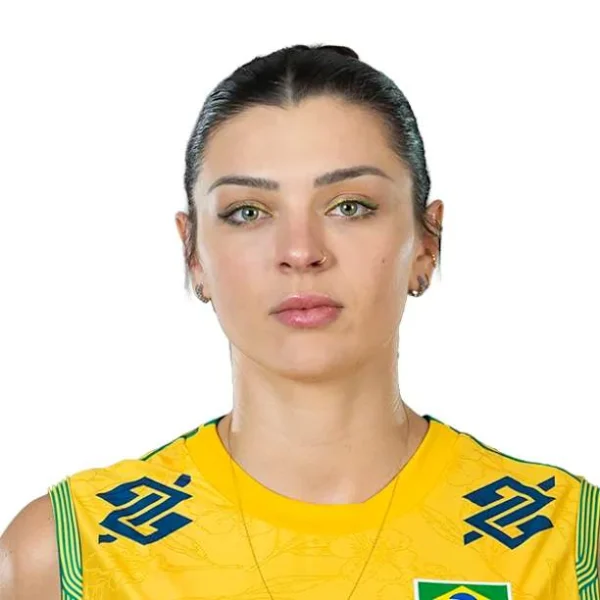
Rosamaria Montibeller (born April 9, 1994) is a Brazilian professional volleyball player who plays primarily as an opposite spiker and can also operate as an outside hitter. She represents the Brazil women’s national volleyball team and plays for Denso Airybees in Japan. Born in Nova Trento, Santa Catarina, she has won two Olympic medals with Brazil: silver at the Tokyo 2020 Olympics and bronze at Paris 2024.
Known widely as Rosamaria or Rosa, she began her professional career in Brazil before spending four seasons in Italy’s Serie A1 and moving to Japan in 2023. Her international career includes a silver medal at the 2022 FIVB Women’s World Championship, multiple Volleyball Nations League silver medals and a prominent role in Brazil’s Olympic teams. Her ability to play across two attacking positions has been particularly important throughout her national-team career.
Player Information
| Field | Details |
|---|---|
| Full Name | Rosamaria Montibeller |
| Known As | Rosamaria |
| Nickname | Rosa |
| Date of Birth | April 9, 1994 |
| Age | 32 |
| Place of Birth | Nova Trento, Santa Catarina, Brazil |
| Nationality | Brazilian |
| Gender | Female |
| Height | 185 cm (6 ft 1 in) |
| Weight | 76 kg (historical Olympic listing) |
| Position | Opposite Spiker / Outside Hitter |
| Current Club | Denso Airybees |
| Current League | Japan SV.League Women |
| Club Jersey Number | 7 |
| National Team | Brazil Women’s National Volleyball Team |
| National Team Number | 7 (2026 VNL) |
| Senior National Team Career | 2015–present |
| Professional Career | 2011–present |
| Career Status | Active |
| @rosamariaoficial | |
| X | @rosamariavolei |
Early Life and Volleyball Beginnings
Rosamaria Montibeller was born on April 9, 1994, in Nova Trento, a municipality in the southern Brazilian state of Santa Catarina. The town’s Italian cultural heritage forms part of her family background, and the local volleyball development system gave her an early introduction to organized competition.
She started playing volleyball as a child through a local training project associated with Nova Trento. The Brazilian Olympic Committee dates her introduction to the sport to 2003, when she was nine years old. That development environment provided a route from local volleyball into increasingly competitive youth teams without requiring her to begin her career at an established major-city club.
Her attacking ability brought her into Brazil’s national youth system while she was still a teenager. In 2010, she helped Brazil win the South American Girls’ Volleyball Championship, an early international achievement that confirmed her potential beyond domestic competition.
Further youth-team opportunities followed. She won another continental youth title in 2012 and received recognition as an opposite hitter, demonstrating that her attacking qualities were already important to her role. The progression through Brazil’s age-group teams gave her experience with international opponents before she became a regular senior professional.
In 2011, Rosamaria joined São Caetano and began competing professionally. Moving into the São Paulo volleyball environment meant facing stronger domestic opposition and adapting to the demands of senior-level training and competition. It also marked the start of a club career that would eventually take her through three countries and some of the world’s most competitive women’s leagues.
Club Career
Early Professional Career in Brazil: São Caetano, Campinas and Pinheiros
Rosamaria began her senior club career with São Caetano in 2011, progressing from a promising youth international into Brazil’s professional league system. Her first two seasons were primarily a transition from age-group volleyball to the physical and tactical demands of senior competition.
In 2013, she moved to Vôlei Amil/Campinas, a prominent project coached by José Roberto Guimarães, who was already one of the most successful coaches in international volleyball. The squad included established Brazilian stars such as Natália Pereira and Tandara Caixeta.
For a young attacker, the opportunity to train and compete in that environment was significant. Rosamaria was exposed to a higher standard of preparation and experienced teammates who understood the demands of elite domestic and international volleyball. Working in a team led by Guimarães also provided an early connection with the coach who would later guide much of her senior national-team career.
After the Campinas project ended, she joined Esporte Clube Pinheiros for the 2014–15 season. Although the move was comparatively short, it maintained her place in Brazil’s top domestic competition and preceded a more substantial period with Minas Tênis Clube.
Minas Tênis Clube and Praia Clube: Becoming an Established Attacker
Rosamaria joined Minas Tênis Clube in 2015 and remained there for three seasons. This period overlapped with her emergence in Brazil’s senior national-team setup, giving her a more established professional platform during an important stage of her international development.
At Minas, she continued to develop as an attacker capable of contributing in different offensive roles. Playing in Brazil’s Superliga required her to perform against domestic rivals that regularly supplied players to the national team.
The 2015–18 period mattered because she was no longer being evaluated only for her youth-level promise. She had become a senior international competing regularly in an elite professional environment, with club performance and national-team selection increasingly connected.
Her next move took her to Dentil Praia Clube for the 2018–19 season. Praia was already a major Brazilian contender, and Rosamaria joined a squad with domestic and continental ambitions.
During that campaign, Praia won the Brazilian Super Cup and the South American Women’s Club Championship. Rosamaria also received individual recognition as one of the standout outside hitters at the continental club competition.
The season offered an important distinction in her career: she was contributing to a team competing for major honors rather than merely gaining experience. It also proved to be her final club season in Brazil before her first move overseas.
Italian Serie A1: First Overseas Challenge with Perugia and Casalmaggiore
In 2019, Rosamaria moved to Italy and signed with Bartoccini Fortinfissi Perugia, beginning a four-season stretch in Serie A1 Femminile.
The transfer represented a substantial career step. Italy’s top women’s league combines high-level international talent with demanding tactical systems, and the adjustment required her to compete against a different mix of blockers, defensive organizations and experienced attackers.
Perugia recruited her as an opposite, identifying her attacking experience in Brazil as an important addition to a team preparing for Serie A1 competition. The club’s 2019 signing announcement also emphasized her Brazilian national-team background and success at Praia Clube.
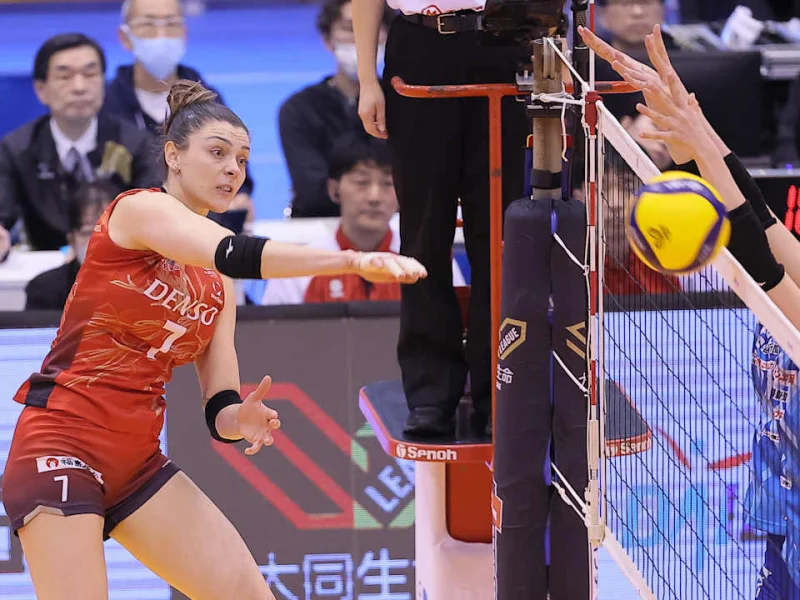
Her first Italian season was not defined by a major club trophy, but it established her in European professional volleyball. Adapting to a new country and championship became part of her development at a stage when she was already competing for Brazil internationally.
For 2020–21, she joined VBC Èpiù Casalmaggiore. This second season in Italy allowed her to build on the experience gained at Perugia rather than return to Brazil after a single overseas campaign.
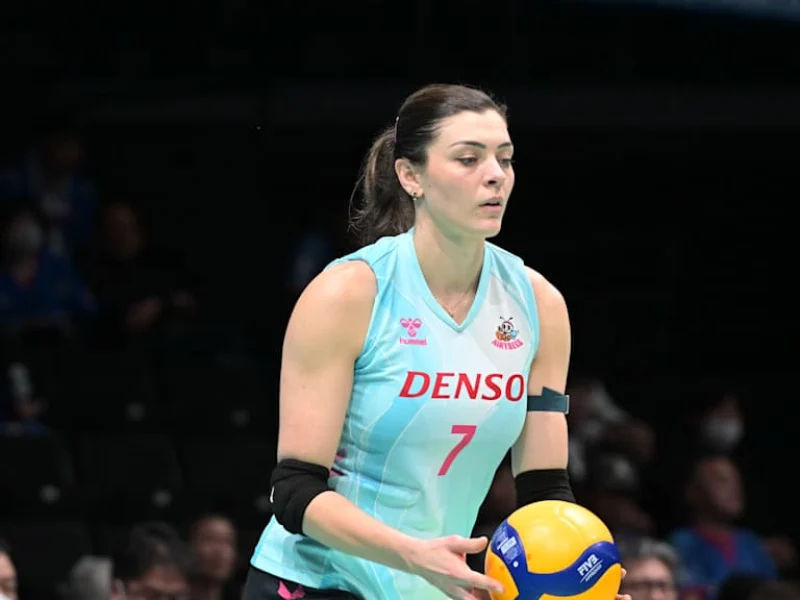
Casalmaggiore provided continuity in Serie A1, with Rosamaria remaining in a league where attacking efficiency, tactical awareness and the ability to respond to organized defensive systems were important measures of performance.
Novara and Busto Arsizio: Different Responsibilities in Italy
Rosamaria joined Igor Gorgonzola Novara for the 2021–22 season. Novara was one of the leading clubs in Italian women’s volleyball, with a squad assembled to challenge for domestic and international honors.
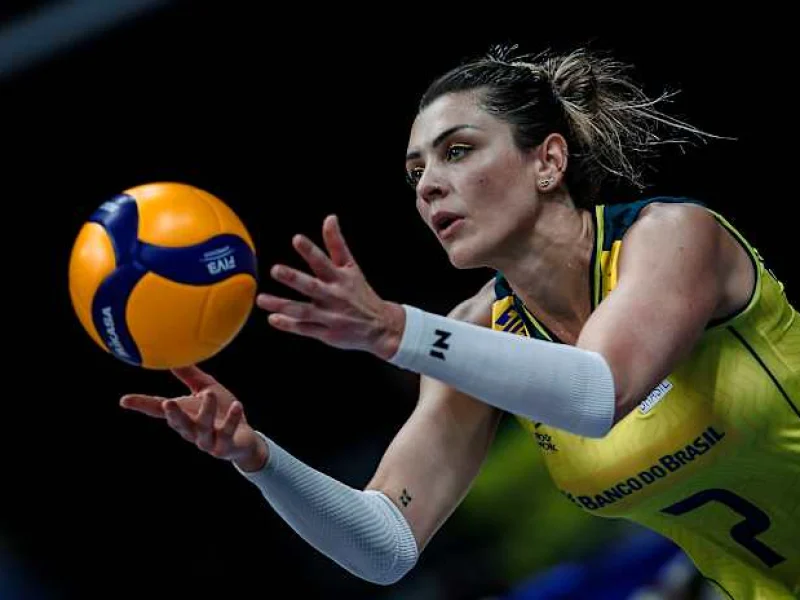
Her move placed her in a more competitive squad environment, where attacking opportunities and playing time were shared among several high-level players. Rather than serving as the unquestioned primary attacking option throughout the season, she had to adapt to a different distribution of responsibilities.
That distinction matters when evaluating her career. A season with fewer individual points does not necessarily represent a decline in ability when a player’s role changes substantially within a stronger or more crowded attacking rotation.
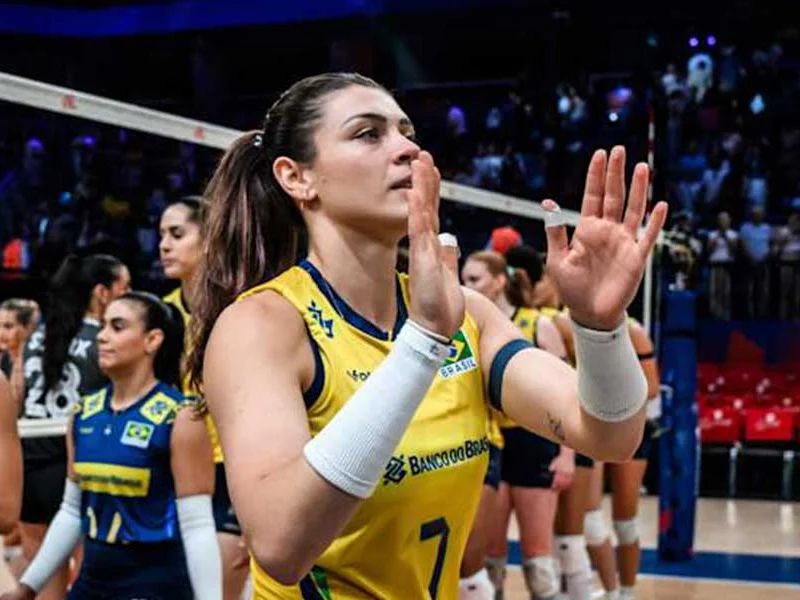
In 2022–23, Rosamaria moved to E-Work Busto Arsizio, where she received a more substantial attacking assignment. Official league records list her with 384 points in 22 Italian league appearances, including 330 attack points, 36 blocks and 18 service points.
The Busto Arsizio season provided a clearer statistical demonstration of her capacity to handle sustained offensive responsibility. It also concluded her four-year Italian career, during which she had experienced different competitive expectations at Perugia, Casalmaggiore, Novara and Busto Arsizio.
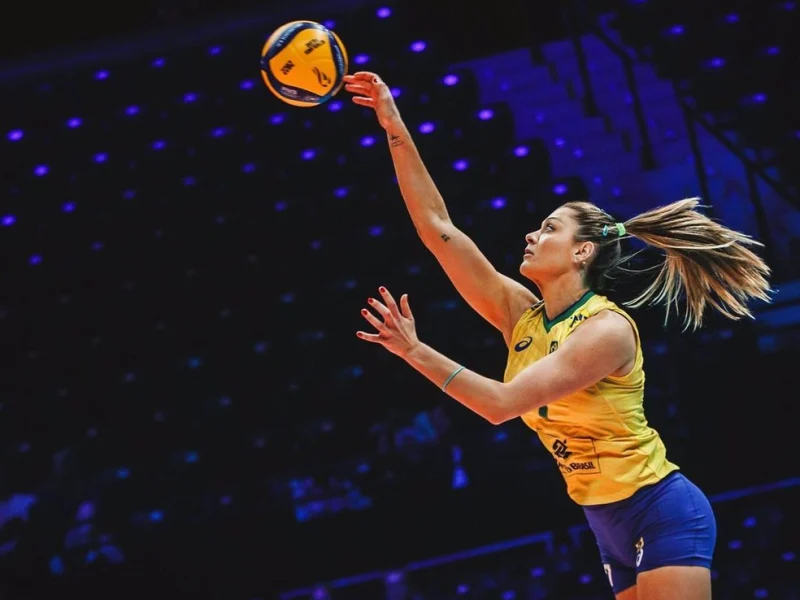
Those contrasting environments helped prepare her for another major transition: moving from European club volleyball to Japan.
Denso Airybees: The Japanese Volleyball Chapter
Rosamaria signed with Denso Airybees in 2023, beginning a new phase in Japan after eight years of senior club volleyball in Brazil and four seasons in Italy.
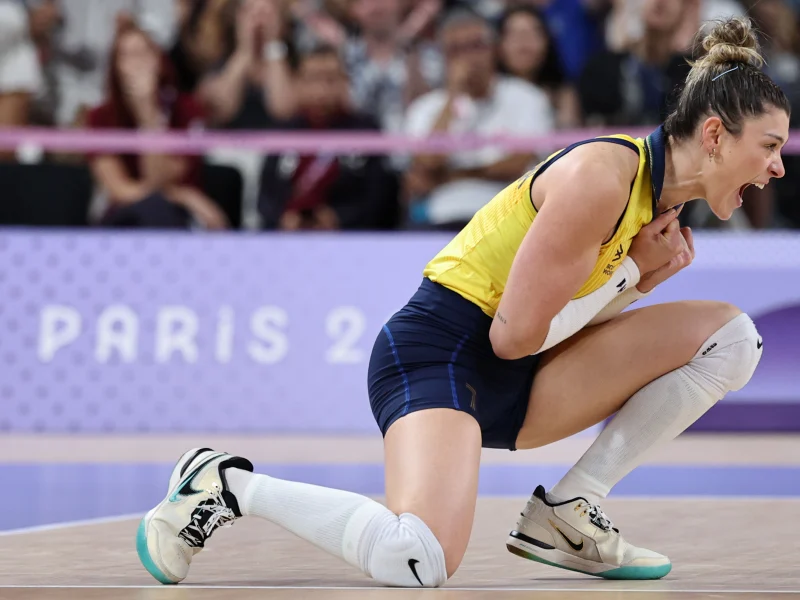
The move was a deliberate attempt to experience a different volleyball environment. In a 2026 interview with Denso, she explained that facing Japan internationally had impressed her because of the country’s precision, defensive persistence and ability to keep rallies alive.
She viewed the move as an opportunity to improve, rather than simply as another overseas contract. The differences between Japanese and Italian volleyball were especially relevant to an attacker who regularly faced disciplined blocking and floor-defense systems.
Her role at Denso developed into that of a central scoring option. The team’s expectations extended beyond her international reputation: she was required to carry significant attacking volume across a long domestic schedule.
The 2024–25 SV.League season offered particularly strong evidence of that workload. Across 48 matches including the playoffs, Rosamaria accumulated 1,026 points, consisting of 917 attack points, 83 blocks and 26 service points. Her total reflected not only scoring ability but also repeated availability and responsibility across a demanding campaign.
Denso progressed to the semifinals that season, with Rosamaria contributing during both the regular season and postseason. Her individual production remained significant even though the team did not finish as league champion.
In 2025–26, her overall scoring total decreased, but she continued to carry a major attacking role. She recorded 805 points in 44 regular-season matches, ranking among the competition’s leading scorers.
Denso’s decision to retain her for 2026–27 reflected that continuing role. On July 22, 2026, the club announced her contract renewal, confirming another season in Japan.
Rosamaria described her decision to remain as an expression of confidence in the club’s project and its commitment to volleyball. By this stage, Denso had become more than a short international stop: it was her longest continuous club association since her three seasons with Minas.
Club Career Timeline
| Seasons | Team | Country |
|---|---|---|
| 2011–2013 | São Caetano | Brazil |
| 2013–2014 | Vôlei Amil/Campinas | Brazil |
| 2014–2015 | Esporte Clube Pinheiros | Brazil |
| 2015–2018 | Minas Tênis Clube | Brazil |
| 2018–2019 | Dentil Praia Clube | Brazil |
| 2019–2020 | Bartoccini Fortinfissi Perugia | Italy |
| 2020–2021 | VBC Èpiù Casalmaggiore | Italy |
| 2021–2022 | Igor Gorgonzola Novara | Italy |
| 2022–2023 | E-Work Busto Arsizio | Italy |
| 2023–present | Denso Airybees | Japan |
National Team Career
Youth National Team Success and Senior Breakthrough
Rosamaria’s international career began in Brazil’s youth system, where she accumulated continental experience before reaching the senior national team.
She helped Brazil win the 2010 South American Girls’ Championship and added further youth-level success in 2012. Her ability to attack as an opposite and outside hitter gave her positional flexibility from an early stage.
In 2015, she entered the senior national-team picture and helped Brazil earn the silver medal at the Pan American Games in Toronto.
The Pan American tournament was an important bridge between her youth success and her later Olympic career. It demonstrated that she could contribute to a senior Brazilian squad while still developing her role in professional club volleyball.
Brazil’s attacking positions were highly competitive, so Rosamaria’s progression was not an immediate move into an undisputed starting role. She spent several years building international experience while competing with established hitters for court time.
She was part of Brazil’s successful 2017 FIVB World Grand Prix campaign, adding a major international title to her record before the competition was replaced by the Volleyball Nations League.
Tokyo 2020: Olympic Silver and Expanded Responsibility
Rosamaria’s first Olympic appearance came at the Tokyo 2020 Games, held in 2021.
She entered the tournament as a flexible attacking option for coach José Roberto Guimarães. Her capacity to play both opposite and outside hitter helped Brazil manage different attacking combinations.
Her tournament responsibility changed considerably when Tandara Caixeta became unavailable late in the competition. Rosamaria moved into a more prominent starting role, helping Brazil maintain its attacking structure during the knockout stage.
She made valuable contributions as Brazil advanced through the quarterfinal against the Russian Olympic Committee and the semifinal against South Korea.
Brazil ultimately reached the gold medal match, where the United States won in straight sets. Rosamaria earned her first Olympic medal as a member of the silver-medal team.
The Brazilian Olympic Committee’s biography identifies this progression from versatile squad option to Olympic starter as a defining part of her career.
The silver medal carried particular significance because she had entered the tournament without being Brazil’s automatic first-choice opposite. When the team’s circumstances changed, her versatility became essential rather than supplementary.
2022 World Championship Silver and International Continuity
Following Tokyo, Rosamaria remained part of Brazil’s senior national-team plans.
The team won silver medals in the Volleyball Nations League in both 2021 and 2022, maintaining its place among the strongest women’s national teams in international volleyball.
In 2022, Brazil reached the final of the FIVB Women’s World Championship, eventually finishing runner-up to Serbia.
Rosamaria was part of that World Championship silver-medal campaign, adding another major international honor between her two Olympic appearances.
This period reinforced her status as a reliable international squad member rather than an athlete whose major contribution had been confined to Tokyo. Brazil continued to value her attacking experience and ability to cover more than one position.
The fact that she was also competing in Italy during this period is relevant. Her national-team responsibilities developed alongside regular exposure to Serie A1 opposition, where many of the world’s leading attackers and blockers played their club volleyball.
Paris 2024: Olympic Bronze as Starting Opposite
At the Paris 2024 Olympics, Rosamaria arrived with a more clearly established role than she had held at the beginning of Tokyo.
She served as Brazil’s starting opposite during the tournament, operating as a primary scoring option in a team that also featured Gabi Guimarães and other experienced international players.
Brazil advanced through the group stage and quarterfinals before losing a closely contested semifinal to the United States. That defeat ended the team’s gold-medal ambitions but left an opportunity to finish on the podium.
In the bronze-medal match, Brazil defeated Türkiye to secure third place. Rosamaria scored 10 points in that match, contributing to a performance that completed her second consecutive Olympic podium finish.
Her Paris 2024 competition statistics record 75 points across six matches, including 64 attack points, seven blocks and four service points.
The numbers reflect a different Olympic identity from Tokyo. Rather than being required to assume a larger responsibility because of a late roster disruption, she entered Paris with an established role in Brazil’s attack.
She finished the tournament among its leading scorers, and Brazil’s bronze medal made her a two-time Olympic medalist.
2026 Volleyball Nations League and Continued International Competition
Rosamaria remained active with Brazil in the 2026 Volleyball Nations League, adding another significant chapter to her international career.
Brazil reached the championship match in Macao after advancing through the Finals, but Türkiye won the final 3–1.
Rosamaria contributed 19 points in the championship match, with 17 attack points and two blocks, finishing behind Ana Cristina among Brazil’s scorers.
Her performance demonstrated that she could still contribute meaningfully in decisive international matches more than a decade after her first senior national-team appearances.
Across the 2026 VNL, her official tournament record shows 111 points: 101 in attack, nine from blocks and one from serving.
Brazil’s silver medal was another major result for a national-team group that had remained competitive across several Olympic cycles.
In September 2026, Rosamaria also participated in Brazil’s South American Championship campaign. However, a left-knee injury interrupted her tournament.
On September 11, the Brazilian Volleyball Confederation confirmed a partial injury to her medial collateral ligament and announced that she would not take part in the remaining matches.
The federation initially estimated a recovery period of three to six weeks. Brazil subsequently won the continental title, securing qualification for the Los Angeles 2028 Olympic Games, although Rosamaria was unable to complete the competition.
Her injury introduced a different concern from the attacking responsibilities that had characterized most of her recent national-team appearances: recovery and a return to full competition would become important considerations ahead of her next club campaign.
Playing Style and Strengths
Rosamaria is primarily an opposite spiker whose game is built around attacking volume, back-row hitting and the ability to score against organized defensive systems. She has also played as an outside hitter, particularly earlier in her career and when Brazil required different attacking combinations.
Her positional flexibility is a defining part of her international profile, but her Japanese club career has provided the clearest recent evidence of her performance as a high-volume opposite.
High-Volume Attacking and Scoring Responsibility
At Denso Airybees, Rosamaria has operated as one of the team’s main attacking outlets.
Her 2025–26 SV.League regular-season statistics illustrate the scale of that responsibility. She attempted 1,901 attacks and converted 728 of them into points, producing a 38.3% attack success rate across 44 matches.
This was not a minor contribution from a rotational attacker. The repeated attacking workload required her to absorb large numbers of sets across the season and remain a consistent scoring option.
Her 805 total points placed her among the league’s leading scorers, demonstrating how central she remained to Denso’s offense.
The previous season also showed her ability to produce over a longer campaign. In 2024–25, she scored 1,026 points across the regular season and playoffs, with more than 900 points coming directly from attacks.
Those totals indicate a player trusted to finish rallies repeatedly, although attacking volume and conversion rate must be considered together when comparing her with players on teams that distribute offensive opportunities differently.
Back-Row Attacking and Tactical Versatility
Rosamaria’s attacking role extends beyond front-row swings.
Japan’s league statistics record substantial back-row attacking activity. In the 2025–26 regular season, she scored 172 points from 489 back-row attack attempts, with a reported success rate of 35.2%.
Back-row attacking is particularly valuable for a high-volume opposite because it allows the player to remain an offensive option when rotating through the back court.
For Denso, that means Rosamaria’s contribution is not limited to the rotations in which she can attack directly near the net. She can continue to receive sets from behind the attack line and help sustain offensive pressure across the full rotation.
Her experience as an outside hitter adds another dimension. Brazil previously used her as a flexible attacking option capable of adapting to different combinations, and that positional background helped her assume a larger Olympic role when needed.
Nevertheless, her current primary assignment is more specialized. Denso and Volleyball World’s official player records identify her as an opposite, while the Japanese league database also contains an outside-hitter classification reflecting her broader positional history.
Blocking, Serving and Match Impact
Although attack scoring accounts for most of Rosamaria’s points, she also contributes at the net through blocking.
In 2025–26, she recorded 60 block points and 17 service points for Denso. During the preceding season, she finished with 83 blocks and 26 service points across the regular season and playoffs.
These figures show that her value is not restricted to attack efficiency. She adds scoring opportunities in other phases, even though serving is not the dominant feature of her statistical profile.
Her performance in the 2026 VNL final offers a useful international example. Against Türkiye, she produced 17 attack points and two blocks in a match where Brazil needed its hitters to compete against one of the strongest blocking and defensive systems in the tournament.
That contribution also illustrates the difference between her club and national-team roles. At Denso, she regularly handles large attacking volumes; with Brazil, she works within a broader group of elite scorers and her share of the offense can change depending on the lineup and match.
Adaptation to Japanese Volleyball
Rosamaria’s decision to join Denso also helps explain how she approaches her development.
In her 2026 Denso interview, she described being impressed by Japan’s precision, low-error approach and refusal to allow rallies to end easily. These were qualities she wanted to experience more closely after years in Brazil and Italy.
The move required her to attack against defensive systems emphasizing persistence and ball control, rather than assuming that a powerful first swing would always end the rally.
Her successful adaptation is reflected in her sustained scoring totals over consecutive Japanese seasons. She has remained productive within an environment whose defensive characteristics originally motivated her transfer.
This combination of international experience, positional versatility and high-volume scoring responsibility explains why she has continued to be valuable to both Denso and Brazil.
Major Achievements
Selected National Team Honors
| Year | Competition | Result |
|---|---|---|
| 2010 | South American Girls’ Volleyball Championship | Gold |
| 2012 | South American Junior Volleyball Championship | Gold |
| 2015 | Pan American Games | Silver |
| 2017 | FIVB World Grand Prix | Gold |
| 2021 | Tokyo 2020 Olympic Games | Silver |
| 2021 | FIVB Volleyball Nations League | Silver |
| 2022 | FIVB Volleyball Nations League | Silver |
| 2022 | FIVB Women’s World Championship | Silver |
| 2024 | Paris Olympic Games | Bronze |
| 2025 | FIVB Volleyball Nations League | Silver |
| 2026 | FIVB Volleyball Nations League | Silver |
| 2026 | South American Women’s Volleyball Championship | Gold — participated before injury |
Selected Club Honors
| Season | Competition | Result | Team |
|---|---|---|---|
| 2018–19 | Brazilian Super Cup | Winner | Dentil Praia Clube |
| 2018–19 | South American Women’s Club Championship | Winner | Dentil Praia Clube |
Selected Individual Awards
| Year | Competition | Award |
|---|---|---|
| 2012 | South American Junior Volleyball Championship | Best Opposite |
| 2019 | South American Women’s Club Championship | Best Outside Hitter |
These selected honors distinguish national-team medals, club trophies and individual recognition. The national-team record includes competitions in which Rosamaria was a squad member, with her role varying from rotational attacker to established starter.
Personal Life and Background
Rosamaria’s connection with Nova Trento remains an identifiable part of her background. The Santa Catarina town is known for its Italian heritage, and her family roots reflect that cultural setting.
Her grandmother has also been an important presence in her public accounts of family life. In material shared through her club profile and social media, Rosamaria has spoken warmly about childhood memories and time spent with relatives.
Her life outside Brazil has been shaped by the international nature of professional volleyball. Four years in Italy were followed by a move to Japan, exposing her to different languages, sporting cultures and everyday routines.
Rosamaria has expressed an interest in using those experiences for personal development beyond volleyball. In her Denso interview, she emphasized how living and playing in Japan had broadened her understanding of teamwork, respect and cultural differences.
She has also discussed the importance of challenging herself even when a new situation is unfamiliar. Rather than presenting the move abroad as an uncomplicated step, she acknowledged the uncertainty involved in changing countries and adapting to different environments.
These experiences have become part of her identity alongside her career achievements. Her public profile reflects a professional athlete whose interests extend beyond match results to travel, culture and continued learning.
Off the Court and Public Profile
Rosamaria has developed a substantial public following, particularly among Brazilian volleyball supporters.
Her visibility increased during the Tokyo Olympics, when her performances contributed to Brazil’s run to the silver medal. In August 2021, Volleyball World reported that her Instagram account had passed one million followers.
That milestone reflected her growing recognition outside the sport’s traditional audience. Her appeal combined international sporting success with a social-media presence that allowed supporters to follow her experiences away from competition.
Her verified public Instagram account is @rosamariaoficial, where she shares material related to volleyball, travel, training and personal interests.
Rosamaria has also been associated publicly with Nike, reflecting her appeal as an internationally recognized athlete. Her broader visibility is supported by two Olympic medals and extensive experience in three major club-volleyball markets.
Her popularity in Japan is particularly notable because it developed after she had already become an established Brazilian international. Denso’s own editorial coverage has highlighted her approachable personality and her involvement with supporters, complementing her role as one of the team’s leading scorers.
Where Is Rosamaria Montibeller Playing Now?
As of October 2026, Rosamaria Montibeller is contracted to Denso Airybees for the 2026–27 Japan SV.League Women season.
The club confirmed her renewal on July 22, 2026, extending an association that began in 2023. She wears jersey number 7 and is listed by Denso as an opposite spiker.
Her most recently completed Japanese league campaign was 2025–26, when she scored 805 points in 44 regular-season matches and remained among the league’s leading scorers.
Internationally, she continued representing Brazil during 2026 and helped the national team finish second in the Volleyball Nations League. She also took part in September’s South American Championship before suffering a partial injury to the medial collateral ligament of her left knee.
The Brazilian Volleyball Confederation initially estimated three to six weeks of recovery. That estimate should not be treated as confirmation of a completed recovery or a return-to-play date; her competitive availability requires confirmation through subsequent club or match records.
Her 2026–27 contract establishes her team affiliation, while her actual playing status following the September injury remains a separate matter.
Recent Performance Snapshot
Denso Airybees — 2025–26 SV.League Regular Season
| Statistic | Total |
|---|---|
| Matches Played | 44 |
| Sets Played | 167 |
| Total Points | 805 |
| Attack Points | 728 |
| Attack Attempts | 1,901 |
| Attack Success Rate | 38.3% |
| Block Points | 60 |
| Service Points | 17 |
| Back-Row Attack Points | 172 |
| Back-Row Attack Attempts | 489 |
| Average Points per Match | 18.30 |
Rosamaria’s 805 points placed her among the highest-scoring players in Japan’s 2025–26 women’s competition.
The largest share of those points came from attacking, reinforcing her role as Denso’s primary offensive option. Her 60 blocks provided a secondary contribution at the net, while 172 successful back-row attacks demonstrate the offensive workload she carried when rotating away from the front row.
Brazil — 2026 Volleyball Nations League
| Statistic | Total |
|---|---|
| Total Points | 111 |
| Attack Points | 101 |
| Block Points | 9 |
| Service Points | 1 |
| Attack Efficiency (Official Tournament Metric) | 38.4% |
| Points in Final vs Türkiye | 19 |
| Tournament Result | Silver |
The VNL statistics reflect a different environment from her Japanese club season. Brazil distributes offensive responsibility among several internationally established players, so Rosamaria’s national-team totals are not directly comparable with her Denso scoring averages.
Her 19-point contribution in the final remains particularly significant because it came against Türkiye in the competition’s deciding match.
Frequently Asked Questions
How old is Rosamaria Montibeller?
Rosamaria Montibeller was born on April 9, 1994. She is 32 years old as of October 2026.
How tall is Rosamaria Montibeller?
Rosamaria is listed at 185 cm (approximately 6 ft 1 in) by Denso Airybees and Volleyball World. Some older official records list her at 186 cm.
What position does Rosamaria Montibeller play?
She plays primarily as an opposite spiker but has also played as an outside hitter. Her ability to cover both attacking positions has been important during her international career.
Which club does Rosamaria Montibeller play for?
Rosamaria plays for Denso Airybees in Japan. Her contract was renewed for the 2026–27 season.
How many Olympic medals has Rosamaria Montibeller won?
She has won two Olympic medals with Brazil: silver at Tokyo 2020, held in 2021, and bronze at Paris 2024.
What is Rosamaria Montibeller’s Instagram account?
Her official Instagram account is @rosamariaoficial.
References
- Brazilian Olympic Committee — Rosamaria Montibeller Olympic Biography
- Olympedia — Rosamaria Montibeller Olympic Results and Biography
- Denso Airybees — Official Rosamaria Montibeller Player Profile
- Denso Airybees — 2026–27 Contract Renewal Announcement
- Denso — No Risk, No Victory: Rosamaria Montibeller Interview, May 2026
- Volleyball World — Rosamaria Montibeller, 2025–26 SV.League Statistics
- Japan SV.League — Rosamaria Montibeller Official Player Records
- Volleyball World — Rosamaria Montibeller, Paris 2024 Olympics
- Volleyball World — Rosamaria Montibeller, 2026 VNL Statistics
- Brazilian Volleyball Confederation — Brazil’s 2026 VNL Silver Medal
- Brazilian Volleyball Confederation — Official Rosamaria Injury Statement, September 11, 2026
- Volleyball World — Brazil’s 2026 South American Championship Title
- Italian Women’s Volleyball League — Rosamaria Montibeller Career Record
- Italian Women’s Volleyball League — Perugia Signing Announcement, 2019
- Santa Catarina State Sports Authority — Rosamaria’s Career and Paris 2024 Selection
- Volleyball World — Rosamaria Reaches One Million Instagram Followers
- Brazilian Olympic Committee — Paris 2024 Media Guide