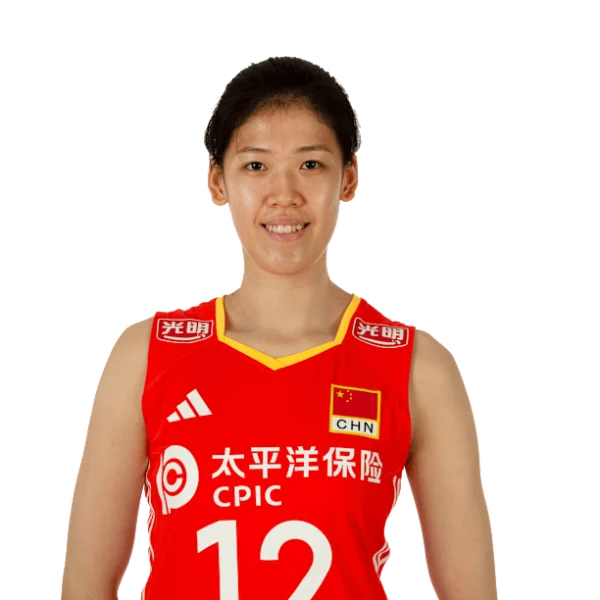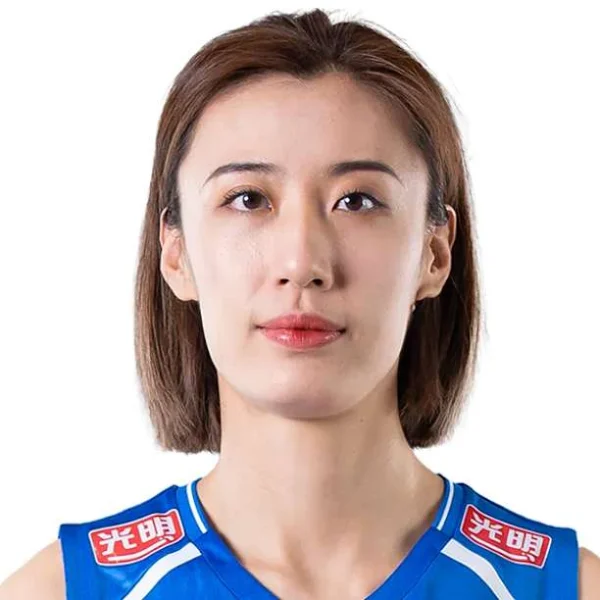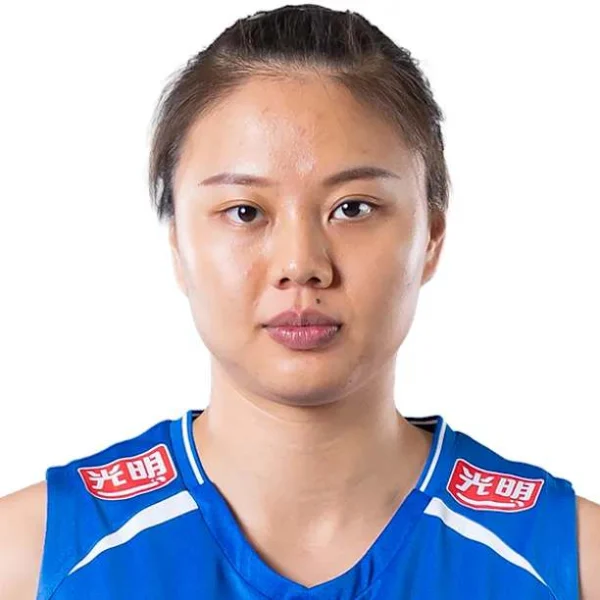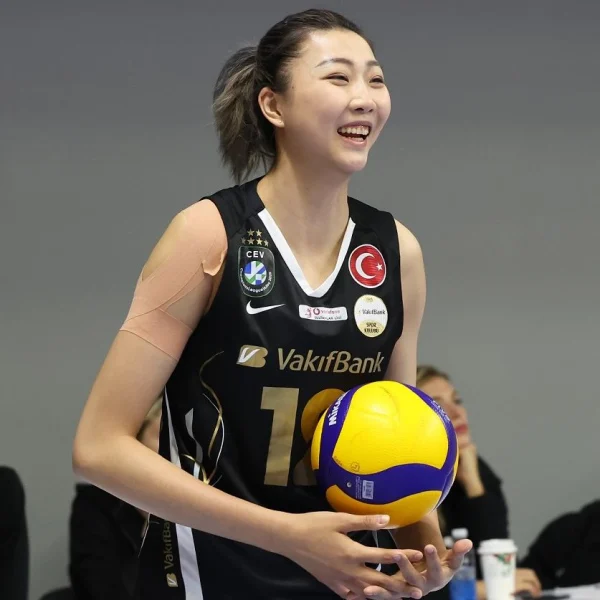
The China women’s national volleyball team represents the People’s Republic of China in senior international women’s volleyball and competes under the Chinese Volleyball Association within the Asian Volleyball Confederation. The team is coached by Zhao Yong and captained by Olympic champion Gong Xiangyu. China are three-time Olympic champions, two-time World Championship winners and one of the defining national teams in the history of women’s volleyball.
The 2026 season has combined generational change with a return to the later stages of major competitions. China reached the Volleyball Nations League semifinals, finished runners-up to Thailand at the Asian Championship, won a third consecutive Asian Games gold medal and qualified for the 2027 FIVB Women’s Volleyball World Cup. They enter the next phase of the Los Angeles 2028 cycle ranked seventh in the world.
Team Information
| Field | Detail |
|---|---|
| Official Team Name | China Women’s National Volleyball Team |
| Native Name | 中国国家女子排球队 |
| Country | China |
| Gender | Women |
| National Federation | Chinese Volleyball Association |
| FIVB Code | CHN |
| Region / Confederation | Asia — AVC |
| Head Coach | Zhao Yong |
| Captain | Gong Xiangyu |
| FIVB World Ranking | No. 7 — 324.90 points — View full FIVB rankings |
| Current Cycle | 2026–2028 |
| 2027 World Cup | Qualified — AVC continental qualifier |
| 2027 World Cup Pool | Pool H — China, Netherlands, Sweden, Switzerland; Quebec City |
| LA28 Olympic Status | Not yet qualified |
| Olympic Best Result | Gold — 1984, 2004, 2016 |
| World Championship Best Result | Champions — 1982, 1986 |
| Volleyball Nations League Best Result | Silver — 2023 |
| Asian Championship Best Result | Champions — 13 titles |
| Asian Games | Champions — 10 titles, including 2018, 2023 and 2026 consecutively |
| Federation Website | Chinese Volleyball Association |
The official FIVB women’s ranking lists China at No. 7 in the late-October 2026 snapshot, behind Italy, Brazil, Türkiye, the United States, Poland and Japan. At 324.90 points, China remain Asia’s second-highest-ranked women’s national team behind Japan.
National Team History
China’s place among the sport’s major national teams was established during the first half of the 1980s. The team won five consecutive global titles across the major competitions of the era: the 1981 FIVB World Cup, 1982 World Championship, 1984 Olympic Games, 1985 World Cup and 1986 World Championship.
The sequence transformed China from an emerging Asian contender into the dominant women’s program of the period. Lang Ping became the most internationally recognizable player from that generation, combining high-level attacking with the competitive identity that came to define the team. Volleyball World’s World Championship history records China’s breakthrough title in 1982 and successful defence in 1986, while FIVB’s retrospective on Lang documents her central role in the World Championship, Olympic and World Cup victories.
The program did not maintain uninterrupted dominance after the 1980s, but it remained regularly competitive at global level. China reached the Olympic final in 1996 and World Championship finals in 1990 and 1998 before another major peak arrived under head coach Chen Zhonghe.
That generation won the 2003 FIVB World Cup and then captured Olympic gold at Athens 2004. Setter Feng Kun became the tactical centre of a team capable of combining quick middle play with a broad attacking distribution and strong floor defence.
The next defining era was associated with Lang Ping’s return as head coach. China won the 2015 World Cup, then recovered from a difficult Olympic preliminary round to win gold at Rio 2016. The cycle continued with bronze at the 2018 World Championship and another World Cup title in 2019.
The Rio victory also gave Lang a unique place in volleyball history. FIVB’s profile of Lang Ping’s career notes that she became the first person in volleyball to win an Olympic title both as a player, in 1984, and as a head coach, in 2016.
The post-Tokyo period brought a more uneven transition. China remained internationally competitive but did not medal at Paris 2024, and the federation subsequently began another rebuilding phase. Zhao Yong was appointed head coach ahead of the 2025 season, initially working with a younger group while gradually restoring experienced players around them.
China at the Olympic Games
China’s Olympic history is one of the strongest in women’s volleyball. The team have won three gold medals — Los Angeles 1984, Athens 2004 and Rio 2016 — as well as silver in Atlanta 1996 and bronze in Seoul 1988 and Beijing 2008. The official Olympic medal history maintained by Volleyball World confirms that six-medal record.
The first gold came in Los Angeles during the program’s early-1980s run of major titles. China defeated the United States in the final, completing the third major championship in the five-title sequence that defined the first golden generation.
Twenty years later, China returned to the top of the Olympic podium in Athens. That title came through a dramatically different team, built around Feng Kun’s setting and a balanced attacking structure. The victory re-established China as a global champion after a long period in which the program had remained competitive without winning Olympic gold.
Rio 2016 produced another distinct route. China finished only fourth in their preliminary pool before eliminating hosts Brazil in a five-set quarterfinal, beating the Netherlands in the semifinal and defeating Serbia 3–1 for gold. Zhu Ting became the tournament’s central attacking figure and was named Olympic MVP.
China entered Paris 2024 with another experienced group but did not return to the podium. The current LA28 cycle is therefore the first Olympic rebuild led by Zhao Yong.
China had an opportunity to secure an early Los Angeles place at the 2026 Asian Championship because the continental champion received Asia’s direct quota. Thailand’s victory in the final meant China did not take that route, so qualification remains open through the 2027 World Cup and the final FIVB ranking pathway.
World Championship & Other Global Competitions
China have won the women’s World Championship twice, in 1982 and 1986. The official World Championship honours record also shows silver medals in 1990, 1998 and 2014 and bronze in 2018.
The 1982 championship in Peru was China’s first global title at the event and a decisive moment in the program’s rise. Lang Ping was named tournament MVP as China defeated the hosts in the final. Four years later, China successfully defended the championship in Czechoslovakia.
The 2014 silver medal marked the beginning of another important period under Lang as coach. China lost the final to the United States but used the tournament as part of the development cycle that produced the 2015 World Cup and 2016 Olympic titles. Four years later, China returned to the World Championship podium with bronze in Japan.
China also have an exceptional record in the historical FIVB World Cup competition, winning it in 1981, 1985, 2003, 2015 and 2019. Those titles belong to the former World Cup format and should be distinguished from the competition beginning in 2027, when FIVB renamed its flagship World Championship as the FIVB Volleyball World Cup.
China have already qualified for that 2027 competition. After taking silver at the Asian Championship, they were confirmed among the 32 teams that will compete in the United States and Canada.
The official World Cup draw placed China in Pool H with the Netherlands, Sweden and Switzerland. Pool H will be played at Centre Videotron in Quebec City from August 20–25, 2027, with the top two teams progressing to the round of 16.
The tournament carries additional importance because it is also part of Olympic qualification. Three highest-finishing teams that have not already secured an LA28 berth will qualify directly for the Games.
China in the Volleyball Nations League
China have been a regular contender in the Volleyball Nations League without yet winning the competition. Their best finish is silver in 2023, while they also earned bronze medals in 2018 and 2019.
The 2026 campaign was especially important for Zhao’s developing group. China qualified for the Finals in Macao and then defeated preliminary-round leaders United States 3–2 in the quarterfinal, 15–25, 25–23, 25–20, 17–25, 15–13. It was China’s first VNL semifinal appearance since their 2023 silver-medal run.
Türkiye stopped the run in the semifinal, winning 3–0. China then faced reigning Olympic and world champions Italy in the bronze-medal match and lost 3–1, finishing the tournament in fourth place.
Although that result did not add another VNL medal, the tournament provided useful evidence of the current roster’s progress. China were able to eliminate a strong American team in a high-pressure knockout match while giving significant roles to players who were not established starters at the beginning of the LA28 cycle.
The tournament also clarified areas still under development. Zhao repeatedly emphasized the need to improve serving pressure, blocking coordination and the stability of first contact. Those issues became important again later in the season against Thailand’s faster offensive system.
Asian Championship Record
China entered the 2026 AVC Women’s Volleyball Continental Championship as 13-time Asian champions, the most successful record in the competition’s history. The tournament was held in Tianjin and carried unusually high stakes: the champion qualified directly for LA28, while the top three eligible teams earned places at the 2027 World Cup.
China reached the final after moving through the preliminary and knockout stages without losing. Their semifinal victory over Iran secured the World Cup berth before the title match.
The final against Thailand became one of the most important matches of the current cycle. China recovered from losing the opening set and moved ahead 2–1, but Thailand forced a fifth set and eventually won the Asian title 3–2, 25–20, 11–25, 23–25, 25–18, 15–10.
The five-set defeat left China with continental silver rather than the direct Olympic quota. It also highlighted the changing competitive balance in Asian women’s volleyball. China retained a net advantage — including an 11–10 blocking edge in the final — but Thailand produced greater attacking volume and handled the deciding phase more effectively.
China nevertheless secured one of Asia’s three World Cup places alongside Thailand and Japan. Zhuang Yushan was selected as one of the tournament’s Best Outside Hitters, Wang Yuanyuan as a Best Middle Blocker and Wang Mengjie as Best Libero.
2026 Asian Championship Squad
The 14-player championship squad was an event-specific selection and is separate from China’s wider 30-player national-team pool.
| Player | Position |
|---|---|
| Wu Mengjie | Outside Hitter |
| Zhuang Yushan | Outside Hitter |
| Li Chenxuan | Outside Hitter |
| Wang Yuanyuan | Middle Blocker |
| Chen Houyu | Middle Blocker |
| Wang Aoqian | Middle Blocker |
| Guo Zhongnan | Middle Blocker |
| Gong Xiangyu | Opposite |
| Tang Xin | Opposite |
| Yang Shuming | Opposite |
| Diao Linyu | Setter |
| Xie Shengyu | Setter |
| Wang Mengjie | Libero |
| Ni Feifan | Libero |
The officially announced Asian Championship roster brought Wu Mengjie back after an earlier injury absence, while Li Yingying did not appear in the tournament squad. Zhao retained the experienced core of Gong Xiangyu, Wang Yuanyuan, Diao Linyu and Wang Mengjie around a much younger group.
2026 Current National Team Pool
China’s canonical 2026 senior pool is the 30-player VNL registration list, not the smaller squad used at any single VNL week, the 14-player Asian Championship squad or the Asian Games selection. The 30-player list published for the 2026 VNL season was explicitly designed as a wider registration pool from which 12–14 match players could be selected.
Club affiliations below reflect the 2026–27 assignment where a current move is confirmed; otherwise the player’s most recent Chinese senior club is used. Heights follow Chinese national-team records where available, preserving federation measurements when they differ from club listings.
| Player | Position | Club | Height |
|---|---|---|---|
| Wu Mengjie | Outside Hitter | Jiangsu Zenith Steel | 189 cm |
| Zhuang Yushan | Outside Hitter | Göztepe | 182 cm |
| Li Chenxuan | Outside Hitter | Shandong Rizhao Steel | 187 cm |
| Li Yingying | Outside Hitter | Tianjin Bohai Bank | 192 cm |
| Dong Yuhan | Outside Hitter | Beijing Arctic Ocean | 190 cm |
| Wang Yizhu | Outside Hitter | Tianjin Bohai Bank | 187 cm |
| Wang Yuanyuan | Middle Blocker | Galatasaray Daikin | 195 cm |
| Chen Houyu | Middle Blocker | Shanghai Bright Ubest | 192 cm |
| Wang Aoqian | Middle Blocker | Shanghai Bright Ubest | 195 cm |
| Jin Jiabao | Middle Blocker | Beijing Arctic Ocean | 195 cm |
| Guo Zhongnan | Middle Blocker | Jiangsu Zenith Steel | 190 cm |
| Gao Yi | Middle Blocker | Shanghai Bright Ubest | 193 cm |
| Yang Hanyu | Middle Blocker | Turan Tovuz | 198 cm |
| Wang Wenhan | Middle Blocker | Shandong Rizhao Steel | 194 cm |
| Wan Ziyue | Middle Blocker | Jiangsu Zenith Steel | 196 cm |
| Tang Xin | Opposite | Jiangsu Zenith Steel | 184 cm |
| Gong Xiangyu | Opposite | KUROBE AquaFairies Toyama | 186 cm |
| Yang Shuming | Opposite | Shanghai Bright Ubest | 192 cm |
| Ji Yuxiao | Opposite | Zhejiang Xitang Yaozhuang | 190 cm |
| Zhou Yetong | Opposite | Jiangsu Zenith Steel | 186 cm |
| Fan Poning | Opposite | Jiangsu Zenith Steel | 192 cm |
| Zhang Zixuan | Setter | Jiangsu Zenith Steel | 182 cm |
| Diao Linyu | Setter | Jiangsu Zenith Steel | 183 cm |
| Xie Shengyu | Setter | Shandong Rizhao Steel | 187 cm |
| Xu Xiaoting | Setter | Shanghai Bright Ubest | 180 cm |
| Yin Xiaolan | Setter | Fujian Anxi Tieguanyin | 183 cm |
| Ni Feifan | Libero | Jiangsu Zenith Steel | 177 cm |
| Wang Mengjie | Libero | LOVB San Francisco | 172 cm |
| Zhu Xingchen | Libero | Shanghai Bright Ubest | 164 cm |
| Zheng Xinyi | Libero | Fujian Anxi Tieguanyin | 171 cm |
Several overseas moves make the current pool more internationally distributed than previous China teams. Captain Gong Xiangyu joined KUROBE AquaFairies Toyama for 2026–27 after spending the previous club season with LOVB Madison. Wang Yuanyuan is playing for Galatasaray Daikin in Türkiye, while Yang Hanyu joined Azerbaijan champions Turan Tovuz and is competing in the CEV Champions League.
Zhuang Yushan also moved abroad. Göztepe signed the outside hitter for the 2026–27 season after her spells in Italy, giving one of Zhao’s most important young attackers another season in a high-level European league.
Wang Mengjie moved to LOVB San Francisco for 2026–27. LOVB’s current player profile lists the two-time Olympian as the club’s libero, adding another overseas assignment for an experienced member of China’s core.
The pool should not be interpreted as a fixed 30-player traveling squad. China used different combinations during the VNL and then narrowed the selection again for the Asian Championship and Asian Games. The breadth of the registration list is more useful as a picture of the national program’s 2026 senior depth.
Coaching Staff
| Role | Name | Organization / Context |
|---|---|---|
| Team Leader | Gai Yang | Volleyball Management Center |
| Head Coach | Zhao Yong | China / Liaoning |
| Coach | Yuan Lingxi | Tianjin University of Sport |
| Coach | Yang Hao | Beihang University |
| Coach / Data Analysis | Yu Fei | Tianjin |
| Coach | Zhang Chen | Jiangsu |
| Science & Service Team Lead | Zhang Xin | Tianjin University of Sport |
| Medical Service Team Lead | Wei Yongji | Sports Hospital |
| Strength & Conditioning Coach | Bao Chunyu | Tianjin University of Sport |
| Strength & Conditioning Coach | Sun Qi | Shanxi Institute of Sports Science |
| Rehabilitation | Qi Jian | National Training Bureau |
| Rehabilitation | Gao Xin | Peking University Third Hospital |
The federation’s 2026 first national-team training notice confirmed Zhao Yong at the head of a broad technical and medical staff. Yuan Lingxi, Yang Hao, Yu Fei and Zhang Chen form the principal coaching group, with Yu also handling data analysis.
Zhao had been appointed ahead of the 2025 international season after working extensively with Chinese youth teams. He previously led China’s U17 women to a world title, giving the senior appointment a clear developmental dimension.
That background is visible in his senior selections. Rather than rebuilding immediately around only established Olympians, Zhao has repeatedly given international match responsibility to players in their late teens and early twenties while reintroducing veterans in targeted roles.
Playing Identity & Team Style
China’s current team retains several structural traits associated with successful generations of the national program: considerable height at the net, an expectation that the middle attack remains available in transition, and a preference for distributing offensive responsibility rather than relying permanently on one high-volume scorer.
The details, however, are changing with Zhao’s personnel. In the early part of the 2026 VNL, China deliberately used younger players and rotated combinations. Captain Gong Xiangyu described the LA28 cycle as an opportunity for the newer generation to gain senior international experience, while Zhao identified development rather than immediate lineup stability as one of the first objectives.
The return of Gong, Wang Yuanyuan, Diao Linyu and Wang Mengjie gave the team a more experienced spine. Gong offers a stabilizing opposite who can contribute in reception as well as attack; Diao provides a veteran setting option; Wang Yuanyuan gives China a proven first-tempo and blocking presence; and Wang Mengjie remains the most experienced libero in the pool.
The wing positions are where the generational transition is most visible. Wu Mengjie has developed into one of China’s primary terminal attackers, while Zhuang Yushan has taken on increasingly important responsibility and earned a Best Outside Hitter award at the 2026 Asian Championship. Li Chenxuan and Dong Yuhan add younger depth, while Li Yingying remains a major part of the broader national-team picture when available.
China’s VNL quarterfinal against the United States showed the upside of the new structure. The team survived a poor opening set, found more serving and blocking pressure and then held its nerve in the fifth set. It was the clearest knockout victory of Zhao’s senior tenure to that point.
The losses later in the season also showed the limits. Türkiye controlled the VNL semifinal in straight sets, while Thailand’s speed and attacking volume stretched China over five sets in the Asian Championship final. Zhao’s group can create a large physical presence at the net, but the next step is to make serve-receive stability, transition defence and attacking tempo equally reliable against the world’s fastest teams.
The Asian Games final provided a more encouraging late-season reference. China’s block created the clearest statistical difference against Japan, producing an 8–2 advantage in blocking points, while Wu Mengjie scored 25 points. That combination of wing scoring and net control is a useful model for the next stage of the cycle.
Major Honors
| Competition | Best / Major Results |
|---|---|
| Olympic Games | Gold — 1984, 2004, 2016 |
| Olympic Games | Silver — 1996 |
| Olympic Games | Bronze — 1988, 2008 |
| FIVB Women’s World Championship | Champions — 1982, 1986 |
| FIVB Women’s World Championship | Silver — 1990, 1998, 2014; Bronze — 2018 |
| FIVB World Cup — legacy competition | Champions — 1981, 1985, 2003, 2015, 2019 |
| Volleyball Nations League | Silver — 2023; Bronze — 2018, 2019 |
| AVC Women’s Asian Championship | Champions — 13 titles |
| AVC Women’s Asian Championship | Silver — 2026 |
| Asian Games | Champions — 10 titles, most recently 2026 |
| Asian Games | Three consecutive titles — 2018, 2023, 2026 |
Few national teams have produced major-title success across as many different generations. China’s first global dynasty came in the 1980s, the Athens generation returned the team to Olympic gold in 2004, and Lang Ping’s later group won another Olympic championship in 2016.
That historical depth creates a demanding standard for every new cycle, but the 2026 team is still better evaluated as a developing LA28 group than as a finished successor to those championship sides.
Notable Current & Former Players
| Player | Position | Era / Years | Note |
|---|---|---|---|
| Lang Ping | Outside Hitter | 1980s | Central figure in China’s first global dynasty; Olympic champion as player and later coach |
| Sun Jinfang | Setter | 1970s–1980s | Captain and setter during the emergence of China’s first world-title generation |
| Feng Kun | Setter | 1990s–2000s | Tactical leader of the Athens 2004 Olympic champions |
| Zhu Ting | Outside Hitter | 2010s–2020s | Rio 2016 Olympic champion and tournament MVP; one of the defining attackers of her generation |
| Yuan Xinyue | Middle Blocker | 2010s–2020s | Olympic champion and long-serving middle across multiple major cycles |
| Gong Xiangyu | Opposite | 2010s–present | Rio Olympic champion and current national-team captain |
| Li Yingying | Outside Hitter | 2010s–present | Major scoring option across the Tokyo, Paris and early LA28 cycles |
| Wang Yuanyuan | Middle Blocker | 2010s–present | Experienced current middle and 2026 Asian Championship Dream Team selection |
| Wu Mengjie | Outside Hitter | 2020s–present | Leading attacker in the current generation and 25-point scorer in the 2026 Asian Games final |
| Zhuang Yushan | Outside Hitter | 2020s–present | Current-generation outside hitter and 2026 Asian Championship Best Outside Hitter |
Lang Ping remains the central bridge between two of China’s greatest eras. As a player she helped win the 1981 World Cup, 1982 World Championship, 1984 Olympics and 1985 World Cup. Decades later, she coached China to the 2015 World Cup, Rio 2016 Olympic gold and the 2019 World Cup.
Zhu Ting became the leading individual figure of Lang’s second tenure. Her attacking performance at Rio 2016 was decisive in China’s run from a difficult preliminary stage to the Olympic title, and she emerged as one of the leading international outside hitters of the decade.
The current generation is more distributed. Gong supplies leadership and continuity, Wang Yuanyuan and Wang Mengjie anchor experienced positions, while Wu Mengjie and Zhuang Yushan are increasingly carrying the scoring responsibility that will shape China’s 2027 World Cup prospects.
Rivalries & Key Matchups
Japan
China–Japan is one of the most durable rivalries in Asian women’s volleyball. Both programs have long championship histories, deep domestic development systems and extensive experience at Olympic and world level.
The 2026 Asian Games final added another significant meeting. China defeated host Japan 3–0 to win gold, 25–19, 25–20, 25–23. Japan opened an 10–2 advantage in the third set, but China recovered and closed the match in straight sets.
Wu Mengjie finished with a match-high 25 points, Zhuang Yushan added 12, and China’s 8–2 blocking advantage became the clearest statistical separation between the teams.
Thailand
Thailand have become increasingly important to China’s current continental picture. China historically hold the larger championship record, but Thailand won both the 2023 and 2026 Asian titles.
The 2026 final had direct Olympic consequences. Thailand’s five-set victory delivered the first Olympic qualification in the program’s history and forced China onto the later LA28 routes. Future China–Thailand matches will therefore carry more than traditional regional significance; they now directly measure the balance between China’s size and Thailand’s speed, ball control and attacking variation.
United States
China and the United States have met repeatedly in major global competitions, including the 1984 Olympic final and numerous modern VNL matches. China’s 2026 VNL quarterfinal victory was particularly valuable because the United States had finished the preliminary phase at the top of the standings.
Italy
Italy provide another current benchmark. The reigning Olympic and world champions defeated China in the 2026 VNL bronze-medal match. For Zhao’s developing group, matches against Italy test whether China can sustain side-out quality and transition organisation against one of the deepest offensive systems in the sport.
Qualification Path & Tournament Cycle
China are not yet qualified for the Los Angeles 2028 Olympic Games.
The current Olympic system provides 12 women’s places. The United States qualify automatically as hosts. Five more quotas are awarded to the champions of the 2026 continental championships, three to the highest-finishing not-yet-qualified teams at the 2027 World Cup, and the final three through the FIVB World Ranking after the 2028 VNL preliminary phase.
China’s first route was the 2026 Asian Championship in Tianjin. Thailand’s victory in the final secured Asia’s direct Olympic berth, leaving China without the continental quota.
The second opportunity will come at the 2027 FIVB Women’s Volleyball World Cup. China are already qualified for the tournament, and the World Cup draw placed them in Pool H with the Netherlands, Sweden and Switzerland.
The top two teams from Pool H advance to the round of 16. Olympic qualification, however, depends on the final tournament standings: the three highest-finishing teams that have not already qualified for LA28 will earn direct Olympic places.
If China do not secure a berth through the World Cup, the final route will be the FIVB World Ranking after the 2028 VNL preliminary phase. The three highest-ranked still-unqualified teams will complete the Olympic field.
China’s No. 7 ranking gives them a strong position entering that process, but ranking alone does not currently constitute qualification. VNL and World Cup results can still materially change the order before the final places are awarded.
China in the 2026–27 Cycle
China end the 2026 international season with three clear results defining Zhao Yong’s project: fourth place in the VNL, silver at the Asian Championship and gold at the Asian Games.
The VNL run demonstrated that the younger roster could win a major knockout match against the United States. The Asian Championship confirmed World Cup qualification but also removed the most direct Olympic route when Thailand won the final. The Asian Games then gave the group a title to finish the season, with China beating Japan in straight sets for a third consecutive gold.
The Asian Games success was also China’s 10th women’s volleyball gold medal at the Games. The current sequence — Jakarta 2018, Hangzhou 2023 and Aichi-Nagoya 2026 — spans different coaching and roster generations, making the result an important measure of the program’s continuing regional depth.
The roster itself is changing in ways that could benefit the next phase. Gong Xiangyu, Wang Yuanyuan, Wang Mengjie, Zhuang Yushan and Yang Hanyu are all gaining or continuing overseas club experience in Japan, Türkiye, the United States and Azerbaijan. At the same time, players such as Wu Mengjie, Zhang Zixuan, Chen Houyu and Guo Zhongnan remain connected to strong Chinese development environments.
The immediate target is now the 2027 World Cup. China will play the Netherlands, Sweden and Switzerland in Quebec City, and the tournament offers both a world title pathway and an opportunity to secure LA28 qualification before the final ranking phase.
Recent Performance Snapshot
| Competition / Stage | Opponent | Result | Significance |
|---|---|---|---|
| 2026 VNL Quarterfinal | United States | Won 3–2 | Advanced to first VNL semifinal since 2023 |
| 2026 VNL Semifinal | Türkiye | Lost 0–3 | Moved to bronze-medal match |
| 2026 VNL Bronze Match | Italy | Lost 1–3 | Finished fourth |
| 2026 Asian Championship Semifinal | Iran | Won 3–0 | Secured 2027 World Cup qualification |
| 2026 Asian Championship Final | Thailand | Lost 2–3 | Asian silver; Thailand claimed direct LA28 berth |
| 2026 Asian Games Semifinal | Thailand | Won 3–2 | Advanced to gold-medal match |
| 2026 Asian Games Final | Japan | Won 3–0 | Won third consecutive Asian Games gold |
The progression across those tournaments shows a team that remains capable of reaching the decisive stages without yet being consistently dominant. China defeated the United States and later avenged the Asian Championship loss to Thailand at the Asian Games, but Türkiye, Italy and Thailand also exposed areas that Zhao will need to improve before the World Cup.
The final against Japan offered the strongest closing performance. China won in straight sets, controlled the block and received 25 points from Wu Mengjie, ending the national-team season with a title rather than another narrow qualification setback.
FAQ
Who is the current head coach of the China women’s national volleyball team?
Zhao Yong is the current head coach. He was appointed ahead of the 2025 international season after coaching within China’s youth system and leading the U17 women to a world championship title.
Who is the current captain of China?
Gong Xiangyu is the current captain. The Olympic champion returned to a central role in 2026 and was publicly identified as captain throughout China’s VNL campaign.
What is China’s current FIVB World Ranking?
China are No. 7 with 324.90 points in the late-October 2026 FIVB women’s World Ranking snapshot.
Has China qualified for the 2027 Women’s Volleyball World Cup?
Yes. China qualified by reaching the 2026 Asian Championship final. They have been drawn into Pool H with the Netherlands, Sweden and Switzerland in Quebec City.
Has China qualified for the Los Angeles 2028 Olympics?
No. Thailand earned Asia’s direct Olympic quota by defeating China in the 2026 Asian Championship final. China can still qualify through the 2027 World Cup or the final FIVB World Ranking allocation after the 2028 VNL preliminary phase.
How many Olympic gold medals has China won in women’s volleyball?
China have won three Olympic gold medals: Los Angeles 1984, Athens 2004 and Rio 2016.
How many World Championships has China won?
China have won two FIVB Women’s World Championships, in 1982 and 1986.
What is China’s best VNL result?
China’s best Volleyball Nations League finish is silver in 2023. They also won bronze in 2018 and 2019 and finished fourth in 2026.
How many Asian Championship titles has China won?
China have won the AVC Women’s Asian Championship 13 times, the competition record entering the 2026 edition.
How did China finish at the 2026 Asian Games?
China won gold, defeating Japan 3–0 in the final. It was the program’s 10th Asian Games women’s volleyball title and third consecutive gold.
References
- Volleyball World — FIVB Women’s Volleyball World Ranking
- Chinese Volleyball Association — 2026 China Women’s National Volleyball Team
- Chinese Volleyball Association — 2026 First National Team Training Camp Notice
- General Administration of Sport of China — China Announces 30-Player 2026 VNL Registration Pool
- Volleyball World — With a New Coach, China Start Preparations for 2025
- Volleyball World — China Outlast USA on Way to 2026 VNL Semifinals
- Volleyball World — Türkiye Shut Out China in the 2026 VNL Semifinal
- Volleyball World — Italy Defeat China for 2026 VNL Bronze
- FIVB — Powerhouses Meet New Challengers at 2026 AVC Women’s Continental Championship
- FIVB — Thailand Retain AVC Title and Secure LA28 Olympic Berth
- FIVB — Qualified Teams Confirmed for the 2027 Women’s Volleyball World Cup
- FIVB — 2027 Women’s Volleyball World Cup Pools Revealed During Global Draw
- Chinese Volleyball Association — China Defeat Japan to Win Third Consecutive Asian Games Gold
- Volleyball World — Women’s World Championship Honours
- Volleyball World — Volleyball Olympic Medallists