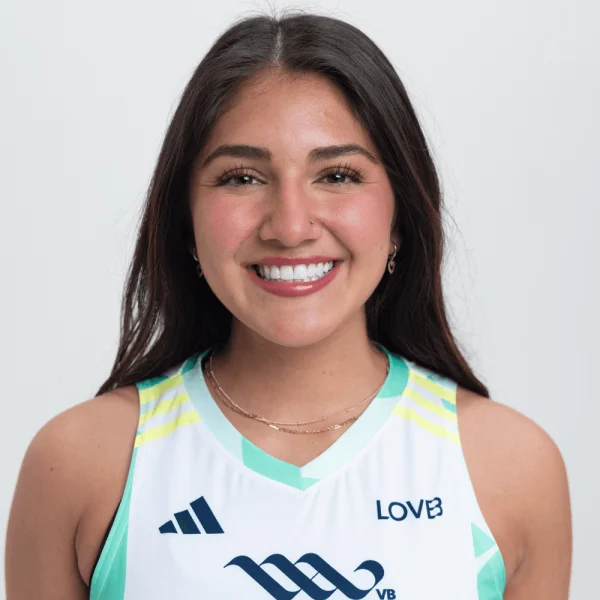
Logan Tom is an American former outside hitter whose career stretched from teenage national-team selection to four Olympic Games, two Olympic silver medals and professional seasons across 12 countries. Born in Napa, California, on May 25, 1981, and raised in Salt Lake City, she became one of the defining all-around outside hitters of her U.S. generation, combining high-level scoring with serve receive, defense and serving.
Tom represented the United States Women’s National Volleyball Team through the final years before the program became an Olympic champion, appearing at Sydney 2000, Athens 2004, Beijing 2008 and London 2012. She was the Best Scorer at Beijing, won silver there and again in London, and built a club career that included championships in Europe, Brazil, New Zealand and Israel. After retiring as a player, she remained in the sport through coaching and professional-league leadership.
Player Information
| Field | Details |
|---|---|
| Full Name | Logan Maile Lei Tom |
| Date of Birth | May 25, 1981 |
| Place of Birth | Napa, California, United States |
| Nationality | American |
| Hometown | Salt Lake City, Utah |
| College / University | Stanford University |
| Position | Outside Hitter |
| Height | 186 cm / 6 ft 1 in |
| Weight | 80 kg / 176 lb |
| Spike Reach | 306 cm |
| Block Reach | 297 cm |
| National-Team Number | 15 |
| National Team | United States Women’s National Volleyball Team — senior debut in 1998; four Olympic teams from 2000 to 2012 |
| Career Status | Retired from playing; active in volleyball administration and coaching |
| Previous Clubs | MRV/Minas; Monte Schiavo Jesi; Chieri Volley; Voléro Zürich; CV Tenerife; Dinamo Moscow; Hisamitsu Springs; Asystel Novara; Guangdong Evergrande; Fenerbahçe Universal; Unilever Vôlei; Openjobmetis Ornavasso; RC Cannes; Halkbank; Jakarta Pertamina Energi; Harbour Raiders; Maccabi XT Haifa; Hapoel Kfar Saba |
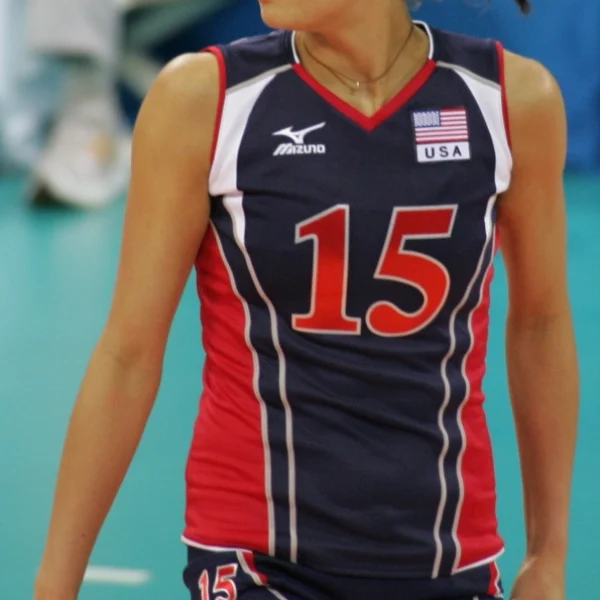
Tom is listed at 6-foot-1 by Team USA, while historical international roster data commonly records her at 186 cm and 80 kg. Her No. 15 shirt became closely associated with her U.S. career, including her Olympic appearances in Beijing and London.
Early Life & Volleyball Beginnings
Tom was born in Napa but grew up primarily in Salt Lake City. Volleyball entered her life early: she began playing at 13, reached the U.S. Girls’ Youth National Team at 14 and made her senior U.S. national-team debut at 16, appearing in a NORCECA World Championship qualification tournament and a Dominican Republic tour in 1998 while she was still in high school. Her father, Melvyn Tom, had played defensive end in the NFL for the Philadelphia Eagles and Chicago Bears, giving her a family connection to elite-level sport without determining the path she ultimately chose.
At Highland High School, Tom was more than a volleyball specialist. Stanford’s records note that she helped Highland win two Utah state volleyball championships, competed in basketball and track, earned all-state recognition in basketball and placed third in the state in the javelin as a senior. She also graduated with a 4.00 GPA at the top of her class. Stanford’s player profile records that broad high-school athletic background, along with the unusual fact that she was already playing in the senior U.S. system before beginning college.
Tom arrived at Stanford in 1999 and immediately became one of the leading players in the college game. She earned first-team AVCA All-America honors in each of her four seasons, won AVCA National Player of the Year in 2001 and 2002, and was named the Most Outstanding Player of the 2001 NCAA Championship as Stanford won the national title. She also won the Honda Award for volleyball as a junior and senior.
Her production showed how complete her college role already was. As a senior in 2002, Tom averaged 4.89 kills, 3.28 digs, 0.82 blocks and 0.34 aces per game. She finished her Stanford career with 1,939 kills and 171 service aces; when her college profile was archived, those totals had placed her first in school history in kills and second in aces, while later Stanford records still listed her among the program’s all-time leaders.
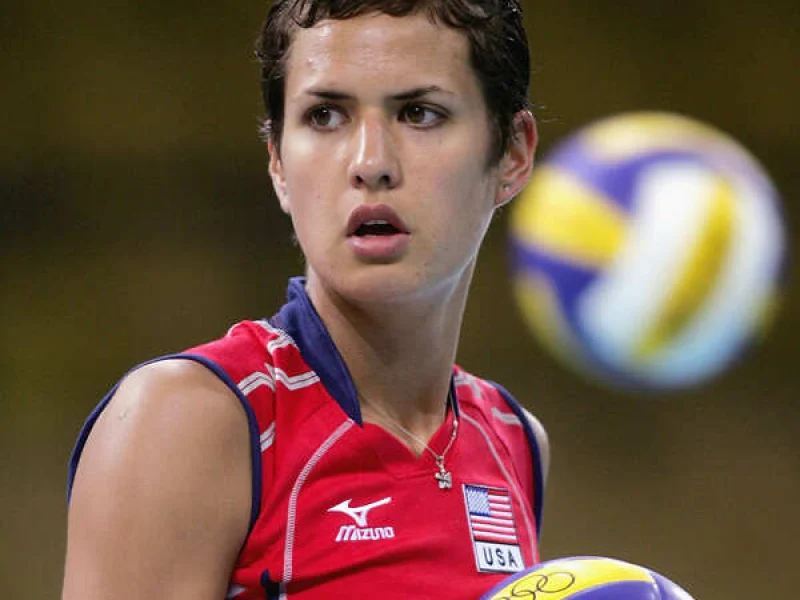
College volleyball did not interrupt her international rise. Tom played at the Sydney Olympics in 2000 before returning to Stanford, making her one of the rare collegiate athletes of that period already balancing NCAA volleyball with a full Olympic-level role.
Club Career
Tom’s professional indoor career was notable not only for its length but for how widely it was distributed. The International Volleyball Hall of Fame credits her with professional experience in 12 countries, eight championships and one runner-up finish. Rather than settling into one domestic league for most of her career, she repeatedly moved between different volleyball systems in Europe, Asia, South America and, later, Israel. The Hall of Fame’s career account identifies the international scope of that club career as one of the defining parts of her playing record.
First Professional Years & the Move Across Europe
Tom began her professional indoor career with MRV/Minas in Brazil after completing her collegiate eligibility. Italy followed with Monte Schiavo Jesi and Chieri, then came Voléro Zürich in Switzerland, CV Tenerife in Spain and Dinamo Moscow in Russia. The sequence established a pattern that continued for most of her career: short, concentrated club periods rather than a decade built around one organization.
There was also a significant beach-volleyball interlude. Tom stepped away from the U.S. indoor national team for part of the mid-2000s while continuing to compete professionally, and she spent time on the beach circuit with partners including Hall of Famer Holly McPeak. She was named AVP Rookie of the Year in 2006 and recorded 14 top-10 finishes in 2007 before returning fully to the international indoor game.
Back indoors, Tom continued through Japan with Hisamitsu Springs, Italy with Asystel Novara and China with Guangdong Evergrande. Those moves required her to adjust repeatedly to different tempos, foreign-player rules and team structures while still maintaining the two-way responsibilities expected from an outside hitter.
Fenerbahçe, Brazil & Major Club Titles
One of Tom’s most significant European club seasons came with Fenerbahçe Universal in 2011–12. She was part of the squad that won the club’s first CEV Women’s Champions League title, completing the Final Four in Baku with a straight-set victory over RC Cannes. CEV records confirm Tom on Fenerbahçe’s championship roster, and the title remains part of the sporting history of the club now represented on VolleyBond by Fenerbahçe Medicana.

She returned to Brazil for the following season with Unilever Vôlei and added the 2012–13 Brazilian Superliga championship. Those consecutive European and Brazilian titles came in two very different competitive environments and reinforced the value of her all-around game: Tom did not need to dominate every attacking category to remain useful in a championship lineup because she could contribute across first contact, defense, serving and the front row. The International Volleyball Hall of Fame lists both the Fenerbahçe and Unilever titles among the central achievements of her professional career.
Later Career: From Europe to Israel
Tom continued moving through high-level club volleyball in her thirties. She played for Openjobmetis Ornavasso in Italy, RC Cannes in France and Halkbank in Türkiye before taking later assignments with Jakarta Pertamina Energi in Indonesia and Harbour Raiders in New Zealand. With Harbour Raiders, she added another domestic championship in 2017.
Israel became the final extended chapter of her playing career. Tom joined Maccabi XT Haifa and contributed to consecutive national championships. In the deciding match of the 2018–19 Israeli league season, she scored 19 points as Haifa retained the title after she had rejoined the club during the season. CEV’s report on that championship specifically highlighted her contribution at age 37.

Her last playing years also included Hapoel Kfar Saba. By the time she finished competing, Tom had spent nearly two decades adapting her game to different club environments, with her professional path extending far beyond the countries usually associated with a single U.S. player’s overseas career.
Club Career Timeline
| Seasons | Team | Country |
|---|---|---|
| 2002–03 | MRV/Minas | Brazil |
| 2003–04 | Monte Schiavo Jesi | Italy |
| 2004–05 | Chieri Volley | Italy |
| 2005–06 | Voléro Zürich | Switzerland |
| 2006–07 | CV Tenerife | Spain |
| 2007–08 | Dinamo Moscow | Russia |
| 2008–09 | Hisamitsu Springs | Japan |
| 2009–10 | Asystel Novara | Italy |
| 2010–11 | Guangdong Evergrande | China |
| 2011–12 | Fenerbahçe Universal | Türkiye |
| 2012–13 | Unilever Vôlei | Brazil |
| 2013–14 | Openjobmetis Ornavasso | Italy |
| 2014–15 | RC Cannes | France |
| 2015–16 | Halkbank | Türkiye |
| 2016 | Jakarta Pertamina Energi | Indonesia |
| 2017 | Harbour Raiders | New Zealand |
| 2017–19 | Maccabi XT Haifa | Israel |
| 2019–20 | Hapoel Kfar Saba | Israel |
United States National Team Career
Tom’s relationship with the U.S. senior program began unusually early. She made her debut at 16 in 1998 and, two years later, became the youngest woman ever selected to a U.S. Olympic volleyball team when she made the Sydney roster at 19. The United States finished fourth in Sydney, and Tom returned to Stanford afterward rather than entering a conventional full-time professional path immediately. The International Volleyball Hall of Fame records that teenage progression from youth national-team volleyball to a senior-team debut and then the Olympics.
The next Olympic cycle added a World Championship medal before Athens. The United States won silver at the 2002 FIVB World Championship, and Tom was part of a 2003 season that included NORCECA and Pan American Cup gold plus World Cup bronze. At the 2004 World Grand Prix, she produced one of the strongest individual tournaments of her international career, leading the field with 224 points in 13 matches and earning both MVP and Best Server honors. Team USA’s official profile preserves those figures as a central part of her international record.
After the 2004 Olympics, Tom spent an extended period away from the national team and explored beach volleyball while continuing her professional indoor career. Her return was immediate rather than gradual: at the 2007 World Cup, her first major international tournament with the U.S. in almost three years, she averaged 4.10 points per set and was one of three MVP finalists. The United States took bronze and qualified for Beijing.
Beijing 2008 became Tom’s most prominent Olympic tournament individually. She started every available set for the United States and finished as the Olympic tournament’s Best Scorer with 124 points, an average of 3.76 points per set. The U.S. reached the gold-medal match before losing to Brazil, giving Tom her first Olympic silver medal.
The final cycle of her national-team career showed another side of her value. The United States won the 2010 World Grand Prix, and at the World Championship later that year Tom was named Best Receiver as the Americans finished fourth. In 2011, the U.S. again won the World Grand Prix, captured the NORCECA Championship and took silver at the World Cup. Tom received the Best Server award at the 2011 NORCECA Championship, showing that her service pressure remained a recognized strength late in her international career.
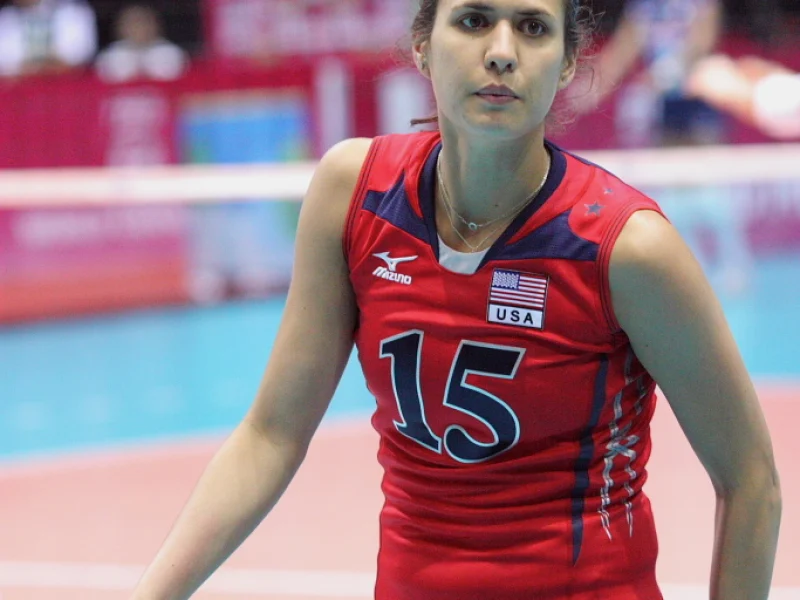
London 2012 was her fourth and final Olympics. The Americans went 7–1 and again reached the final against Brazil, finishing with a second consecutive silver medal. USA Volleyball lists Tom among the small group of four-time U.S. women’s volleyball Olympians and among the players who won medals in both Beijing and London.
Across that international career, the Hall of Fame credits Tom with 14 medals at major tournaments spanning the Olympics, World Championship, World Cup, World Grand Prix, NORCECA Championship and Pan American Cup. The medal count matters, but so does the range of roles behind it: Tom could be a primary scorer, a high-volume passer, a server used to create pressure and an experienced six-rotation outside hitter within the same national-team cycle.
Playing Style & Strengths
Tom’s strongest playing identity was her completeness as an outside hitter. The International Volleyball Hall of Fame specifically describes her as an all-around player who brought stability to U.S. serve receive and defense while also contributing in attack and at the block. That combination is more useful for understanding her than treating her only as a scorer.
Her college numbers already showed the pattern. In her 2002 Stanford season, Tom averaged 4.89 kills and 3.28 digs per game while also contributing 0.82 blocks and 0.34 aces. Those figures reflect a player carrying a large attacking load without being removed from reception and back-row responsibility. Stanford’s contemporary profile also noted her quick arm swing and vertical ability, traits that helped her score at international level despite being smaller than many high-volume international outside hitters.
The 2008 Olympics provide the clearest evidence of her terminal attacking ability. Tom’s 124 points made her the tournament’s Best Scorer, but scoring alone did not define her late-career national-team role. By 2010, FIVB named her Best Receiver at the Women’s World Championship, while the 2011 NORCECA Championship ended with another Best Server award. Those honors across scoring, reception and serving came at different stages of her career and support the same broader picture: she could influence a match without being confined to one phase of play.
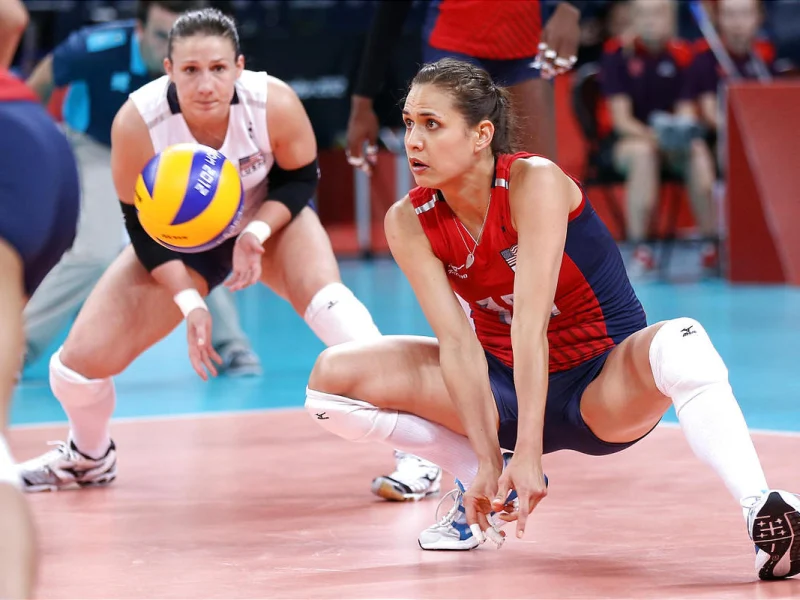
Her serving was particularly valuable because it connected directly to her six-rotation role. Tom won Best Server alongside the MVP award at the 2004 World Grand Prix and again received the serving honor at NORCECA seven years later. For an outside hitter already responsible for receiving and attacking, that added another way to create points or force predictable transition balls.
Tom’s long club career also depended on adaptability. Moving between Brazil, Italy, Switzerland, Spain, Russia, Japan, China, Türkiye, France, Indonesia, New Zealand and Israel meant playing in systems with different tempos and different expectations for foreign players. Her ability to remain useful across those environments is consistent with the technical breadth visible in her U.S. career rather than being a separate part of it.
Major Achievements
Selected National Team Honors
| Year | Competition | Result |
|---|---|---|
| 2001 | FIVB World Grand Prix | Gold |
| 2002 | FIVB World Championship | Silver |
| 2003 | Pan American Cup | Gold |
| 2003 | NORCECA Championship | Gold |
| 2003 | FIVB World Cup | Bronze |
| 2004 | FIVB World Grand Prix | Bronze |
| 2007 | FIVB World Cup | Bronze |
| 2008 | Beijing Olympic Games | Silver |
| 2010 | FIVB World Grand Prix | Gold |
| 2011 | FIVB World Grand Prix | Gold |
| 2011 | NORCECA Championship | Gold |
| 2011 | FIVB World Cup | Silver |
| 2012 | London Olympic Games | Silver |
Tom’s Olympic medals came in consecutive Games, while her broader senior record included medals across almost every major international competition available to the U.S. women during her era. USA Volleyball’s Olympic history confirms the Beijing and London silvers and identifies Tom as a four-time Olympian.
Selected Club Honors
| Season | Competition | Team | Result |
|---|---|---|---|
| 2005–06 | Swiss League | Voléro Zürich | Champion |
| 2011–12 | CEV Champions League | Fenerbahçe Universal | Champion |
| 2012–13 | Brazilian Superliga | Unilever Vôlei | Champion |
| 2017 | New Zealand League | Harbour Raiders | Champion |
| 2017–18 | Israeli Premier League | Maccabi XT Haifa | Champion |
| 2018–19 | Israeli Premier League | Maccabi XT Haifa | Champion |
The Hall of Fame credits Tom with eight professional championships overall. Her 2012 CEV Champions League victory and 2013 Brazilian Superliga title stand out because they arrived in consecutive seasons on different continents, while the later Israeli titles demonstrated that she was still contributing to championship teams well into her thirties.
Selected Individual Awards & Recognition
| Year | Competition / Organization | Award |
|---|---|---|
| 1999 | AVCA | National Freshman of the Year |
| 2001 | AVCA | National Player of the Year |
| 2001 | NCAA Championship | Most Outstanding Player |
| 2002 | AVCA | National Player of the Year |
| 2004 | FIVB World Grand Prix | Most Valuable Player |
| 2004 | FIVB World Grand Prix | Best Server |
| 2006 | AVP | Rookie of the Year |
| 2008 | Olympic Games | Best Scorer |
| 2010 | FIVB World Championship | Best Receiver |
| 2011 | NORCECA Championship | Best Server |
| 2015 | Pac-12 | Women’s Volleyball Player of the Century |
| 2021 | International Volleyball Hall of Fame | Inducted as a Female Indoor Player |
Stanford’s 2015 All-Century announcement named Tom the Pac-12 Women’s Volleyball Player of the Century, placing her collegiate career in a broader historical context rather than treating the two AVCA Player of the Year awards as isolated seasons. She entered the International Volleyball Hall of Fame in 2021.
Career After Playing & Current Role
Tom’s transition out of playing did not take her away from high-level volleyball. She worked inside Israel’s national-team system from 2020 to 2022, and CEV competition records show her as head coach of the Israeli women’s senior team during the 2021 European Championship qualification campaign. Later coaching work in Israel included age-group teams and club positions, extending the international experience she had accumulated as a player into a different part of the sport.
In 2023, Tom moved into the developing U.S. professional-league structure when she joined Pro Volleyball Federation as Director of International Development & Player Strategy. The league described her responsibilities as maintaining international federation and agency relationships, serving as a player liaison and working on athlete welfare. That organization later became part of the Major League Volleyball identity.
As of November 2026, Major League Volleyball lists Tom as Vice President, Player Personnel, making league administration her clearest current long-term role. Her work now sits on the player-management side of the professional game rather than on an active club roster.
She also returned to an international bench in 2026. Germany’s volleyball federation listed Tom as an assistant coach on Giulio Bregoli’s women’s national-team staff, and the FIVB recorded her among the female coaches registered during the opening week of the 2026 Volleyball Nations League. The FIVB’s VNL coaching initiative included Tom with Germany in June.
That assignment did not continue through the full VNL schedule. In early July, the German federation told Volleyball Insider that Tom would not accompany the team for the remaining VNL tournaments because of personal reasons. She therefore should not be described as Germany’s continuing assistant coach without a newer appointment confirming that status.
Legacy
Tom’s career sits at the intersection of several eras in American women’s volleyball. She reached the senior national team as a teenager, competed in the Olympics while still at Stanford, became a central player before the United States had won either a women’s World Championship or Olympic title, and finished her international career with consecutive Olympic silver medals.
Her individual awards also cover unusually different parts of the game. Best Scorer at an Olympics, Best Receiver at a World Championship and multiple Best Server honors do not describe three separate versions of Tom so much as the range required by her role. She could carry points, remain in reception and defend the back court without being turned into a specialist.
The club record adds another dimension. Few prominent U.S. players of her generation built such a geographically varied professional career, and fewer still remained contributors to championship teams into their late thirties. Her later movement into coaching and league administration has kept that experience inside the sport rather than closing the story at retirement.
Stanford’s selection of Tom as the Pac-12 Player of the Century and her 2021 International Volleyball Hall of Fame induction place that career in institutional terms. Her four Olympics and two silver medals are the easiest achievements to summarize, but the fuller profile is that of a six-rotation outside hitter who remained technically useful across college, national-team and professional volleyball for roughly two decades.
References
- International Volleyball Hall of Fame — Logan Tom, Class of 2021
- Team USA — Logan Tom athlete profile
- USA Volleyball — Women’s National Team Olympic History
- Stanford Athletics — Logan Tom player profile
- Stanford Athletics — Pac-12 All-Century Team and Logan Tom Player of the Century
- CEV — Maccabi Haifa cement supremacy with Israeli league title
- NORCECA — 2011 Women’s Championship individual awards
- FIVB — World Volley News No. 58, 2010 Women’s World Championship awards
- Major League Volleyball — League Staff
- Major League Volleyball — Logan Tom joins Pro Volleyball Federation
- FIVB — Female coach initiative at VNL 2026
- Volleyball Insider — Logan Tom no longer continuing with Germany during VNL 2026