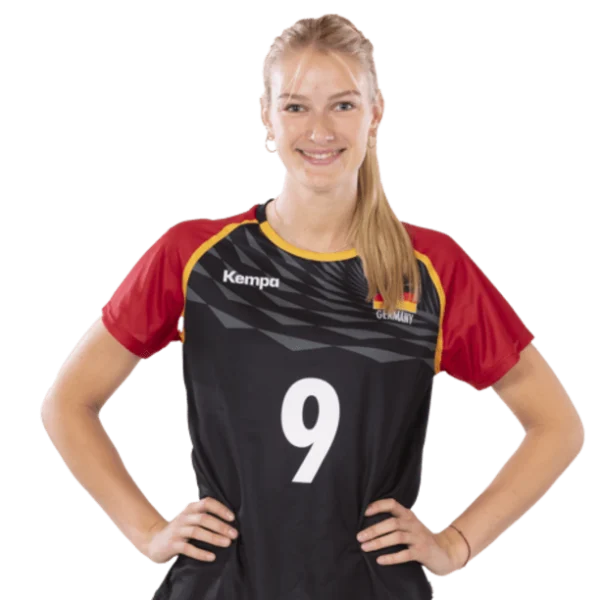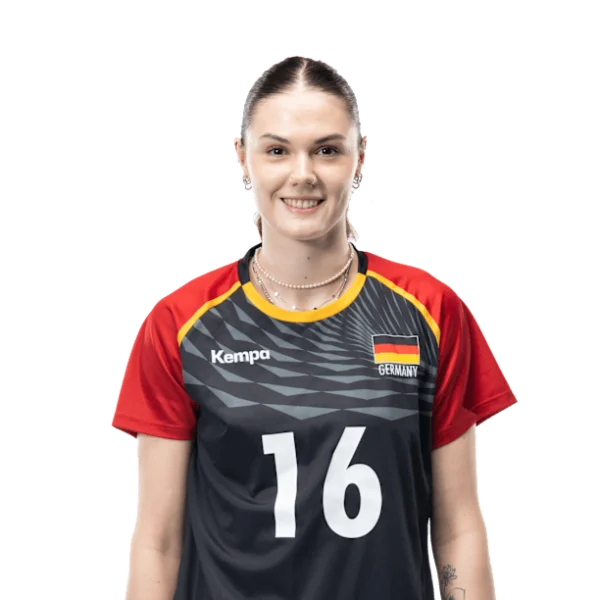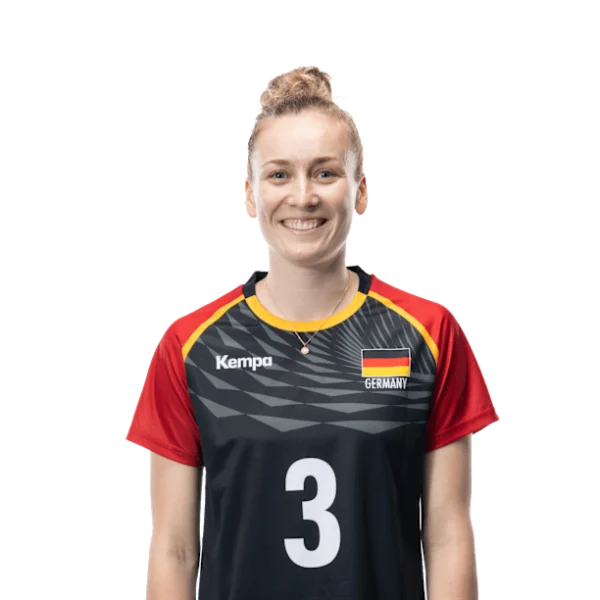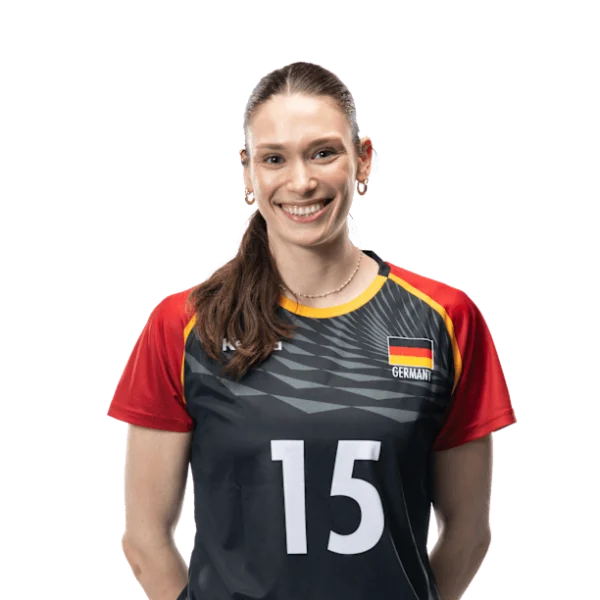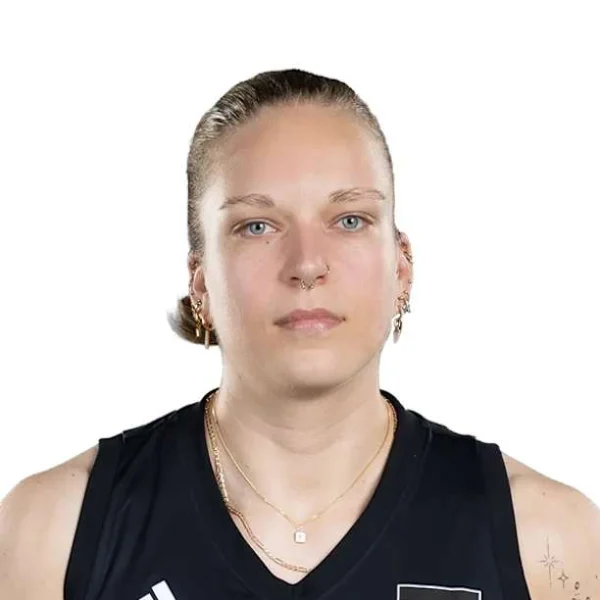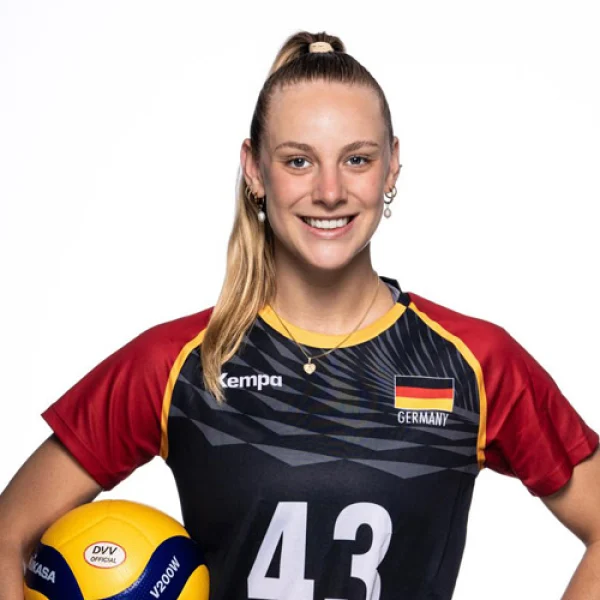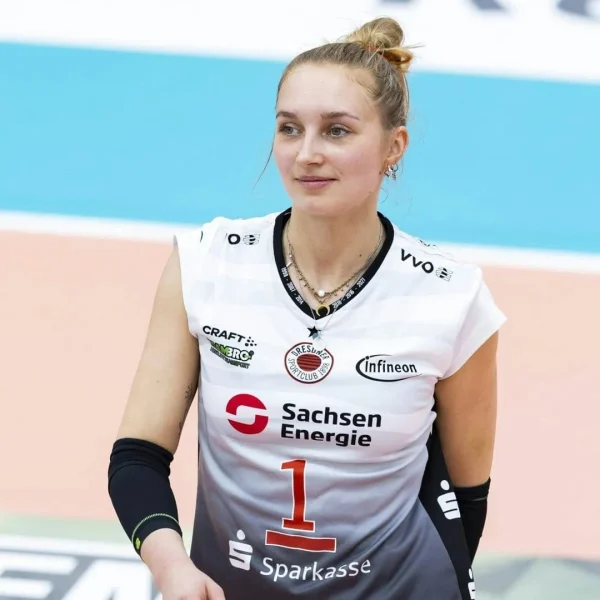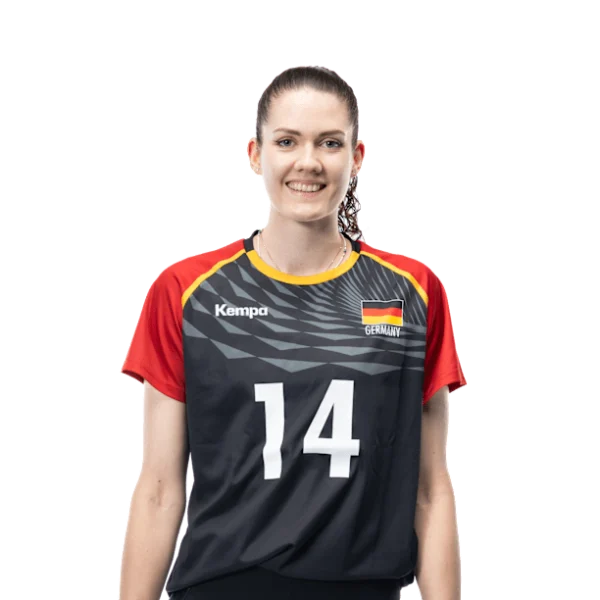
The Germany women’s national volleyball team represents Germany in senior international volleyball and is governed by the Deutscher Volleyball-Verband (DVV) within the European Volleyball Confederation. Commonly known as Die Schmetterlinge (“The Butterflies”), Germany are coached by Giulio Bregoli, with middle blocker Camilla Weitzel serving as captain during the 2026 European Championship cycle. Germany finished eighth at EuroVolley 2026 and close the season at No. 12 in the FIVB Women’s World Ranking.
The current team belongs to a rebuilding-and-development phase rather than the medal-winning generation of the early 2010s. Germany reached the VNL Final Eight in 2023 and again in Bregoli’s first season in 2025, made the round of 16 at the 2025 World Championship and returned to the European Championship quarterfinals in 2026. Their next major target is already confirmed: Germany qualified for the 2027 FIVB Women’s World Cup through the World Ranking and were drawn with Poland, Slovenia and Cuba in Pool E in Montreal.
Team Information
| Field | Detail |
|---|---|
| Official Team Name | Germany Women’s National Volleyball Team |
| Common Nickname | Die Schmetterlinge |
| Country | Germany |
| Gender | Women |
| National Federation | Deutscher Volleyball-Verband (DVV) |
| FIVB Code | GER |
| Confederation | CEV — European Volleyball Confederation |
| Head Coach | Giulio Bregoli |
| Captain | Camilla Weitzel |
| FIVB World Ranking | No. 12 — 256.45 points — View full FIVB rankings |
| Current Cycle | 2026–28 / Los Angeles 2028 Olympic cycle |
| 2027 FIVB Women’s World Cup | Qualified via FIVB World Ranking |
| 2027 World Cup Pool | Pool E — Poland, Germany, Slovenia, Cuba; Montreal |
| LA28 Olympic Status | Not yet qualified as of 27 October 2026 |
| Olympic Best Result — Reunified Germany | 6th — Sydney 2000 |
| World Championship Best Result — Reunified Germany | 5th — 1994 |
| VNL Best Result | 8th — 2023 and 2025 |
| European Championship Best Result — Reunified Germany | Silver — 2011 and 2013 |
| Official Website | Deutscher Volleyball-Verband |
| National-Team Instagram | DVV Nationalteams Instagram |
| Federation Facebook | DVV Facebook |
| Federation TikTok | DVV TikTok |
| Federation YouTube | DVV YouTube |
The official Volleyball World ranking places Germany 12th with 256.45 points, sixth among CEV teams behind Italy, Türkiye, Poland, Serbia and the Netherlands in the late-October snapshot.
DVV reorganized its social-media channels in 2025 so that dvv_nationalteams focuses on Germany’s senior national teams across indoor and beach volleyball. It is therefore an official national-team channel, but not an account exclusive to the women’s indoor team.
National Team History
Germany’s women’s volleyball history needs to be read with a distinction between the modern reunified national team and the separate East German and West German programs that competed before reunification.
The German Democratic Republic produced the strongest pre-reunification women’s results. East Germany won Olympic silver at Moscow 1980 and European Championship gold in 1983 and 1987, while also finishing fourth at the World Championship in both 1974 and 1986. West Germany competed independently during the same era, including Olympic appearances in 1972 and 1984. DVV’s historical archive for the 1970s and 1980s retains those records while identifying DDR and BRD achievements separately.
After reunification, the new German team established itself as a regular presence at major championships. Germany’s World Championship record includes fifth place in Brazil in 1994, while the team later finished eighth at the 1996 Olympics and sixth at Sydney 2000. That sixth-place finish remains the best Olympic result by reunified Germany’s women.
The next major step came under Giovanni Guidetti. Germany won European Championship bronze in 2003 and developed into one of Europe’s strongest challengers by the end of the decade. In 2011, Germany reached the European final in Belgrade and lost 3–2 to host Serbia after twice leading by a set. DVV described the silver medal as the program’s biggest result since reunification.
Germany returned to the European final two years later, this time at the home EuroVolley co-hosted with Switzerland. Russia won the Berlin final 3–1, but consecutive silver medals in 2011 and 2013 became the defining achievement of the Guidetti era.
The following decade was less stable. Germany remained competitive internationally but missed the Olympic Games in 2016, 2021 and 2024. DVV’s historical list of women’s national-team coaches records Felix Koslowski’s tenure from 2015 through 2021, Vital Heynen’s spell in 2022–23 and Alexander Waibl’s management of the national team during the difficult 2024 season.
The Bregoli cycle began in 2025. DVV appointed Giulio Bregoli on a contract through 2028, citing his experience in Italy, France and the Italian national-team staff. He arrived with a mandate to combine Germany’s experienced internationals with the younger generation and develop a clearer long-term playing identity.
Germany at the Olympic Games
Germany’s Olympic record is another area where predecessor results should not be merged without context.
DVV’s women’s Olympic record lists East Germany’s silver medal at Moscow 1980 as the strongest result by a German women’s volleyball selection before reunification. The DDR also finished sixth in 1976 and fifth in 1988, while West Germany’s best result was sixth at Los Angeles 1984.
Reunified Germany qualified for Atlanta 1996, Sydney 2000 and Athens 2004. Sydney produced the best result of those three campaigns, with Germany finishing sixth. At Athens, Germany opened by overturning a 0–2 deficit to defeat defending Olympic champion Cuba 3–2, but later losses prevented the team from reaching the quarterfinals and left Germany ninth overall.
Germany have not returned to the women’s Olympic tournament since Athens. They missed Beijing 2008, London 2012, Rio 2016, Tokyo 2020/21 and Paris 2024.
That absence gives the LA28 cycle particular importance. Germany are not yet qualified, but their confirmed place at the 2027 World Cup gives them a direct route back to the Olympic tournament.
World Championship and Global Competition Record
The best World Championship finish by reunified Germany remains fifth place in Brazil in 1994. DVV’s complete women’s World Championship record also lists Germany seventh in 2010, ninth in 2014, 11th in 2018 and 14th in 2022.
At the expanded 2025 World Championship in Thailand, Bregoli’s first German team advanced from Pool G after straight-set wins over Kenya and Vietnam. Germany then pushed Poland through five sets in the match for first place in the pool, holding multiple match points before losing 3–2.
The draw sent Germany into a round-of-16 meeting with Italy. The eventual champions eliminated Germany 3–0 in Bangkok, leaving Germany 12th in the final standings. Despite the defeat, the tournament established several pieces of the current core, including Lina Alsmeier, Camilla Weitzel, Emilia Weske and a younger group that Bregoli continued to develop in 2026.
Germany secured its place in the next global championship in October 2026. The European Championship awarded its three continental World Cup places to Türkiye, Serbia and Poland, so Germany entered through the FIVB World Ranking instead. FIVB’s confirmed 2027 Women’s World Cup field lists the Netherlands, Russia and Germany as the first three ranking qualifiers among the 14 remaining teams.
The October 26 draw placed Germany in Pool E in Montreal with Poland, Slovenia and Cuba. DVV’s report on the 2027 World Cup draw confirms that the top two teams in each four-team pool advance to the round of 16.
Germany in the Volleyball Nations League
Germany’s most important VNL breakthrough came in 2023 under Vital Heynen. The team reached the VNL Finals for the first time after winning seven of 12 preliminary-round matches. Poland won the quarterfinal 3–1, giving Germany an eighth-place finish.
The program returned to the Final Eight in Bregoli’s first season in 2025. Germany again finished eighth in the preliminary phase before losing the quarterfinal to Brazil 3–0. Captain Camilla Weitzel nevertheless described it as Germany’s strongest VNL campaign to that point because of the level the team sustained across the preliminary round.
The 2026 VNL was more uneven. Germany won five of 12 matches and finished 12th, missing the Finals. The campaign nevertheless contained one of the team’s strongest individual results of the cycle: Germany defeated previously unbeaten Brazil in five sets, with Pia Timmer scoring 16 points and Romy Jatzko adding 14. The ranking gain briefly moved Germany into the world top ten.
Germany closed the tournament with a straight-set victory over Bulgaria. The five-win total showed the difference between Germany’s best level and their week-to-week consistency: they could defeat Brazil, Belgium and Czechia, but losses elsewhere left the team outside the top eight.
European Championship Record
The European Championship has produced the strongest medal record for the modern German team.
Reunified Germany won bronze in 1991 and 2003, then reached consecutive finals in 2011 and 2013. Those two silver medals remain Germany’s best European Championship results since reunification. The DDR predecessor team had an even stronger continental record, including European titles in 1983 and 1987, which DVV’s historical European Championship statistics list separately.
Germany’s results dropped in the following cycles: fifth in 2015, eighth in 2017, sixth in 2019, 11th in 2021 and 12th in 2023. In 2026, the team returned to the European quarterfinals for the first time since 2019.
The campaign began badly with a 3–0 loss to Slovenia. Germany recovered through the pool phase and then defeated Belgium 3–2 in the round of 16, with Leana Grozer scoring 28 points.
The quarterfinal against host Türkiye was significantly stronger than Germany’s opening performance. Germany took the second set and stayed within range in the fourth before the defending European champions won the quarterfinal 3–1. CEV’s final standings placed Germany eighth.
2026 EuroVolley squad
DVV’s final 14-player EuroVolley selection contained:
- Setters: Sarah Straube, Hannah Kohn
- Liberos: Annie Cesar, Patricia Nestler
- Outside Hitters: Lina Alsmeier, Leana Grozer, Romy Jatzko, Hanna Orthmann
- Middle Blockers: Camilla Weitzel, Anastasia Cekulaev, Monique Strubbe, Marie Schölzel
- Opposites: Emilia Weske, Lena Kindermann
Orthmann returned after missing the VNL through injury, while Weitzel captained the team. The roster was an event-specific selection and is distinct from Germany’s broader current national-team pool.
2026 Current National Team Pool
DVV’s current senior women’s Perspektivkader, updated 1 October 2026, contains 24 players. That federation list is used here as the canonical current national-team pool rather than the 30-player VNL registration list or the 14-player EuroVolley squad. Player positions and heights come from DVV’s current national-team profiles.
| Player | Position | Club | Height |
|---|---|---|---|
| Lina Alsmeier | Outside Hitter | Igor Gorgonzola Novara | 189 cm |
| Laura Berger | Middle Blocker | VfB Suhl Lotto Thüringen | 192 cm |
| Anastasia Cekulaev | Middle Blocker | Imoco Volley Conegliano | 187 cm |
| Annie Cesar | Libero | FC Porto | 173 cm |
| Corina Glaab | Setter | Reale Mutua Fenera Chieri ’76 | 179 cm |
| Leana Grozer | Outside Hitter | Laica Cioccolato Busto Arsizio | 183 cm |
| Romy Jatzko | Outside Hitter | RC Cannes | 187 cm |
| Pia Kästner | Setter | Allianz MTV Stuttgart | 180 cm |
| Lena Kindermann | Opposite | Dresdner SC | 190 cm |
| Mia Kirchhoff | Opposite | SSC Palmberg Schwerin | 182 cm |
| Hannah Kohn | Setter | SSC Palmberg Schwerin | 184 cm |
| Patricia Nestler | Libero | Dresdner SC | 170 cm |
| Hanna Orthmann | Outside Hitter | Osaka Marvelous | 188 cm |
| Mette Pfeffer | Middle Blocker | Dresdner SC | 193 cm |
| Anna Pogany | Libero | LOVB Miami | 170 cm |
| Emma Sambale | Libero | VfB Suhl Lotto Thüringen | 171 cm |
| Marie Schölzel | Middle Blocker | Minnesota Forge | 190 cm |
| Antonia Stautz | Outside Hitter | Volley Wrocław | 180 cm |
| Sarah Straube | Setter | Dresdner SC | 185 cm |
| Monique Strubbe | Middle Blocker | Dresdner SC / LOVB Salt Lake | 188 cm |
| Maria Tabacuks | Outside Hitter | Loyola Marymount University | 186 cm |
| Pia Timmer | Outside Hitter | NorCal Rumble | 187 cm |
| Camilla Weitzel | Middle Blocker | Eczacıbaşı Peron İstanbul | 195 cm |
| Emilia Weske | Opposite | Igor Gorgonzola Novara | 188 cm |
The composition illustrates the balance Bregoli has been trying to build. Schölzel, Weitzel, Orthmann, Alsmeier, Pogany and Kästner provide substantial senior international experience, while Grozer, Cekulaev, Kohn, Tabacuks, Pfeffer and several of the newer pool members give Germany a younger layer for the 2027–28 cycle.
The October pool also differs materially from the expanded 30-player VNL registration announced in May. Players such as Luisa van Clewe and several development selections appeared in that VNL long list but are not in DVV’s October Perspektivkader; they therefore are not included in the canonical table above.
Coaching Staff
DVV’s current women’s national-team page lists the following staff around Bregoli.
| Role | Name | Organization / Team |
|---|---|---|
| Head Coach | Giulio Bregoli | Germany / DVV |
| Assistant Coach | Gerardo Daglio | Germany / DVV |
| Assistant Coach | Martin Frydnes | Germany / DVV |
| Strength & Conditioning Coach | Rett Larson | Germany / DVV |
| Scout | Arthur Cohen | Germany / DVV |
| Physiotherapist | Florentina Robert | Germany / DVV |
| Physiotherapist | Jonas Wagner | Germany / DVV |
| Team Manager | Florian Völker | Germany / DVV |
| Team Doctor | Dr. Stefan Hemmer | Germany / DVV |
| Team Doctor | Dr. Benedict Lotz | Germany / DVV |
| Team Doctor | Dr. Frederick Krepulat | Germany / DVV |
| Team Doctor | Dr. Frederike Hohenbild | Germany / DVV |
| Team Doctor | Pia-Elena Frey | Germany / DVV |
| Team Doctor | Timo Nees | Germany / DVV |
Bregoli’s appointment runs through 2028, giving the current staff a complete Olympic cycle rather than a single-season mandate. His first two summers have also included significant roster experimentation, especially as Germany have integrated younger attackers while managing injuries and availability among established players.
How Germany Plays
Germany’s best performances under Bregoli have usually started with pressure from serve and a productive block-defence system.
That pattern was clear during the May 2026 preparation matches against the Netherlands. Germany increasingly controlled the first match through serve and block, then used aggressive serving and more varied attacking patterns as the series developed.
It appeared again in the VNL. Germany’s straight-set victory over Belgium was built around serve pressure, block and floor defence, with libero Annie Cesar particularly effective behind the block. Against Czechia, ten blocks and five aces helped Germany recover from losing the first set and win 3–1.
The limitation has been consistency. After Germany’s five-set loss to China, Bregoli noted that the block-defence system had reached a strong level but the team still needed to turn more defensive opportunities into quality transition attack. DVV’s match report from that China encounter also reflected a pattern seen elsewhere in 2026: periods of high-level serving and blocking were sometimes followed by stretches with too many unforced errors.
The attacking structure has also changed as the roster has become younger. Lina Alsmeier remains one of the most established six-rotation outsides, while Hanna Orthmann gives Germany another experienced high-level option when healthy. Leana Grozer has moved rapidly into a significant scoring role, particularly during EuroVolley, and Romy Jatzko and Pia Timmer have supplied additional outside-hitter depth.
At opposite, Emilia Weske and Lena Kindermann carried the main 2026 event workload. Germany can also build substantial front-court size through Weitzel, Cekulaev, Schölzel and Strubbe in the middle.
The result is a team with enough physicality and serving pressure to trouble higher-ranked opponents, as the Brazil victory showed, but one still working toward the sustained side-out and transition efficiency required to reproduce that level over an entire major tournament.
Major Honors
Reunified Germany
| Competition | Best / Major Results |
|---|---|
| Olympic Games | 6th: 2000 |
| FIVB World Championship | 5th: 1994 |
| Volleyball Nations League | 8th: 2023, 2025 |
| European Championship | Silver: 2011, 2013 · Bronze: 1991, 2003 |
| FIVB World Grand Prix | Bronze: 2002 |
Germany’s World Grand Prix bronze in 2002 came shortly before the home World Championship and remains a notable medal from the former annual global series.
German predecessor national teams
| Team / Competition | Major Result |
|---|---|
| East Germany — Olympic Games | Silver: 1980 |
| East Germany — European Championship | Gold: 1983, 1987 |
| East Germany — World Championship | 4th: 1974, 1986 |
| West Germany — Olympic Games | 6th: 1984 |
These predecessor results are historically relevant to German volleyball, but they should not be presented as if they were won by the post-1990 reunified national team. DVV’s historical competition statistics identify DDR and BRD results separately.
Key Players Across Generations
| Player | Position | Era / Years | Note |
|---|---|---|---|
| Camilla Weitzel | Middle Blocker | Current era | Current captain and central blocker in the Bregoli cycle |
| Lina Alsmeier | Outside Hitter | Current era | Established six-rotation outside and one of Germany’s primary attackers |
| Hanna Orthmann | Outside Hitter | Current era | Experienced international attacker whose availability significantly affects Germany’s wing depth |
| Leana Grozer | Outside Hitter | Current era | Rising scorer who became increasingly prominent during the 2026 cycle |
| Marie Schölzel | Middle Blocker | Current era | Most experienced player in DVV’s October 2026 pool by international appearances |
| Anna Pogany | Libero | 2010s–2020s | Long-serving libero and captain during Germany’s 2023 VNL Final Eight breakthrough |
| Margareta Kozuch | Opposite | 2000s–2010s | Leading scorer and captain during the European silver-medal era |
| Christiane Fürst | Middle Blocker | 2000s–2010s | Internationally decorated middle and key player in Guidetti’s strongest Germany teams |
| Kerstin Tzscherlich | Libero | 1990s–2010s | Long-serving defensive leader and member of the 2000 Olympic and 2011 European silver teams |
| Angelina Grün | Outside Hitter / Opposite | 1990s–2010s | One of the defining German attackers of the post-reunification era |
The generational contrast is substantial. Kozuch, Fürst, Tzscherlich and Grün formed part of teams built around considerable international experience, whereas the present pool contains several players born in the 2000s and is being developed toward a 2027 World Cup and possible 2028 Olympic campaign.
Grozer is one of the clearest examples of that transition. At EuroVolley 2026, the 19-year-old scored 28 points in Germany’s five-set round-of-16 victory over Belgium and had become a major attacking option by the knockout stage.
Rivalries and Key Matchups
Poland is one of Germany’s most important current European reference points. Germany came within points of beating Poland at the 2025 World Championship before losing the pool match 3–2, then met the Poles again during EuroVolley 2026. The teams will face each other again in Pool E at the 2027 World Cup.
Türkiye has become another significant matchup. Germany faced the European champions during the 2026 EuroVolley pool phase and then again in the quarterfinal, where Türkiye won 3–1. For Germany, the quarterfinal provided a direct measure against one of the top three teams in the current world ranking.
The Netherlands carries a more regional and developmental dimension. The neighboring teams meet regularly in major competition and preparation, and Germany opened the 2026 international season with two home matches against the Dutch in Münster. The Netherlands later defeated Germany in the VNL and finished ahead of them in the world ranking.
Qualification Path and the LA28 Cycle
Germany did not qualify directly for Los Angeles 2028 through EuroVolley 2026. Under the current LA28 volleyball qualification system, each 2026 continental champion receives one Olympic quota, and Türkiye took Europe’s place by winning the championship.
Germany’s EuroVolley quarterfinal exit also meant they missed Europe’s three direct qualification places for the 2027 World Cup. FIVB confirmed that Türkiye, Serbia and Poland took those European places.
The World Ranking provided the second route. After the October 2 ranking cutoff, Germany were the third-highest-ranked unqualified team in the ranking allocation, behind the Netherlands and Russia, and were therefore confirmed among the 32 teams for the 2027 World Cup.
That qualification is especially valuable because the 2027 World Cup is itself an Olympic qualifier. The three highest-finishing teams that have not already qualified for LA28 will earn Olympic quotas. Additional places will later be available through the FIVB World Ranking under the approved LA28 system.
Germany therefore have a clear path in front of them: advance from Pool E in Montreal, negotiate the knockout bracket and place high enough among the remaining Olympic-eligible teams to take one of the three World Cup quotas.
Germany in Late 2026
Germany end 2026 in a stronger long-term position than a simple comparison with their 2025 VNL quarterfinal might suggest.
The immediate results were mixed. Germany finished the 2026 VNL with five wins from 12 matches, producing a 12th-place finish, and later finished eighth at EuroVolley after losing to Türkiye in the quarterfinal. Their world ranking also slipped from the top-ten position briefly reached during the VNL to No. 12.
There were also meaningful signs of progress. Germany beat Brazil in the VNL, reached a European quarterfinal for the first time since 2019, integrated Grozer and several other younger players into larger roles and secured 2027 World Cup qualification without needing a special invitation or host place.
The October Perspektivkader reinforces the direction of the program. It keeps established internationals such as Alsmeier, Orthmann, Weitzel, Schölzel, Kästner and Pogany around a younger group that includes Grozer, Tabacuks, Pfeffer, Kohn, Cekulaev and other players still early in their senior careers.
Bregoli’s contract through 2028 also gives Germany continuity through the decisive phase. The 2027 World Cup will now determine whether that development can turn into the achievement the program has been chasing for more than two decades: a return to the Olympic Games.
Recent Performance Snapshot
| Competition | Result | Context |
|---|---|---|
| 2023 Volleyball Nations League | 8th | First VNL Finals appearance |
| 2024 Olympic Qualification Cycle | Did not qualify for Paris | Fifth consecutive missed women’s Olympic tournament after Athens 2004 |
| 2025 Volleyball Nations League | 8th | Second Final Eight appearance; lost to Brazil in quarterfinal |
| 2025 World Championship | 12th | Reached round of 16; eliminated by eventual champion Italy |
| 2026 Volleyball Nations League | 12th | Five wins; major five-set victory over Brazil |
| 2026 European Championship | 8th | Beat Belgium in round of 16; lost 1–3 to Türkiye in quarterfinal |
| 2027 FIVB Women’s World Cup | Qualified | Entered through FIVB World Ranking; Pool E with Poland, Slovenia and Cuba |
The progression is not linear, but Germany have reached the knockout phase at three of their four most important championship events across 2023–26: the 2023 VNL, 2025 VNL, 2025 World Championship and 2026 EuroVolley, missing only the 2026 VNL Finals.
FAQ
Who is the head coach of Germany’s women’s volleyball team?
Giulio Bregoli is Germany’s head coach. DVV appointed him ahead of the 2025 international season on a contract through 2028.
Who is the current captain?
Camilla Weitzel captained Germany during the 2025 World Championship and 2026 European Championship cycle. DVV identified her as captain before EuroVolley 2026.
What is Germany’s current FIVB World Ranking?
Germany are No. 12 with 256.45 points in the current women’s ranking snapshot checked on 27 October 2026.
Did Germany qualify for the 2027 Women’s World Cup?
Yes. Germany qualified through the FIVB World Ranking after the continental qualification places had been allocated.
Who will Germany play at the 2027 World Cup?
Germany were drawn in Pool E with Poland, Slovenia and Cuba. Pool E will be played in Montreal, and the top two teams will advance to the round of 16.
Have Germany qualified for the Los Angeles 2028 Olympics?
No. Germany have not yet secured an LA28 place. Their next major direct opportunity is the 2027 World Cup, where three Olympic quotas will be awarded to the highest-finishing teams that have not already qualified.
What is Germany’s best Olympic result?
For reunified Germany, the best women’s result is sixth place at Sydney 2000. East Germany won Olympic silver in 1980, but that predecessor result should be distinguished from the post-1990 German national team.
What is Germany’s best European Championship result?
Reunified Germany won silver in 2011 and 2013. East Germany won the European Championship in 1983 and 1987.
References
- Volleyball World — Official FIVB Women’s Volleyball World Ranking
- Deutscher Volleyball-Verband — Current Germany women’s Perspektivkader, 1 October 2026
- Deutscher Volleyball-Verband — Germany women’s player profiles, positions, heights and staff
- Deutscher Volleyball-Verband — Giulio Bregoli appointed Germany women’s head coach through 2028
- Deutscher Volleyball-Verband — Historical list of German national-team head coaches
- Deutscher Volleyball-Verband — Germany women’s Olympic Games record
- Deutscher Volleyball-Verband — Germany women’s World Championship record
- Deutscher Volleyball-Verband — Germany women’s European Championship record
- Volleyball World — 2023 VNL final standings and Germany’s first Final Eight
- Deutscher Volleyball-Verband — Germany reach the 2025 VNL Final Eight
- Volleyball World — Germany defeat unbeaten Brazil in the 2026 VNL
- Deutscher Volleyball-Verband — Germany finish the 2026 VNL with five wins
- CEV — Germany and Türkiye advance to the 2026 EuroVolley quarterfinal stage
- Deutscher Volleyball-Verband — Germany eliminated by Türkiye in the 2026 EuroVolley quarterfinal
- FIVB — Qualified teams confirmed for the 2027 Women’s World Cup
- Deutscher Volleyball-Verband — Germany drawn with Poland, Slovenia and Cuba at the 2027 World Cup
- FIVB — LA28 Olympic volleyball qualification system
- FIVB — Serbia, Poland and Türkiye qualify for the 2027 Women’s World Cup
- Deutscher Volleyball-Verband — Germany’s 2025 World Championship match against Poland
- Deutscher Volleyball-Verband — Germany’s 2025 World Championship exit against Italy
- Deutscher Volleyball-Verband — Official DVV social-media directory