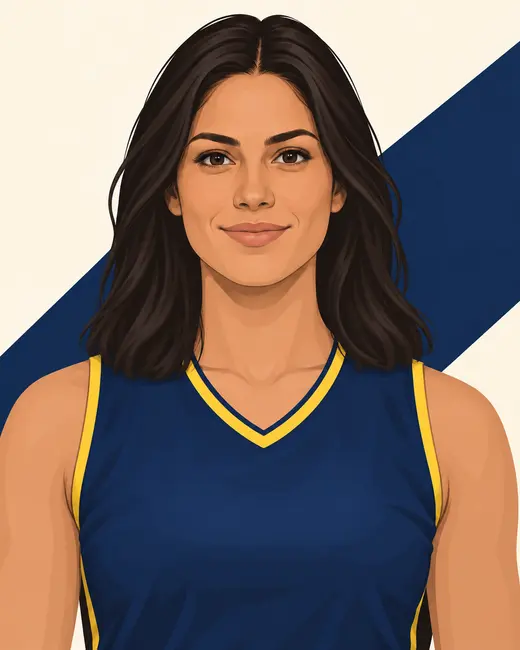
The Kenya women’s national volleyball team represents Kenya in senior international women’s volleyball. Governed by the Kenya Volleyball Federation and competing within the African Volleyball Confederation (CAVB), the team is widely known as the Malkia Strikers. Geoffrey Omondi is the current head coach, while outside hitter Meldinah Nemali Sande captains a squad that has moved into a significant generational transition.
Kenya remain the most successful women’s team in African Championship history, with 10 continental titles, and have appeared at four Olympic Games. Their latest continental campaign ended with silver at the 2026 African Nations Championship in Nairobi, where Egypt denied them the direct African qualification place for Los Angeles 2028. The tournament nevertheless secured Kenya a place at the 2027 FIVB Women’s Volleyball World Cup, keeping the current generation on a clear global pathway.
Team Information
| Field | Detail |
|---|---|
| Official Team Name | Kenya Women’s National Volleyball Team |
| Nickname | Malkia Strikers |
| Country | Kenya |
| Gender | Women |
| National Federation | Kenya Volleyball Federation (KVF) |
| FIVB Code | KEN |
| Confederation | CAVB — African Volleyball Confederation |
| Head Coach | Geoffrey Omondi |
| Captain | Meldinah Nemali Sande |
| FIVB World Ranking | No. 24 — 174.85 points, late-October 2026 snapshot — View full FIVB rankings |
| Current Cycle | 2026–2028 |
| 2027 World Cup | Qualified — Africa silver medallist / continental qualifier |
| 2027 World Cup Pool | Pool B — Brazil, Czechia, Kenya, Korea; Orlando |
| LA28 Olympic Status | Not yet qualified; World Cup and final-ranking routes remain |
| Olympic Appearances | 4 — 2000, 2004, 2020, 2024 |
| Olympic Best Result | 11th — Athens 2004 |
| World Championship Best Result | 13th — 1994 and 1998 |
| African Championship Best Result | Champions — record 10 titles |
| Federation Digital Hub | Kenya Volleyball Federation official store |
| Federation Instagram | Kenya Volleyball Federation on Instagram |
| Federation X | Kenya Volleyball Federation on X |
The official FIVB women’s World Ranking is the governing ranking source for the current snapshot. Kenya’s late-October 2026 position is No. 24 with 174.85 points, leaving the Malkia Strikers as Africa’s highest-ranked women’s side despite Egypt taking the continental title.
National Team History
Kenya’s status in African women’s volleyball was built during the 1990s. The Malkia Strikers won four consecutive African Championship titles in 1991, 1993, 1995 and 1997, establishing a continental standard that would shape the program for decades. After another championship double in 2005 and 2007, Kenya produced a second extended run of control by winning in 2011, 2013 and 2015.
That dominance was challenged sharply during the next continental cycle. Kenya finished with silver in 2017, 2019 and 2021 as Cameroon emerged as a stronger rival. The response came in Yaoundé in 2023, when Kenya reclaimed the African title with a 3–0 victory over Egypt, ending an eight-year wait for gold and lifting the program to a record-extending 10 championships.
The modern story is also tied to a deliberate attempt to reduce the gap between African success and performances against elite international teams. FIVB Volleyball Empowerment support contributed high-performance coaching and preparation around the Tokyo 2020 and Paris 2024 cycles. By 2026, however, Kenya had moved into a more domestically led phase under Geoffrey Omondi, with several long-serving veterans giving way to younger players emerging from Kenya Pipeline, KCB, Kenya Prisons, DCI and the school system.
The 2026 African Championship showed both sides of that transition. Kenya reached the final without losing a match, swept Cameroon in the semifinal and secured World Cup qualification, but Egypt controlled the championship match in straight sets. The silver medal preserved Kenya’s place among Africa’s leading teams while also showing that continental supremacy can no longer be assumed.
Kenya at the Olympic Games
Kenya have appeared at four Olympic Games: Sydney 2000, Athens 2004, Tokyo 2020 and Paris 2024. FIVB records the Athens campaign as Kenya’s best Olympic finish at 11th place; the Malkia Strikers had finished 12th on their debut in Sydney. After Athens, Kenya spent 16 years outside the Olympic tournament before returning at Tokyo 2020.
The Tokyo return was significant beyond the final standings. Kenya entered the Games following an extended high-performance project supported by FIVB Volleyball Empowerment, with Brazilian coach Luizomar de Moura working with the national program. The team did not reach the knockout phase, but the cycle re-established regular Olympic-level preparation after the long absence.
Kenya then qualified for Paris 2024 as the highest-ranked African team at the end of the Olympic qualification process, making a fourth Olympic appearance. The Malkia Strikers again did not record their first Olympic match victory, but the qualification confirmed that ranking strength as well as continental competition could provide a viable route to the Games.
Los Angeles 2028 presents a different challenge. Kenya’s first opportunity was to win the 2026 African Championship, whose champion received Africa’s direct Olympic quota. Egypt took that berth by beating Kenya in the final. Under the LA28 volleyball qualification system, the Malkia Strikers now have two remaining pathways: finish among the three highest-placed teams not already qualified at the 2027 World Cup, or claim one of the final three places through the FIVB World Ranking after the 2028 VNL preliminary phase.
World Championship & Global Competition Record
Kenya have been a recurring African representative at the sport’s flagship world championship since the 1990s. Their best World Championship finishes remain 13th place in 1994 and 1998. The challenge has usually been converting continental authority into enough first-ball control, serving pressure and attack efficiency to consistently beat teams from deeper professional systems.
At the 2025 Women’s World Championship in Thailand, Geoffrey Omondi led a reshaped roster captained by Sande. Kenya lost to Poland and Germany before defeating Vietnam, but the victory was not enough to take the team beyond the preliminary stage. The tournament became an important bridge between the Paris 2024 generation and the younger group Omondi later trusted at the 2026 African Championship.
From 2027, the competition previously known as the FIVB Volleyball World Championship becomes the FIVB Volleyball World Cup. FIVB’s 2027 World Cup rebrand retains the flagship 32-team format introduced in 2025, so Kenya’s 2027 qualification is a continuation of its World Championship pathway rather than entry into an unrelated competition.
Kenya have already learned their route through the 2027 tournament. The official World Cup draw placed the Malkia Strikers in Pool B alongside Brazil, Czechia and Korea, with pool play scheduled for Orlando, Florida, at Kia Center from August 20–25, 2027. The top two teams in each four-team pool advance to the knockout phase.
That draw gives the current rebuild a clear competitive target. Brazil represent an elite medal-level benchmark, Czechia enter from a considerably stronger European competition environment, while Korea provide an Asian opponent closer to Kenya’s ranking range. Progress from the pool would therefore require more than a single upset; Kenya will need repeatable serve-receive quality and scoring balance across three matches.
VNL & Annual FIVB Competition Context
Kenya have not yet established themselves in the Volleyball Nations League field. Their path toward that level has instead included the former World Grand Prix era, major global championships and Challenger Cup opportunities. In the modern FIVB system, the Challenger Cup historically served as a promotion route into the VNL, and Kenya were included in that pathway during the Paris 2024 cycle. FIVB’s international competition overview provides the broader context for those annual global pathways.
For the present generation, the 2027 World Cup is the more immediate international benchmark. Strong performances there would not only expose the developing squad to top-ranked opposition but could also change Kenya’s FIVB ranking position ahead of the final LA28 qualification phase.
African Championship Record
The African Championship remains the defining competition in Kenya’s national-team history. The Malkia Strikers’ record 10 continental titles](https://www.sjak.co.ke/2026/08/15/omondi-names-final-14-for-nations-championship-on-home-soil/) came in 1991, 1993, 1995, 1997, 2005, 2007, 2011, 2013, 2015 and 2023. No other women’s national team has matched that total.
The 2023 title was particularly important because Kenya had finished second in each of the previous three editions. Under Luizomar de Moura, the team defeated Egypt 3–0 in Yaoundé to end Cameroon’s run of continental control and reclaim the championship for the first time since 2015.
Three years later, Nairobi hosted the 2026 edition with unusually high stakes. Besides the continental trophy, the champions earned a direct LA28 place and the top three eligible teams qualified for the 2027 World Cup. Kenya topped their preliminary pool, eliminated Nigeria in the round of 16, recovered from an opening-set loss to beat Algeria 3–1 in the quarterfinal and then swept Cameroon 3–0 to reach the final and secure World Cup qualification.
Egypt proved a different problem. The North Africans had not dropped a set throughout the tournament and defeated Kenya 3–0 in the final, 25–21, 25–15, 25–15. Egypt therefore took the continental title and the direct Olympic quota, while Kenya finished with silver and a confirmed World Cup place.
2026 African Championship Squad
The championship roster was a 14-player event squad and should be kept distinct from Kenya’s broader 2026 national-team pool.
| Player | Position |
|---|---|
| Emmaculate Nekesa | Setter |
| Esther Mutinda | Setter |
| Malyne Terry Tata | Opposite |
| Mercy Iminza | Opposite |
| Gladys Ekaru | Middle Blocker |
| Belinda Barasa | Middle Blocker |
| Marian Sokoiyo | Middle Blocker |
| Lorine Chebet | Middle Blocker |
| Meldinah Sande | Outside Hitter |
| Veronica Adhiambo | Outside Hitter |
| Daisy Leting | Outside Hitter |
| Milka Akinyi Apuoyo | Outside Hitter |
| Josephine Kataa | Libero |
| Sharon Arusei | Libero |
The final 14-player squad announced for the African Championship was captained by Sande, with Omondi retaining a mixture of international experience and several players who had only recently broken into the senior setup.
2026 Current National Team Pool
The broadest published senior selection for the 2026 African Championship cycle was the 25-player provisional pool named in late July. It is more representative of Kenya’s national-team depth than the later 14-player tournament roster and therefore serves as the canonical 2026 pool below.
Club affiliations reflect the 2026 selection context with later clearly documented moves incorporated where available. Heights are retained only where a reliable senior-player measurement is available; no value is inferred to fill an empty data point.
| Player | Position | Club | Height |
|---|---|---|---|
| Emmaculate Nekesa Misoki | Setter | Kenya Pipeline | 184 cm |
| Fridah Boke | Setter | KCB | 175 cm |
| Esther Mutinda | Setter | APR WVC, Rwanda | 176 cm |
| Sheila Khasandi | Setter | Kenya Prisons | — |
| Linar Ogwera Achieng | Setter | APR WVC, Rwanda | — |
| Malyne Terry Tata | Opposite | Turkey — club not named in current reporting | 180 cm |
| Deborah Jesang | Opposite | KCB | 185 cm |
| Mercy Iminza Likhayo | Opposite | DCI | 185 cm |
| Gladys Ekaru Emaniman | Middle Blocker | Kenya Pipeline | 192 cm |
| Belinda Nanjala Barasa | Middle Blocker | KCB | 188 cm |
| Lorine Chebet Kaei | Middle Blocker | Kenya Prisons | 179 cm |
| Marian Sokoiyo | Middle Blocker | Kenya Pipeline | 187 cm |
| Pauline Chemutai | Middle Blocker | Kenya Pipeline | — |
| Caroline Sirengo | Middle Blocker | DCI | 179 cm |
| Anne Lowem | Middle Blocker | Kenya Prisons | 180 cm |
| Veronica Adhiambo Oluoch | Outside Hitter | Henan Women’s Volleyball Club, China | 180 cm |
| Meldinah Nemali Sande | Outside Hitter | Police WVC, Rwanda | 180 cm |
| Juliana Namutira | Outside Hitter | KCB | 181 cm |
| Sarah Namisi | Outside Hitter | DCI | 181 cm |
| Jemimah Siang’u | Outside Hitter | DCI | — |
| Pauline Itoo | Outside Hitter | Kenya Prisons | — |
| Daisy Jepkorir Leting | Outside Hitter | DCI | 176 cm |
| Milka Akinyi Apuoyo | Outside Hitter | Kenya Pipeline / Aluor Girls | 188 cm |
| Sharon Sandui | Libero | Kenya Prisons | 180 cm |
| Josephine Kataa | Libero | Kenya Pipeline | 168 cm |
The club picture continued to move after the African Championship. Esther Mutinda joined APR WVC in Rwanda, where fellow Kenyan setter Linar Achieng was already playing, while Pauline Chemutai and Josephine Kataa left KCB for Kenya Pipeline. Veronica Adhiambo moved abroad again in October, signing for Henan Women’s Volleyball Club in China after a domestic season in which she had been named Kenya Cup MVP.
The pool illustrates Omondi’s core selection problem in a positive sense: Kenya now have competition across nearly every position. The 2026 championship squad removed experienced and emerging players from the wider list rather than simply recycling a fixed 14, giving the coaching staff more options for the longer 2027 World Cup preparation period.
Coaching Staff
| Role | Name | Organization / Context |
|---|---|---|
| Head Coach | Geoffrey Omondi | Kenya Pipeline / Kenya |
| Assistant Coach | David Muthui Kinga | Kenya |
| Assistant Coach | Patrick Sang | Kenya |
| Statistician | Brackcides Agala | Former Kenya international |
| Physiotherapist | Conceptor Bala | Kenya |
| Team Manager | Neddy Kilimo | Kenya |
Omondi took the national team into a deliberate rebuilding phase while simultaneously coaching Kenya Pipeline, the dominant domestic women’s club in the 2025–26 season. His 2026 selections reduced dependence on several older names and expanded opportunities for players such as Sokoiyo, Tata, Kataa and Akinyi.
The technical staff also reflects continuity within Kenyan volleyball. The staff structure announced around the 2026 championship squad included former national-team player Brackcides Agala as statistician, while assistants David Muthui Kinga and Patrick Sang remained with Omondi through the African Championship campaign.
Playing Identity & Team Style
Kenya’s traditional advantage in African competition has been physicality at the net, but the 2026 group is better understood as a team in tactical transition than as a finished system. Omondi used the African Championship group phase to rotate widely and build depth instead of relying on one fixed starting six, an approach consistent with a squad still establishing its long-term hierarchy.
The current group has useful size through the middle. Gladys Ekaru provides experienced blocking presence, while Belinda Barasa, Lorine Chebet and Marian Sokoiyo give Kenya several combinations against different opponents. On the pins, Sande supplies leadership and six-rotation experience, while Veronica Adhiambo offers high-volume attacking and Milka Akinyi represents a younger, more physical option.
During the 2026 African Championship, Kenya identified reception consistency and block timing as areas requiring improvement. Sande stressed that cleaner first contact was necessary to keep the offense functioning, particularly against opponents able to sustain serving pressure.
That issue becomes more important outside Africa. Against teams with stronger jump serving and more disciplined transition systems, Kenya cannot rely solely on terminal attacking. The setters need stable passing to involve the middles, while the block-defence system must create repeatable transition opportunities rather than forcing the outside hitters to score continually from difficult situations.
The 2026 loss to Egypt was a useful illustration. Kenya had enough athletic quality to move through the earlier rounds, including a convincing semifinal against Cameroon, but Egypt’s technical control and consistency prevented the Malkia Strikers from establishing sustained pressure in the final. For the 2027 World Cup, progress is likely to depend less on adding more attacking options than on making the first-contact and defensive phases reliable enough for those options to matter.
Major Honors
| Competition | Best / Major Results |
|---|---|
| CAVB Women’s African Nations Championship | Champions — 10 titles: 1991, 1993, 1995, 1997, 2005, 2007, 2011, 2013, 2015, 2023 |
| CAVB Women’s African Nations Championship | Silver — 2026, plus runner-up finishes in 2017, 2019 and 2021 |
| Olympic Games | 11th place — Athens 2004 |
| FIVB Women’s World Championship | 13th place — 1994 and 1998 |
| Paris 2024 Olympic Qualification | Qualified as the highest-ranked African team at the end of the qualification process |
| 2027 FIVB Women’s Volleyball World Cup | Qualified through the 2026 African Championship |
Kenya’s continental record remains the defining achievement. The value of the next cycle will be measured by whether the program can convert that historic African success into a stronger global finish at the 2027 World Cup and, ultimately, another Olympic qualification.
Notable Current & Former Players
| Player | Position | Era / Years | Note |
|---|---|---|---|
| Janet Wanja | Setter | 2000s–2010s | Athens 2004 Olympian and five-time African champion; later worked with the national-team staff |
| Mercy Moim | Outside Hitter | 2010s–2020s | Long-serving international and captain during the Tokyo 2020 Olympic cycle |
| Sharon Chepchumba | Opposite | 2010s–2020s | Major attacking figure and a central player in Kenya’s 2023 African title cycle |
| Gladys Ekaru | Middle Blocker | 2010s–present | Experienced middle who remained part of the 2026 rebuild |
| Emmaculate Nekesa | Setter | 2020s–present | Current-generation setter with Olympic and World Championship experience |
| Veronica Adhiambo | Outside Hitter | 2020s–present | Olympian, 2026 Kenya Cup MVP and one of Kenya’s leading current professional attackers |
| Meldinah Sande | Outside Hitter | 2020s–present | Current national-team captain and Rwanda-based professional |
| Milka Akinyi Apuoyo | Outside Hitter | 2026–present | Young attacker who moved rapidly from the school pathway into Kenya’s 2026 senior championship squad |
Janet Wanja’s 15-year senior international career included five African Championship titles and appearances at the Olympics, World Championships, World Cup and World Grand Prix. She later served on Kenya’s staff at Paris 2024 before her death in December 2024.
The current list also reflects a changing national-team model. Kenya no longer depend on one or two veterans to carry most of the international experience. Sande, Ekaru, Nekesa and Adhiambo provide continuity, while players such as Akinyi, Sokoiyo, Tata and Kataa have already shown that the next layer can contribute in high-stakes continental matches.
Rivalries & Key Matchups
Egypt
Egypt are now Kenya’s most immediate continental benchmark. Kenya beat them in straight sets to win the 2023 African title, but Egypt reversed the result in the 2026 final and took the direct LA28 Olympic place. That sequence has turned Kenya–Egypt into more than a traditional regional matchup: the rivalry is directly shaping Olympic qualification and Africa’s position in the next global cycle.
Cameroon
Cameroon remain another defining opponent. Their run of success coincided with Kenya’s three consecutive African silver medals in 2017, 2019 and 2021, making them the clearest challenger to Kenya’s continental control during that period. Kenya’s 3–0 semifinal victory over Cameroon in 2026 was therefore significant both historically and practically, because it guaranteed the Malkia Strikers a place at the 2027 World Cup.
Qualification Path & Tournament Cycle
The 2026 African Championship opened the LA28 qualification process for Kenya. Under the approved Olympic qualification system, each of the five continental champions in 2026 receives one Olympic quota place. Egypt claimed Africa’s berth by winning the Nairobi final.
Kenya’s second route is now the 2027 FIVB Women’s Volleyball World Cup. The three highest-finishing teams there that have not already qualified for LA28 will receive Olympic berths. If Kenya do not qualify through the World Cup, the final route comes through the FIVB World Ranking after the 2028 VNL preliminary phase, when the three highest-ranked still-unqualified teams will complete the Olympic field.
The World Cup berth itself is secure. Kenya qualified by reaching the 2026 African Championship final, and FIVB subsequently confirmed Kenya among Africa’s three qualified teams alongside Egypt and Cameroon.
The October 26, 2026 draw then provided the next concrete milestone: Brazil, Czechia and Korea in Pool B in Orlando. For Kenya, the preparation cycle is therefore no longer abstract. The program can build the 2027 squad around a known group of opponents and a tournament that carries both global championship significance and a direct Olympic opportunity.
Kenya in the 2026–27 Cycle
Kenya close the 2026 national-team season in a stronger global position than the African Championship silver medal alone might suggest. The current FIVB World Ranking places them at No. 24 with 174.85 points, while the Malkia Strikers remain the highest-ranked African women’s team and have already secured a place at the 2027 World Cup.
At the same time, the loss to Egypt changed the Olympic picture. The Malkia Strikers can no longer rely on the continental route to Los Angeles. Their next meaningful international objective is to make the 2027 World Cup competitive enough to create an Olympic opportunity there, while protecting or improving a ranking position that could still matter in 2028.
Omondi’s rebuild gives that goal a different shape from previous Kenyan cycles. The coaching staff have started widening the senior pool, incorporating younger players and creating genuine competition for roster spots. Kenya’s domestic league remains the main talent base, but more players are also moving abroad: Sande in Rwanda, Mutinda and Achieng at APR, and Adhiambo in China are examples of a group accumulating different professional environments.
That combination of continental pedigree, increased positional competition and more international club exposure is promising. The unresolved question is whether Kenya can translate it into global-level consistency. The answer will come quickly in Orlando against Brazil, Czechia and Korea.
Recent Performance Snapshot
2026 CAVB Women’s African Nations Championship
| Stage | Opponent | Result |
|---|---|---|
| Pool Stage | Zambia | Won 3–0 |
| Pool Stage | Mali | Won 3–0 |
| Round of 16 | Nigeria | Won 3–0 |
| Quarterfinal | Algeria | Won 3–1 |
| Semifinal | Cameroon | Won 3–0 |
| Final | Egypt | Lost 0–3 |
Kenya reached the final with five consecutive victories before Egypt ended the run. The semifinal victory over Cameroon secured the World Cup qualification objective; the final prevented Kenya from securing the direct LA28 ticket.
FAQ
What is the nickname of the Kenya women’s national volleyball team?
The team is known as the Malkia Strikers, the name commonly used by the federation, Kenyan media and FIVB coverage.
Who is the current Kenya women’s volleyball head coach?
Geoffrey Omondi is the current head coach. He led Kenya at the 2025 World Championship and through the 2026 African Championship, where the Malkia Strikers finished runners-up.
Who is the current captain?
Outside hitter Meldinah Nemali Sande is the current captain. She was appointed captain during the 2025 World Championship cycle and retained the role for the 2026 African Championship.
What is Kenya’s current FIVB World Ranking?
Kenya are No. 24 with 174.85 points in the late-October 2026 women’s FIVB World Ranking snapshot.
Has Kenya qualified for the 2027 Women’s Volleyball World Cup?
Yes. Kenya qualified by reaching the 2026 African Championship final. They have been drawn into Pool B with Brazil, Czechia and Korea, with their pool matches scheduled in Orlando.
Has Kenya qualified for the Los Angeles 2028 Olympics?
Not yet. Egypt earned Africa’s direct place by winning the 2026 continental championship. Kenya can still qualify as one of the three best not-yet-qualified teams at the 2027 World Cup or through one of the final three FIVB World Ranking places after the 2028 VNL preliminary phase.
How many African Championship titles have Kenya won?
Kenya have won a record 10 CAVB Women’s African Nations Championship titles: 1991, 1993, 1995, 1997, 2005, 2007, 2011, 2013, 2015 and 2023.
References
- Volleyball World — FIVB Women’s Volleyball World Ranking
- FIVB — Egypt claim African title to secure historic first Olympic berth for LA28
- FIVB — Kenya and Egypt advance to African Nations final, book World Cup 2027 berths
- FIVB — Volleyball and beach volleyball qualification systems for LA28 Olympic Games confirmed
- FIVB — 2027 FIVB Women’s Volleyball World Cup pools revealed during global draw
- FIVB — The FIVB Volleyball World Cup Takes the Sport Into a New Era
- FIVB — Kenya women’s national team becomes African Nations Champions with Volleyball Empowerment
- FIVB — Kenya Volleyball Federation reaps the benefits of successful four-year Volleyball Empowerment programme
- FIVB — Kenya unveil roster for the Tokyo Olympics
- Volleyball World — Paris 2024: Women’s volleyball national teams qualified
- Volleyball World — Women’s World Championship Pool Previews: Pool G
- The Star — Adhiambo, Baraza headline race for Malkia Strikers places
- Sports Journalists Association of Kenya — Omondi names final 14 for Nations Championship on home soil
- Citizen Digital — Munala faces KCB mass exodus but vows to rebuild
- Citizen Digital — Sande named new Malkia Strikers captain
- The Star — Omondi plots new era for Malkia Strikers
- The Star — Omondi warns Malkia Strikers against complacency
- The Eastleigh Voice — Malkia Strikers unveil final 14-player squad for African Championship in Nairobi
- Capital FM — Why Malkia Strikers are in danger of losing African title on home soil
- FIVB — FIVB mourns passing of Kenyan legend Janet Wanja
- Kenya Volleyball Federation — Official Digital Store