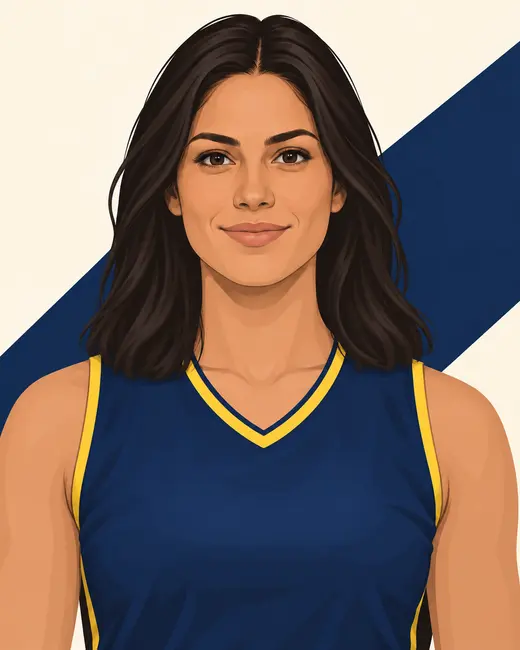
The Argentina women’s national volleyball team represents Argentina in senior international volleyball under the Federación del Voleibol Argentino (FeVA) and the South American Volleyball Confederation (CSV). Nicknamed Las Panteras, the team has developed from an intermittent global participant into one of South America’s most stable international programs, qualifying for two Olympic Games and every women’s global championship since 2014.
Facundo Morando is the current head coach, while opposite Bianca Cugno is the latest officially documented senior captain. Argentina finished runner-up to Brazil at the 2026 South American Championship, securing direct qualification for the 2027 FIVB Women’s Volleyball World Cup and the 2027 Pan American Games. The team enters the next phase of the LA28 cycle at No. 20 in the FIVB World Ranking with 207.22 points.
Team Information
| Field | Detail |
|---|---|
| Official Team Name | Argentina Women’s National Volleyball Team |
| Nickname | Las Panteras |
| Country | Argentina |
| Gender | Women |
| National Federation | Federación del Voleibol Argentino |
| Federation Women’s Team Page | Selección Nacional Femenina |
| Confederation | CSV — South America |
| Head Coach | Facundo Morando |
| Captain | Bianca Cugno |
| FIVB World Ranking | No. 20 — 207.22 points, October 13, 2026 snapshot — View full FIVB rankings |
| Current Cycle | 2026–28 |
| 2027 Global Championship | Qualified — FIVB Women’s Volleyball World Cup |
| 2027 World Cup Pool | Pool F — Japan, Russia, Argentina, Bulgaria |
| LA28 Olympic Status | Not yet qualified |
| Olympic Appearances | 2 — Rio 2016, Tokyo 2020 |
| Olympic Best Result | 9th — Rio 2016 |
| Global Championship Best Result | 8th — 1960 |
| Latest South American Championship Result | Silver — 2026 |
| Federation X | @Voley_FeVA |
| Federation Social Hub | Voleibol Argentino |
The official Volleyball World ranking places Argentina at No. 20 in the October 13, 2026 snapshot. The ranking is volatile and should be treated as a dated competitive measure rather than a permanent team attribute.
From a Regional Challenger to a Regular Global Team
Argentina’s women had already appeared at the World Championship several times before the modern rise of Las Panteras, including an eighth-place finish at the 1960 edition that remains the program’s best global result. The larger change came in the 2010s, when qualification stopped being occasional and became repeatable.
An FIVB profile of Argentina’s Olympic-generation development traces that shift through players such as Lucía Fresco, Yael Castiglione, Yamila Nizetich and Tatiana Rizzo. The same generation helped Argentina return to the World Championship in 2014 after a 12-year absence, make its Olympic debut at Rio 2016 and qualify again for Tokyo 2020.
The 2019 season became another important marker. Argentina won its first women’s Pan American Games medal with bronze in Lima, finished third at the FIVB Challenger Cup and placed 10th at the former FIVB World Cup. Those results did not make Argentina a top-tier global power, but they showed that the team could produce competitive results outside the South American calendar as well as inside it.
The next transition involved turning those breakthroughs into a deeper program. A younger group led increasingly by Victoria Mayer, Bianca Farriol, Candelaria Herrera, Daniela Bulaich and later Bianca Cugno moved into senior roles, while FeVA and FIVB Volleyball Empowerment invested in coaching and long-term planning. By 2025, FIVB described Argentina as a regular presence at major events, with the World Championship in Thailand marking the country’s eighth appearance and fourth consecutive edition.
Olympic History
Argentina made its women’s Olympic debut at Rio 2016, where it finished ninth. Volleyball World’s Tokyo roster announcement specifically identified Rio as the program’s first Olympic appearance and recorded the ninth-place finish.
Four years later in the Olympic cycle, Argentina secured a second consecutive berth through the South American qualifier in Bogotá. Nizetich, Rizzo and other members of the Rio generation were joined by a younger group for Tokyo that included Victoria Mayer, Elina Rodríguez, Daniela Bulaich, Bianca Farriol and Candelaria Herrera. Argentina returned to the Olympic stage at Tokyo 2020.
The back-to-back appearances changed the baseline for the program. Olympic qualification was no longer an abstract long-term target; it had become something Argentina had achieved twice with overlapping generations. The current group missed the Paris 2024 tournament, however, and the LA28 cycle now presents a different qualification system.
Brazil took South America’s direct Olympic quota by winning the 2026 continental championship. Argentina therefore enters 2027 still seeking a third Olympic appearance, with the World Cup and the final 2028 ranking pathway remaining available.
World Championship and Global Competition
Argentina’s 2025 World Championship in Thailand was its eighth appearance at the global championship and fourth in succession. The team opened Pool D with a significant result, beating Czechia 3–1 after dropping the first set.
Bianca Cugno scored 25 points in that victory, while Bianca Bertolino added 13 and Daniela Bulaich 10. The match illustrated the direction of the new attacking core: Cugno had moved into the primary opposite role, Mayer continued to organize the offense, and the outside-hitter group was becoming younger after years in which Nizetich had carried a major share of the receiving and attacking responsibility.
Argentina then lost 3–1 to the United States and 3–0 to Slovenia, finishing third in the pool with a 1–2 record and missing the Round of 16. The campaign therefore stopped short of a global breakthrough, but the Czechia win gave the new group a concrete result to build from.
Qualification for 2027 followed one year later. Volleyball World confirmed that Argentina earned one of South America’s three continental World Cup berths and will make its ninth appearance, alongside Brazil and Colombia.
Pan American Breakthrough and the 2025 Copa América
Argentina’s strongest title sequence of the current era began at the Pan American Cup. Las Panteras won the competition for the first time in 2023, defeating Puerto Rico in a five-set final. FeVA’s report on the historic first title also recorded Bianca Cugno as tournament MVP, Best Opposite, Best Server and leading scorer.
Argentina retained the trophy in 2024. Under Facundo Morando on court, Las Panteras swept the United States 3–0 in the final, and FIVB named Bianca Farriol tournament MVP. Winning consecutive editions was an important sign of depth because the team navigated different lineups while maintaining the same competitive level.
The next major step came at the inaugural women’s Copa América in Brazil in July 2025. Argentina completed the tournament unbeaten and defeated Brazil 3–1 in the deciding match. Cugno scored 29 points and was named MVP and Best Opposite, while Mayer and Farriol joined her in the tournament’s ideal team.
That result did not carry the weight of a South American Championship title, but it was one of the clearest demonstrations that the current Argentina group could beat Brazil in a senior international match. It also reinforced Cugno’s transition from emerging scorer into the main offensive reference of Las Panteras.
VNL and Challenger Cup Context
Argentina has not established a place in the Volleyball Nations League. Under the previous international structure, the team’s route toward promotion ran through the FIVB Challenger Cup.
The strongest result came in 2019, when Argentina finished third. The team returned to the Challenger Cup in later cycles but did not earn promotion.
That absence matters when evaluating the current ranking. Argentina regularly competes in South American, Pan American and global championship events, but it does not receive the same annual block of top-level matches that VNL participants receive. The 2027 World Cup will therefore provide an unusually concentrated test against teams accustomed to higher-frequency competition against the global top tier.
The 2026 South American Cycle
Argentina began 2026 with a larger national-team structure rather than a single tournament roster. FeVA’s official 2026 cycle announcement named a broad group across all five positions and placed Facundo Morando in charge of the senior team.
The year then developed through three distinct senior competition phases: the South American Cup in July, the continental championship in September and the South American Games later that month. Those events served different purposes and used different selections, so their rosters should not be treated as interchangeable.
Bronze at the South American Cup
Argentina reached the semifinals of the South American Cup in Lima before losing 3–1 to Brazil. In that match, FeVA explicitly identified Bianca Cugno as captain, and the opposite scored 33 points in a four-set defeat.
Las Panteras responded by sweeping Chile 3–0 for bronze. Cugno again led the scoring with 24 points, while Farriol, Herrera and Bertolino contributed at the net. The result was less significant than the continental championship that followed, but it gave Morando another event with the main senior core before Olympic and World Cup qualification came into play.
South American Silver and World Cup Qualification
The 2026 South American Championship in Rio de Janeiro was the central tournament of Argentina’s season. The champion would qualify directly for Los Angeles 2028, while the top three teams would secure World Cup places.
Argentina beat Peru, Colombia, Chile and Venezuela to reach the final undefeated. The most demanding match before the decider was a 3–2 victory over Colombia, in which Argentina recovered after falling behind twice in sets. The fourth victory, a straight-set win over Venezuela, guaranteed qualification for both the 2027 World Cup and the 2027 Pan American Games.
Brazil won the final 3–0, 26–24, 25–19, 25–16. FeVA’s final report recorded Cugno with 16 points, Rodríguez and Bertolino with 10 each, and Farriol with seven.
The defeat left Argentina with silver rather than the program’s first South American title, while Brazil claimed the direct LA28 berth. The tournament still produced three individual awards for Las Panteras: Candelaria Herrera was selected as a Best Middle Blocker, Cugno as Best Opposite and Agostina Pelozo as Best Libero in the FIVB championship review.
Development Group Takes South American Games Silver
Argentina used a younger group at the South American Games in Rosario after the continental championship. The selection included players such as Morena Chiappero, Martina Bednarek, Victoria Matich, Julieta Ruelli and Victoria Caballero, with Cugno among the available players but not the event’s central offensive starter.
Argentina finished 2–2 and took silver after beating Colombia 3–0 in its final match. Julieta Ruelli scored 19 points in the medal-clinching victory. The event gave younger members of the 2026 cycle meaningful senior minutes without replacing the main continental roster as the program’s reference selection.
2026 Current National Team Pool
FeVA publishes a broad cycle list, so the canonical current-pool section can remain distinct from the 14-player rosters used at individual competitions. The table below follows the federation’s April 28 2026 national-team cycle selection, with current club and height values included only where they could be supported confidently enough for this editorial pass.
| Player | Position | Club | Height |
|---|---|---|---|
| Victoria Mayer | Setter | — | 178 cm |
| Morena Chiappero | Setter | — | — |
| Catalina Rochaix | Setter | — | — |
| Melany Detzel | Setter | — | — |
| Renata Herrero | Setter | — | — |
| Emma Williner | Setter | — | — |
| Bianca Cugno | Opposite | Il Bisonte Firenze | 192 cm |
| Anahí Tosi | Opposite | — | — |
| Mora Pampin | Opposite | — | — |
| Lara Martínez Casas | Opposite | — | — |
| Elina Rodríguez | Outside Hitter | — | 189 cm |
| Daniela Bulaich | Outside Hitter | Alianza Lima | 178 cm |
| Bianca Bertolino | Outside Hitter | Fluminense | 184 cm |
| Dalma Nicole Pérez | Outside Hitter | — | 180 cm |
| Martina Bednarek | Outside Hitter | — | 186 cm |
| Antonela Fortuna | Outside Hitter | — | 179 cm |
| Bernardita Aguilar | Outside Hitter | — | — |
| Gisela Otamendi | Outside Hitter | — | — |
| Lara Espeche | Outside Hitter | — | — |
| Morena Kaplan | Outside Hitter | — | — |
| Julieta Ruelli | Outside Hitter | — | — |
| Milena Margaria | Outside Hitter | — | — |
| Carmela Ríos | Outside Hitter | — | — |
| Bianca Farriol | Middle Blocker | CBF Balducci HR Macerata | 188 cm |
| Candelaria Herrera | Middle Blocker | LOVB Miami | 182 cm |
| Micaela Cabrera | Middle Blocker | — | 182 cm |
| Avril García | Middle Blocker | Sporting CP Lisboa | 184 cm |
| Martina Da Dalt | Middle Blocker | — | — |
| Victoria Matich | Middle Blocker | — | — |
| Julieta Sarmiento | Middle Blocker | — | — |
| Agostina Pelozo | Libero | KP Brno | 162 cm |
| Victoria Caballero | Libero | — | — |
| María Eugenia Martínez | Libero | — | — |
The broad list shows the two-track structure of the 2026 program. Established senior players such as Mayer, Cugno, Rodríguez, Bulaich, Farriol and Herrera remained alongside younger setters, wing attackers and middles who could be used selectively in preparation matches or development-oriented tournaments.
Several current overseas affiliations are already clear for the 2026–27 club season. Cugno is playing for Il Bisonte Firenze, Bertolino joined Fluminense, Bulaich signed with Alianza Lima, Farriol is with CBF Balducci HR Macerata, Herrera is part of LOVB Miami, García is registered with Sporting CP Lisboa, and Pelozo moved to KP Brno.
Volleyball World’s current Argentina team page already shows a narrower 14-player selection built around Morando, Mayer, Cugno, Rodríguez, Bertolino, Pérez, Bulaich, García, Fortuna, Bednarek, Pelozo and Cabrera, with Azul Benítez, Candela Salinas and Brenda Graff also present. That list is useful as a forward-looking registration snapshot, but it does not overwrite FeVA’s broader 2026 cycle pool or constitute a final 2027 World Cup roster.
Coaching Staff
The latest full senior technical staff published by FeVA for the 2026 South American Cup was:
| Role | Name | Organization / Team |
|---|---|---|
| Head Coach | Facundo Morando | Argentina Women’s National Team |
| Assistant Coach | Pablo Martín Ambrosini | Argentina Women’s National Team |
| Physical Trainer | Ezequiel Matías Alem | Argentina Women’s National Team |
| Statistician | Lucía María Liceri | Argentina Women’s National Team |
| Physiotherapist | María Rocío Flamini | Argentina Women’s National Team |
| Team Manager | Víctor Hugo Ríos | Argentina Women’s National Team |
| Team Official | Diego Martín Ferreyra | Argentina Women’s National Team |
Morando’s current status is supported by both FeVA’s 2026 cycle announcement and the federation’s September South American Championship roster. His role also represents continuity through a difficult coaching transition. Daniel Castellani joined the women’s program in 2023, took medical leave in 2024 with Morando leading the team on court, and remained connected to the project into 2026.
Castellani died in June 2026 after a long illness. The FIVB tribute to his career noted that he had remained committed to the development of Argentina’s women’s program after returning to national-team coaching in 2023. Morando subsequently led Las Panteras through the rest of the 2026 international season.
Playing Identity & Team Style
The current Argentina team is built around more continuity than its 2026 roster size might initially suggest. Mayer has become the central setter for the senior core, Cugno is the primary high-volume opposite, and the experienced middle pairing of Farriol and Herrera gives the offense more options through the center than earlier Argentina generations possessed.
Cugno is the clearest attacking reference. She was MVP of the 2023 Pan American Cup and the 2025 Copa América, scored 25 points in Argentina’s opening victory at the 2025 World Championship, and earned Best Opposite honors at the 2026 South American Championship. Her current 192 cm frame also gives Argentina a higher contact point on the right side than the program historically had at many stages of its development.
The outside-hitter group is less dependent on one veteran than it was during the long Nizetich era. Rodríguez provides experience, Bulaich remains a stable two-way option, and Bertolino has moved into a larger senior role. Pérez, Bednarek, Fortuna and other cycle players give Morando alternatives when reception balance or attacking volume needs to change.
Argentina’s middles are also increasingly important. Farriol and Herrera are experienced internationals, while García and Cabrera have moved into the senior rotation. The 2026 continental awards for Herrera, Cugno and Pelozo showed that Argentina’s best performances were not based on one scorer alone.
Historically, Argentina had to compensate for a lack of elite size through reception, defense and speed. Former head coach Hernán Ferraro described that reality directly in an FIVB discussion of the team’s technical identity. The current group is taller in several positions, but the underlying requirement remains similar: clean first contact allows Mayer to use the middle and accelerate the offense, while poor reception can force a much more predictable dependence on Cugno and the high-ball wings.
Major Honors & Competitive Milestones
| Competition | Best / Major Results |
|---|---|
| Olympic Games | 9th — Rio 2016 |
| FIVB Women’s Global Championship | 8th — 1960 |
| South American Championship | Silver — 8 times through 2026; latest 2026 |
| Pan American Games | Bronze — 2019 |
| Women’s Pan American Cup | Champions — 2023, 2024 |
| Women’s Copa América | Champions — 2025 inaugural edition |
| FIVB Challenger Cup | Bronze — 2019 |
| South American Games | Gold — 2014; Silver — 2026 |
| CSV South American Cup | Bronze — 2026 |
| 2027 FIVB Women’s Volleyball World Cup | Qualified |
Argentina has still never won the senior South American Championship. Its eight runner-up finishes through 2026 therefore tell two stories at once: Las Panteras have become a durable continental medal team, but Brazil remains the barrier between repeated podium appearances and a first CSV championship.
The Pan American Cup titles in 2023 and 2024 and the inaugural Copa América title in 2025 are the strongest senior trophies of the current generation. They matter because each came against a broader regional field than the South American Championship alone and helped establish the group around Mayer, Cugno, Farriol and Herrera before the 2026 qualification cycle.
Notable Current & Former Players
| Player | Position | Era / Years | Note |
|---|---|---|---|
| Yamila Nizetich | Outside Hitter | 2000s–2020s | Long-time international, Rio 2016 captain and central figure in Argentina’s first Olympic generation |
| Lucía Fresco | Opposite | 2009–2020s | Major scorer during the generation that reached Argentina’s first two Olympics |
| Julieta Lazcano | Middle Blocker | 2010s–2020s | Rio Olympian and captain entering the Tokyo cycle |
| Tatiana Rizzo | Libero | 2000s–2020s | Defensive leader across Argentina’s Olympic and World Championship era |
| Emilce “Mimi” Sosa | Middle Blocker | 2000s–2020s | Former captain, Rio 2016 Olympian and long-time middle-blocking reference |
| Victoria Mayer | Setter | 2010s–2020s | Current senior playmaker and two-time Olympian |
| Bianca Cugno | Opposite | 2020s | Current captain and primary scorer; MVP of the 2023 Pan American Cup and 2025 Copa América |
| Bianca Farriol | Middle Blocker | 2020s | Tokyo Olympian and 2024 Pan American Cup MVP |
| Candelaria Herrera | Middle Blocker | 2020s | Tokyo Olympian, current core middle and 2026 South American Championship award winner |
Nizetich, Fresco, Lazcano, Rizzo and Sosa were part of the generation that changed Argentina’s expectations by reaching the Olympics and returning the country to regular global competition. The current core inherited a program with more international continuity but also the challenge of creating its own defining results after the veterans moved out of the central roles.
Cugno is increasingly the player around whom that newer period is identified. Mayer provides continuity at setter, while Farriol and Herrera link the Tokyo generation with the current team. The development of Bertolino, Pérez, Bednarek and the younger 2026 pool will determine how much depth Argentina carries into 2027 and 2028.
Key South American Matchups
Brazil remains the defining continental benchmark. Argentina has beaten Brazil in important individual matches, including the 2025 Copa América decider, but Brazil continues to control the South American Championship and defeated Las Panteras in the 2026 final to take the continental title and LA28 quota.
Colombia has become Argentina’s most regular direct competitor behind Brazil. Their 2026 South American Championship meeting went five sets, and results between the two teams increasingly affect medal position, World Cup qualification and ranking points rather than simply regional prestige.
Peru carries the deeper historical rivalry. Peru was once South America’s dominant women’s program outside Brazil and remains an important matchup, while Argentina’s rise over the last decade has shifted the balance in recent senior competition.
Chile has become more relevant during the 2026 cycle. Argentina defeated Chile for South American Cup bronze, but Chile later won the South American Games ahead of an Argentine development selection.
Qualification Path and the 2027–28 Cycle
Argentina is already qualified for the 2027 FIVB Women’s Volleyball World Cup through the South American continental pathway. The tournament will run from August 20 to September 5, 2027, across five North American host cities.
The official October draw placed Argentina in Pool F with Japan, Russia and Bulgaria. Pool F will be played at CHI Health Center Arena in Omaha from August 20–25, with the top two teams advancing to the Round of 16.
The group gives Argentina two opponents currently ranked clearly above it in Japan and Russia, while Bulgaria sits below Las Panteras in the world ranking. That does not make the pool predictable: Argentina’s recent global campaigns show that one competitive result can change the entire qualification picture in a four-team format.
The World Cup also carries Olympic consequences. FIVB’s LA28 qualification framework allocates Olympic places to the three highest-finishing World Cup teams that have not already qualified. If Argentina does not earn one of those places, the final three quotas will go to the highest-ranked still-unqualified teams after the preliminary phase of the 2028 VNL.
Argentina therefore has two realistic remaining routes to a third Olympic appearance. The World Cup offers the direct competitive route in 2027; the world ranking provides the final fallback in 2028.
Current Status
As of October 29, 2026, Argentina is No. 20 in the FIVB Women’s World Ranking with 207.22 points, second among South American teams behind Brazil. The position reflects a season in which Las Panteras remained securely inside the continental top two even without winning the championship.
The 2026 results were mixed but productive. Argentina took bronze at the South American Cup, silver at the South American Championship and silver with a younger group at the South American Games. More importantly for the next cycle, the senior team secured qualification for both the 2027 World Cup and the 2027 Pan American Games.
The program also ended the year with clearer generational depth than it started with. The main senior core remains identifiable, while FeVA’s broad 2026 pool and the South American Games selection gave younger setters, attackers and middles senior exposure without forcing them immediately into the primary tournament lineup.
The next step is harder. Argentina has become good at qualifying for major events; the 2027 challenge is to convert that consistency into advancement at the global championship and, if possible, the Olympic berth that would send Las Panteras back to the Games after missing Paris 2024.
Recent Performance Snapshot
| Competition / Milestone | Result | Context |
|---|---|---|
| Rio 2016 Olympic Games | 9th | First Olympic appearance |
| Tokyo 2020 Olympic Games | Second appearance | Returned to the Games after Rio 2016 |
| 2019 Pan American Games | Bronze | First women’s Pan American Games medal |
| 2019 FIVB Challenger Cup | Bronze | International podium outside South America |
| 2023 Pan American Cup | Champions | First title; Bianca Cugno MVP |
| 2024 Pan American Cup | Champions | Back-to-back title; Bianca Farriol MVP |
| 2025 Copa América | Champions | Beat Brazil 3–1 in inaugural final |
| 2025 FIVB Women’s World Championship | Pool stage, 1–2 | Beat Czechia; losses to USA and Slovenia |
| 2026 CSV South American Cup | Bronze | Beat Chile in third-place match |
| 2026 South American Championship | Silver | Qualified for 2027 World Cup; Brazil took LA28 quota |
| 2026 South American Games | Silver | Younger senior selection |
| October 2026 FIVB World Ranking | No. 20 | 207.22 points |
| 2027 FIVB Women’s Volleyball World Cup | Qualified | Pool F with Japan, Russia and Bulgaria |
| Los Angeles 2028 Olympics | Not yet qualified | World Cup and 2028 ranking pathways remain |
FAQ
Who is the head coach of the Argentina women’s national volleyball team?
Facundo Morando is the current head coach. FeVA named him as the coach of the broad 2026 cycle and he led Las Panteras through the South American Cup and South American Championship.
Who is Argentina’s current captain?
Bianca Cugno is the latest explicitly documented senior captain. FeVA identified her as captain during the 2026 South American Cup, and she has become the principal opposite and one of the central leaders of the current generation.
What is Argentina’s current FIVB World Ranking?
Argentina is No. 20 with 207.22 points in the October 2026 FIVB ranking snapshot.
Did Argentina qualify for the 2027 Women’s Volleyball World Cup?
Yes. Argentina qualified through the 2026 South American Championship, where it finished second behind Brazil.
Who will Argentina play at the 2027 World Cup?
Argentina is in Pool F with Japan, Russia and Bulgaria. The pool will be played in Omaha, Nebraska.
How many times has Argentina qualified for the women’s global championship?
The 2027 World Cup will be Argentina’s ninth appearance in the World Championship/World Cup championship lineage.
Has Argentina played at the Olympic Games?
Yes. Las Panteras made their Olympic debut at Rio 2016, finishing ninth, and returned for Tokyo 2020.
Has Argentina qualified for Los Angeles 2028?
No. Brazil took South America’s direct LA28 place at the 2026 continental championship. Argentina can still qualify through the 2027 World Cup or the final 2028 FIVB World Ranking pathway.
Has Argentina ever won the South American Championship?
No. Argentina has reached the final repeatedly and collected eight silver medals through 2026, but it has not yet won the senior continental title.
Has Argentina won the Pan American Cup?
Yes. Las Panteras won consecutive Pan American Cup titles in 2023 and 2024.
References
- FeVA — Las Panteras 2026 National-Team Cycle Selection
- Volleyball World — FIVB Women’s Volleyball World Ranking
- FIVB — Argentina Strengthen Foundations with Empowerment Support for World Championship
- FIVB — Lucía Fresco and Argentina’s Olympic-Qualifying Generation
- Volleyball World — Argentina Select Young Roster for Tokyo Olympics
- Volleyball World — Argentina Defeat Czechia at the 2025 Women’s World Championship
- FeVA — Argentina Win Their First Women’s Pan American Cup Title
- FIVB — Argentina Retain the Women’s Pan American Cup in 2024
- FeVA — Argentina Beat Brazil to Win the Inaugural Women’s Copa América
- FIVB — Argentina Coach Ferraro on the Program’s Technical Identity and 2019 Results
- FeVA — Federation Overview of Argentina Women’s Olympic and South American Games Milestones
- FeVA — Argentina Take 2026 South American Cup Bronze
- FeVA — Argentina vs Brazil in the 2026 South American Cup Semifinal
- FeVA — Argentina 2026 South American Cup Roster and Technical Staff
- FeVA — Argentina Finish Runner-Up at the 2026 South American Championship
- FIVB — Brazil Win 2026 South American Championship as Argentina Take Silver
- Volleyball World — South America’s Road to LA28 and World Cup 2027 Starts in Rio
- FeVA — Argentina Take Silver at the 2026 South American Games
- FIVB — 2027 Women’s Volleyball World Cup Pools Revealed
- Volleyball World — Brazil, Argentina and Colombia Qualify for the 2027 Women’s World Cup
- FIVB — 2025–2028 Volleyball Calendar and LA28 Qualification System
- FIVB — Tribute to Daniel Castellani
- Volleyball World — Current Argentina Player Registration
- Lega Pallavolo Serie A Femminile — Bianca Cugno, Il Bisonte Firenze
- Fluminense — Bianca Bertolino Joins for the 2026–27 Season
- RPP — Daniela Bulaich Joins Alianza Lima
- Lega Pallavolo Serie A Femminile — Bianca Farriol, CBF Balducci HR Macerata
- LOVB — Candelaria Herrera, LOVB Miami
- CEV — Avril García, Sporting CP Lisboa
- KP Brno — Agostina Pelozo Joins the Club